Small Farm Ideas That Earn Money on Any Acreage
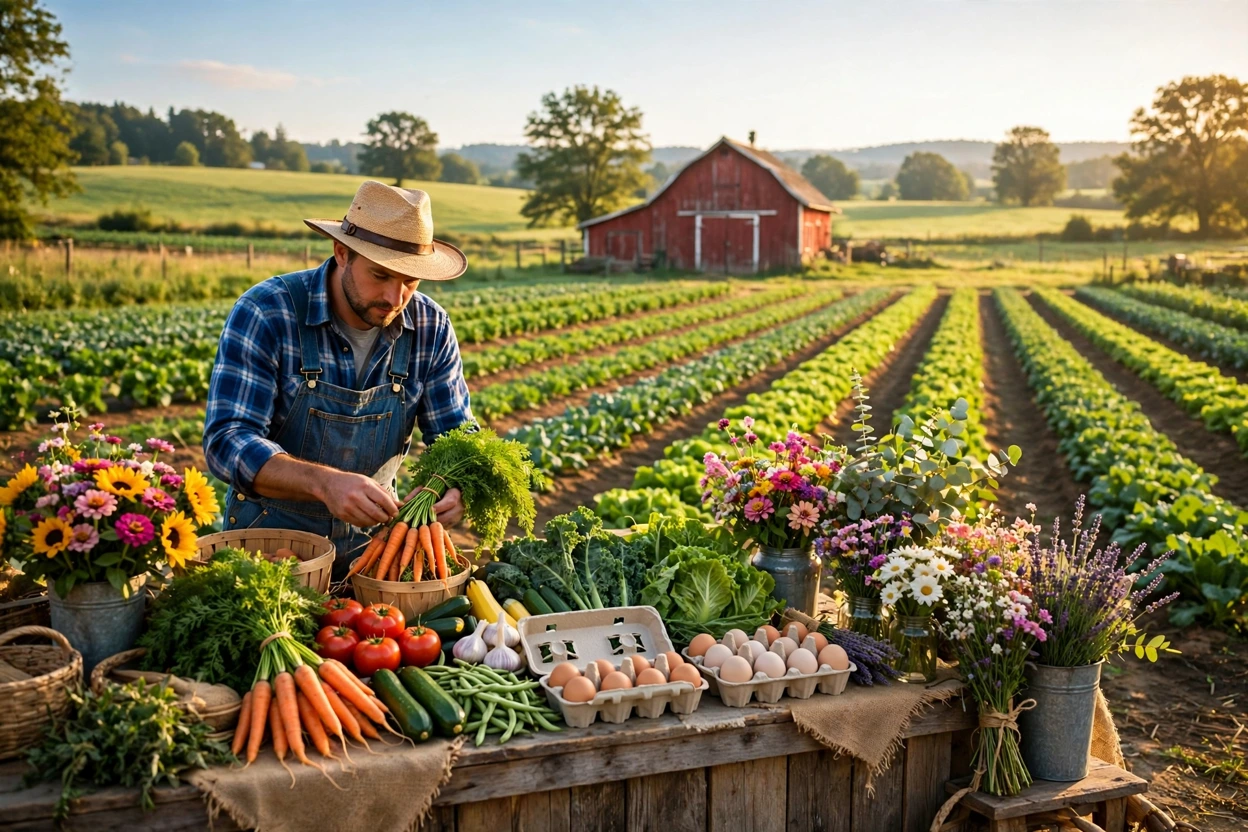 The best small farm ideas pair a high-value product with modest acreage and direct sales. Think microgreens. Cut flowers, pastured eggs, market vegetables, value-added foods, and agritourism round out the strongest options for beginners working with limited land and cash. This guide lists each idea’s land needs, startup cost, legal friction, and matching USDA program, and it explains how to start a farm with little money.
Key Takeaways
- Microgreens, cut flowers, market vegetables, pastured eggs, value-added foods, and agritourism are practical, profitable small farm ideas for beginners on 1 to 10 acres (0.4 to 4 ha).
- Most USDA programs described as farmer grants fund organizations, research projects, or conservation cost-share. They rarely hand startup cash to individuals.
- The Farm Service Agency (FSA) Microloan lends up to $50,000 for operating costs and up to $50,000 for farm ownership. Its application is shorter and simpler than standard FSA loan paperwork.
- State cottage food laws decide which homemade foods a farm stand can sell without a licensed kitchen.
- Leasing land and joining an incubator farm are the most realistic answers to how to start a farm with no money, and pre-selling Community Supported Agriculture (CSA) shares funds the first season.
- The IRS can treat an unprofitable farm as a hobby, which limits deductions. Keep business records from day one.
What Are Small Farm Ideas
Small farm ideas are enterprise models that turn limited land, labor, and capital into steady income through high-value crops, animal products, processed foods, or on-farm services. Each model carries its own land needs, startup costs, legal rules, and customer base, so two farms on identical acreage can end up running very different businesses. Pick by fit. Your acreage and budget narrow the list, and the local market makes the final call.
The USDA counts a place as a farm if it produced and sold $1,000 or more of agricultural products in a year, or normally would have. That bar is low. Size is a separate question, and the USDA Economic Research Service (ERS) answers it by classifying small family farms as those with gross cash farm income under $350,000.
Four filters separate a workable idea from a costly one:
- Value per area: Crops and products that earn more per bed, per shelf, or per bird suit small acreage.
- Legal friction: Food safety, processing, and zoning rules add cost and time before the first sale.
- Funding fit: Some enterprises match a specific USDA loan, grant, or cost-share program.
- Market access: The number of direct buyers within driving distance decides what sells.
What Is the Most Profitable Small Farm Idea
For most US beginners, the most profitable small farm idea is a high-value crop sold directly to consumers. Microgreens are the classic example. Cut flowers qualify too, along with season-extended vegetables grown in a high tunnel. Each one needs little land and can start small. Sales at farm stands and farmers markets earn retail prices, and CSA subscriptions do the same while locking in buyers before harvest.
No verified national profit figure exists for any single enterprise. Margins swing. Labor costs and market prices move them, and so does region, which is why you should pull a Cooperative Extension enterprise budget from your state’s land-grant university before you commit. Treat the land ranges in the table as planning estimates, not survey data.
High-Value Crops for 1 Acre or Less
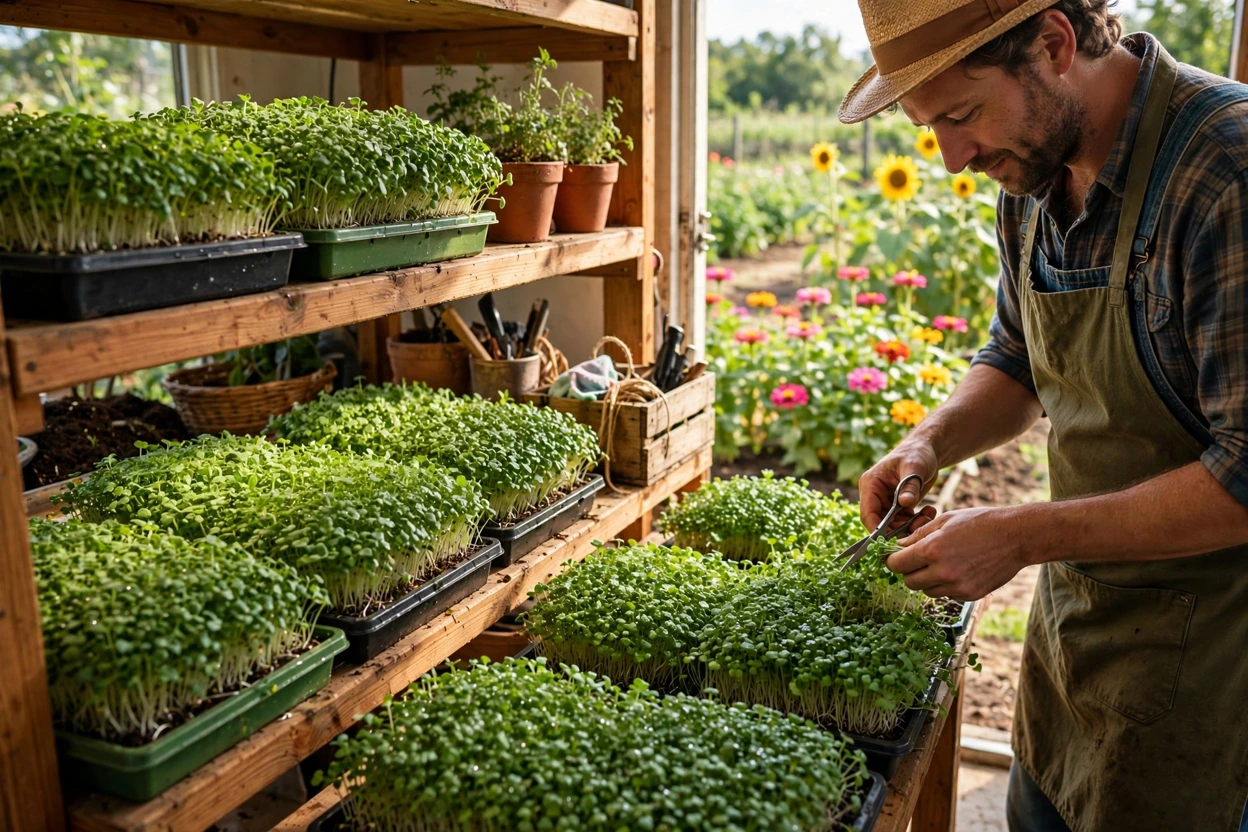
Microgreens grow on indoor shelving and are ready to harvest in roughly 1 to 3 weeks, so a single rack can turn over many times in one season. Buyers come weekly. Restaurants and grocery co-ops order them all year, and so do farmers market shoppers.
Cut flowers such as zinnias, sunflowers, snapdragons, and dahlias sell as bouquets, weekly subscriptions, florist bunches, and do-it-yourself wedding buckets. A quarter acre (0.1 ha) of flower beds keeps one grower busy through the season. Start smaller than you think.
Focus pays. Intensive market vegetables earn the most per bed when you stick to salad greens, tomatoes, garlic, and herbs. A high tunnel stretches the season by several weeks in northern states, and the Natural Resources Conservation Service (NRCS) offers cost-share to help pay for one.
Livestock and Animal Products
Pastured eggs bring customers back every week. Federal rules require shell eggs held for retail sale to stay at 45°F (7°C) or below, and many states layer their own rules on top for licensing and grading, plus carton labels.
Pastured broilers sell at a premium. Processing is the catch, though. The federal Poultry Products Inspection Act (PPIA) allows exemptions for small producers who process limited numbers of birds, and your state can set stricter rules.
Honey bees need very little land. Their honey keeps on the shelf and moves as a gift item, and many state cottage food laws permit it without a licensed kitchen.
Value-Added and Service Enterprises
Value-added products turn surplus and blemished produce into jam, salsa, dried herbs, or baked goods with a higher margin per pound. Home production has limits, though. State food laws decide which of those products you’re allowed to make in your own kitchen.
Agritourism includes pick-your-own fields, pumpkin patches, farm stays, workshops, and event rentals, and it earns money from visitors rather than harvest volume. Paperwork comes first. You’ll need zoning approval and liability coverage before you open the gate.
Small Farm Income Ideas That Combine Well
The small farm income ideas that combine best share land, labor, equipment, or customers. Each new enterprise should lower the cost of another or bring the same buyers back more often. Two pairings prove it. Eggs paired with vegetables at a farm stand work well for direct-sale farms, and so do cut flowers paired with pick-your-own visits.
The table below compares strong enterprise pairings and the resource each pair shares.
| Combination | Shared Resource | Why It Works |
|---|---|---|
| Eggs plus vegetables | Same customers | Eggs bring weekly repeat visits |
| Cut flowers plus u-pick | Same beds | Visitors harvest, cutting labor |
| Pastured poultry plus vegetables | Same land | Rotated birds fertilize future beds |
| Microgreens plus restaurant sales | Indoor space | Year-round cash between outdoor seasons |
| Honey plus farm stand | Same stand | Shelf-stable product sells off-season |
| Jam plus surplus produce | Seconds and culls | Unsold produce becomes a premium product |
Limit year one to two enterprises. Every enterprise comes with its own learning curve, and you’ll find that labor runs short well before the land does.
Can You Make a Living on a Small Farm
Yes, you can make a living on a small farm. One crop rarely does it. Full-time small farm incomes usually come from several direct-to-consumer enterprises run with tight cost control and built on years of customer relationships. Still, USDA ERS data shows that most small family farm households earn the majority of their income off the farm.
Many beginning farmers keep an off-farm job or a spouse’s salary for the first several seasons, using it to cover health insurance and household bills while sales grow. That’s normal, not failure.
Know your numbers. Calculate the cost of production for every product, then set prices high enough to cover labor and packaging as well as market fees. Matching the lowest price at the farmers market won’t keep a farm in business.
Direct-to-consumer sales keep the retail margin on the farm, which matters most when your volume is small and every unit has to earn its keep. Wholesale is different. Those accounts add volume but pay less per unit.
Small Farm Stand Ideas That Draw Repeat Buyers
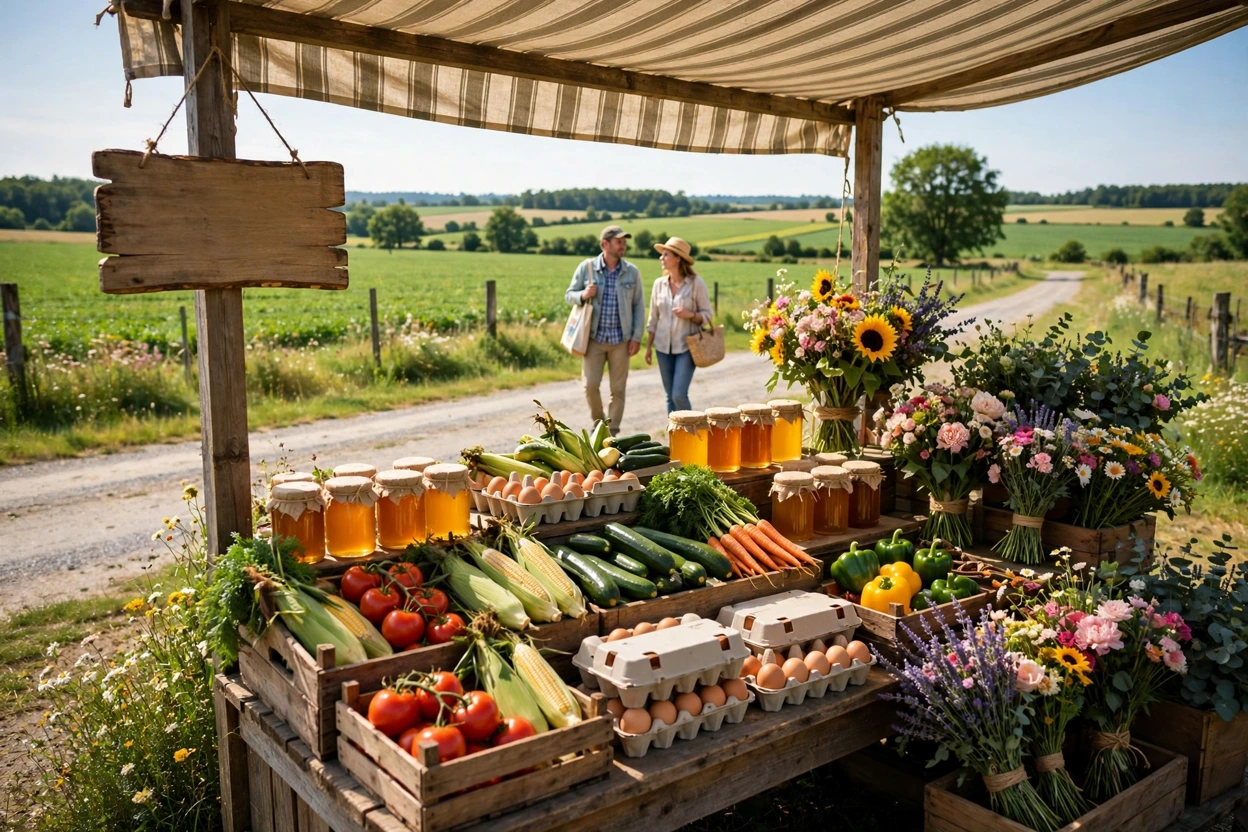
The best small farm stand ideas combine a consistent weekly product lineup with clear pricing, easy payment, visible signage, and a clean, shaded setup customers can spot from the road. Repeat buyers return for reliability. A small stand stocked every open day outsells a large stand that sits half empty.
Use these roadside farm stand ideas to build traffic:
- Signage: Use large letters readable from a moving car, and list the top three items available that day.
- Payment: Pair a bolted lockbox with a printed QR code for mobile payment apps on an honor system stand.
- Cooling: Shade produce with a canopy, and keep eggs and flowers in a cooler or refrigerator.
- Hours: Post fixed open days so customers plan their visits.
- Updates: Share weekly availability on social media or a text list.
- Security: Add a visible camera and empty the cash box daily.
What to Sell at a Farm Stand
Sell what the rules allow. Within those limits, stock the products customers buy every week, since repeat buyers are what keep a farm stand going from one season to the next.
The table below compares common farm stand products by the rules to check and the customer draw.
| Product | Rules to Check | Customer Draw |
|---|---|---|
| Fresh vegetables | Few rules for whole raw produce | Weekly staple purchase |
| Eggs | State egg license, 45°F (7°C) storage | Repeat weekly buyers |
| Cut flower bouquets | Few rules in most states | Impulse purchase |
| Honey | Cottage food or honey exemption | Gift and shelf-stable item |
| Baked goods and jam | State cottage food law | High margin per item |
| Frozen meat | USDA or state inspection | High ticket sale |
Do You Need a Permit for a Farm Stand
Yes, many US counties and states require a permit or business license for a farm stand, and zoning approval can apply too. Rules tighten with risk. Stands selling eggs and meat face the strictest requirements, and so do stands with processed food, while many states go easier on stands that sell only raw produce grown on the farm.
Check with three offices before opening: the county planning or zoning office, the county or state health department, and the state department of agriculture. Taxes are separate. Your state revenue department decides whether you need a sales tax permit for products like flowers or crafts.
How to Accept SNAP/EBT at a Farm Stand
Accepting the Supplemental Nutrition Assistance Program (SNAP) through Electronic Benefit Transfer (EBT) adds customers and lets your stand reach more of your community. Setup takes four steps.
- Apply online to the USDA Food and Nutrition Service (FNS) for SNAP retailer authorization as a farmer or direct marketer.
- Set up an EBT card reader or an FNS-approved mobile payment app.
- Post “SNAP/EBT Accepted” signs at the stand and on social media.
- Ask your state agriculture or health department about nutrition incentive programs, funded through the Gus Schumacher Nutrition Incentive Program (GusNIP), that stretch SNAP dollars spent on produce.
Small Farm Kitchen Ideas for Value-Added Products
The most useful small farm kitchen ideas start with your state’s food law and plan the space around it. A home kitchen under a cottage food law handles low-risk foods, while canned or acidified products, along with refrigerated and meat-based ones, need a separate licensed kitchen. Getting this wrong hurts. One mismatch either wastes money on equipment or blocks the sales channels you need.
Can You Sell Food from Your Farm Kitchen
Yes, you can sell low-risk foods from a home farm kitchen under most state cottage food laws, with breads, cookies, fruit pies, jams, jellies, dried herbs, candy, and honey as common examples. Limits apply, though. Most states require ingredient labels, and many cap annual sales or allow only direct sales to consumers.
Commercially sold acidified foods, such as pickles and many salsas, fall under FDA acidified food rules unless a state cottage food exemption covers them. Check before you jar anything. You’ll find the approved product list through your state department of agriculture or health department.
Cottage Food vs Licensed Kitchen
The table below compares a cottage food home kitchen with a licensed farm kitchen.
| Factor | Cottage Food Kitchen | Licensed Farm Kitchen |
|---|---|---|
| Products | Low-risk foods like bread and jam | Canned, acidified, refrigerated, or meat foods |
| Inspection | Often none or limited | Health inspection required |
| Sales Channels | Often direct to consumer only | Retail, wholesale, and online |
| Sales Cap | Set by each state | Usually none |
| Startup Cost | Low | Medium to high |
Farm Kitchen Layout Tips
A licensed farm kitchen passes inspection more easily when the layout follows common health department expectations:
- Install a dedicated handwashing sink separate from the prep sink.
- Add a three-compartment sink for washing, rinsing, and sanitizing equipment.
- Choose smooth, washable surfaces for walls, floors, and counters.
- Build a separate entrance from the family living space, since many licensed kitchens require one.
- Store dry goods on shelving at least 6 inches (15 cm) off the floor.
- Run a commercial refrigerator with a thermometer at 41°F (5°C) or below, the FDA Food Code cold-holding limit.
- Rent a shared-use commercial kitchen first to test demand before you build.
Are There Grants to Start a Farm
Yes, grants to start a farm exist, but most USDA farmer grants fund organizations, research projects, value-added processing, or conservation cost-share, not startup cash for individuals. New farmers usually pair a low-interest FSA loan with cost-share for specific practices, then add a project grant once the farm is up and running. That’s the realistic path.
Grants Individuals Can Apply For
Individual farmer grants exist, but each one funds a defined project rather than general startup costs:
- SARE Farmer/Rancher Grant: The Sustainable Agriculture Research and Education (SARE) program funds producers who test a new practice on their own farm through research or demonstration projects. Award limits vary by SARE region.
- Value-Added Producer Grant (VAPG): USDA Rural Development offers planning grants up to $75,000 and working capital grants up to $250,000 to independent producers, with a matching funds requirement. Beginning farmers receive priority, and applicants must produce the raw commodity themselves.
- State programs: State departments of agriculture distribute Specialty Crop Block Grant Program funds and sometimes offer their own beginning farmer grants.
The Beginning Farmer and Rancher Development Program (BFRDP), run by the National Institute of Food and Agriculture (NIFA), funds organizations that train new farmers. Individuals can’t apply to BFRDP directly. Still, they can take the free or low-cost courses it supports.
Environmental Quality Incentives Program (EQIP) payments generally arrive after you finish the practice, which means you’ll usually front the cost yourself until the work is done. There’s an exception. Historically underserved producers, including beginning farmers, can request an advance payment option at their local USDA Service Center.
How to Start a Farm in 7 Steps
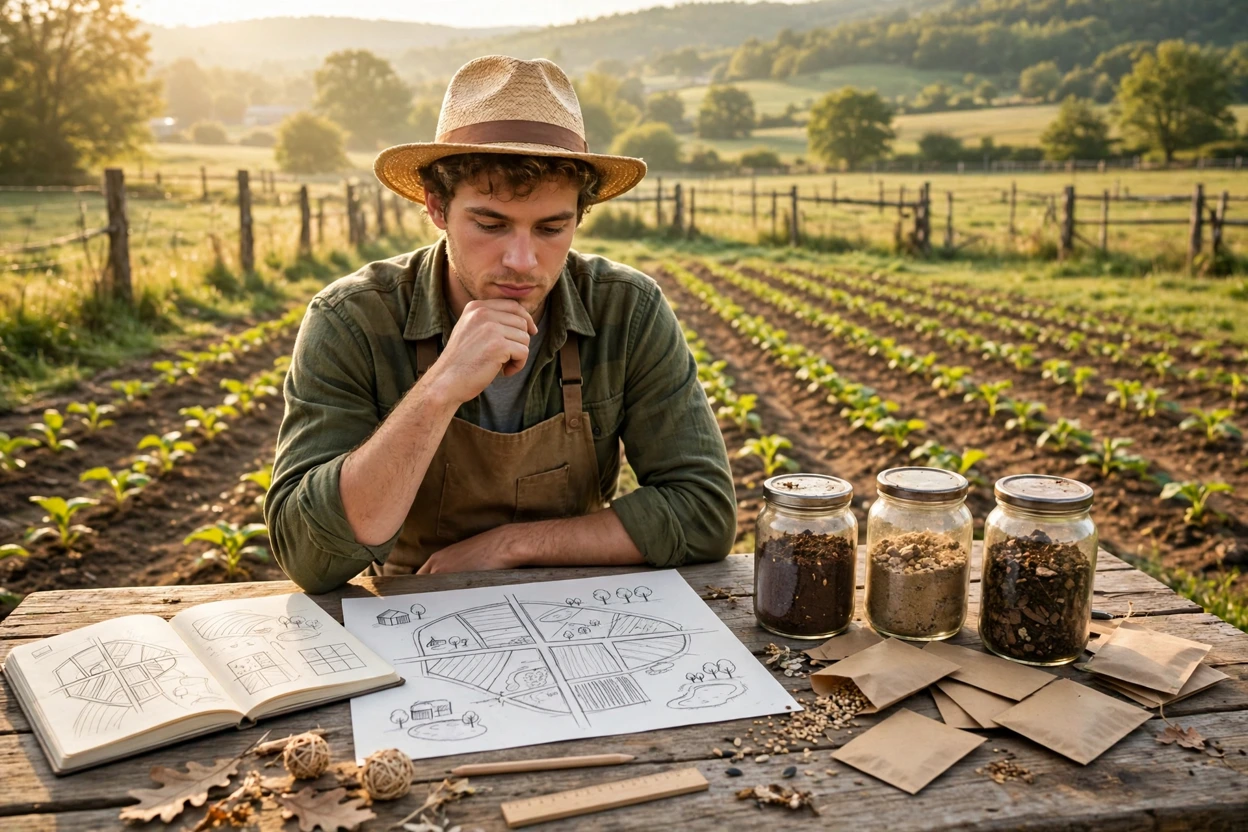
To start a farm, set a clear income goal, test your land and market, confirm local rules, write a business plan, register with the FSA, and launch one or two enterprises at small scale. Order matters. Working through how to establish a farm in that sequence keeps beginners from buying equipment before they have a single customer.
- Define your income goal, weekly labor hours, and maximum startup budget in writing.
- Call your county Cooperative Extension office for enterprise budgets, soil test kits, and beginning farmer courses.
- Test your soil through a land-grant university lab, and test your water if you plan to irrigate or wash produce.
- Confirm zoning, cottage food, egg, and processing rules with your county and state agencies.
- Write a farm business plan covering enterprises, target market, startup costs, and monthly cash flow, using the free SARE guide “Building a Sustainable Business” as a template.
- Register at your local USDA Service Center for an FSA farm number, which most USDA programs require.
- Launch one or two enterprises, sell direct to consumers, and record every expense for IRS Schedule F.
How to Start a Farm with No Money
To start a farm with no money, lease land instead of buying it, join an incubator farm or paid apprenticeship, and choose a low-equipment enterprise like microgreens. Cash comes next. Pre-selling CSA shares can cover first-season costs, and an FSA Microloan fills the remaining gaps once you have a basic plan and some experience.
Lease Land Instead of Buying
Leased land removes the largest startup cost. Look for retiring farmers, landowners with idle acres who want an agricultural property tax rate, land trusts, and state land-link programs listed by Cooperative Extension.
Get it in writing. Sign a lease of at least three years that covers rent, water access, permanent improvements, liability insurance, and termination terms.
Join an Incubator Farm or Apprenticeship
Incubator farm programs rent small plots to new growers for several seasons, usually with shared equipment and irrigation plus business training built in. Extension offices and nonprofits run most.
Paid apprenticeships teach production and marketing on an established farm. Some include housing. To find one, search the ATTRA Sustainable Farming Internships and Apprenticeships directory from the National Center for Appropriate Technology (NCAT).
Pre-Sell to Fund the Season
CSA members pay in winter or early spring, and that money covers seed and soil amendments, along with other supplies, before harvest begins. Flower subscriptions work the same way. So do deposits on pastured meat birds.
Pre-selling creates an obligation to deliver. Plant extra, and keep a written refund policy ready so members know exactly what happens if crop loss cuts the season short.
How Much Land Do You Need to Start a Farm
You need less than 1 acre (0.4 ha) to start a farm that sells microgreens, cut flowers, or intensive vegetables. Pastured poultry and small livestock usually need 5 to 20 acres (2 to 8 ha) or more, as does agritourism. Size isn’t the point. What matters more is matching each enterprise to the right acreage, and the ranges in the next table are planning estimates.
The table below compares acreage tiers with the enterprises that fit each one.
| Acreage (Acres / Ha) | Ideas That Fit | Main Limit |
|---|---|---|
| Under 0.25 / 0.1 | Microgreens, herbs, mushrooms, bees | Labor and indoor space |
| 0.25 to 1 / 0.1 to 0.4 | Cut flowers, salad greens, laying hens | Water access |
| 1 to 5 / 0.4 to 2 | Market vegetables, pastured poultry, u-pick | Equipment and labor |
| 5 to 20 / 2 to 8 | Small livestock, orchards, agritourism | Fencing, zoning, and liability |
Regulations That Shape Your Farm Plan
Federal food safety law, state cottage food and egg rules, county zoning, and state agritourism liability statutes decide which small farm enterprises are legal on your land and what they cost to run. Do this first. Checking the rules before you plant a crop or buy animals avoids expensive changes later.
The Food Safety Modernization Act (FSMA) Produce Safety Rule doesn’t cover farms averaging $25,000 or less in annual produce sales over the previous three years, adjusted for inflation. That’s the first exemption.
Larger farms may still fit the qualified exemption. Two tests apply. A farm must average under $500,000 in annual food sales, adjusted for inflation, and sell more than half of its food directly to qualified end users. Qualified end users include consumers, plus restaurants or retail stores in the same state or within 275 miles (443 km).
The table below compares the main rules that affect small farm enterprises.
| Rule | Who Sets It | What It Affects |
|---|---|---|
| FSMA Produce Safety Rule | FDA, federal | Growing, harvesting, and packing produce |
| Cottage food law | Each state | Homemade foods sold to the public |
| Egg and poultry rules | USDA, FDA, and states | Egg storage, licensing, and bird processing |
| Zoning ordinance | County or city | Farm stands, livestock, events, and signs |
| Agritourism liability statute | Each state | Visitor lawsuits and required warning signs |
Many states have agritourism liability statutes. These laws limit visitor lawsuits over inherent farm risks when operators post the required warning signs, and the National Agricultural Law Center compiles them by state.
Every state has a right-to-farm law. Its protections differ from one state to the next, and they often don’t cover new enterprises that change how the property is used.
Is a Hobby Farm a Tax Write-Off
No, a hobby farm is not a tax write-off. The IRS lets you deduct farm losses only when you run the farm as a business with a genuine profit motive and report it on Schedule F. Hobbies get a worse deal. Income from a hobby is still taxable, but hobby expenses generally aren’t deductible under current federal rules.
Internal Revenue Code Section 183 governs hobby losses. A numeric test applies. The IRS presumes a profit motive when an activity shows a profit in 3 of 5 consecutive tax years, or 2 of 7 years for horse breeding, training, showing, or racing.
The IRS also weighs other factors. These include whether you run the farm in a businesslike manner, your expertise, the time you spend, and your history of income or losses.
Strengthen your business case with a written business plan, a separate farm bank account, accurate records, and documented changes when an enterprise loses money. IRS Publication 225, the Farmer’s Tax Guide, explains farm income and expense reporting. A tax professional can review your specific situation.
Frequently Asked Questions
What Is the Easiest Small Farm to Start?
Microgreens are the easiest small farm to start. Startup is cheap. They grow indoors on shelving, harvest in about 1 to 3 weeks, and sell to restaurants and market shoppers year-round.
What Can I Grow on 1 Acre?
One acre (0.4 ha) supports intensive vegetables, cut flowers, garlic, herbs, berries, or a small laying flock. Channel matters. Selling through a farm stand or CSA returns the most per bed, and a farmers market booth does the same.
Does Land Leasing Work for Beginners?
Yes. Leasing lets beginners farm without a mortgage. Insist on a written lease of three years or more that covers water rights, rent, improvements, and termination, so soil-building work pays off.
What Does the FSA Offer Beginning Farmers?
The Farm Service Agency (FSA) offers beginning farmers microloans, direct and guaranteed operating loans, farm ownership loans, down payment loans, and priority funding. Eligibility hinges on time. FSA defines a beginning farmer as someone who has operated a farm for 10 years or less.
How Do I Apply for an FSA Microloan?
Visit your local USDA Service Center, get a farm number, and submit the microloan application with a basic plan, budget, and credit details. Standard FSA loans ask for more paperwork.
Conclusion
Small farm ideas succeed when they move from inspiration to a tested plan. Test before you spend. Match the enterprise to your acreage and check the rules first, then pair the idea with the right loan, grant, or cost-share program.
Start with one or two direct-to-consumer enterprises this season, and record every sale and expense. Get to know your Extension agent and USDA Service Center staff. Records add up. Each year of records strengthens your case for an FSA loan, a SARE project, or a Value-Added Producer Grant, which helps a small start grow into a lasting farm business.
Sources
- USDA farmers.gov, New Farmers: https://www.farmers.gov/your-business/beginning-farmers
- USDA Farm Service Agency, Farm Loan Programs: https://www.fsa.usda.gov
- USDA farmers.gov, Farm Loans: https://www.farmers.gov/loans