Homesteading for Beginners in 2026 — 10 Skills Every New Homesteader Must Learn First
Homesteading for Beginners in 2026. 10 Skills Every New Homesteader Must Learn First
The first thing I want to tell you has nothing to do with chickens, gardens, or canning jars.
It is this: the biggest reason beginner homesteaders quit is not lack of land, money, or equipment. It is the feeling of being overwhelmed by trying to do everything at once.
I have watched it happen more times than I can count. Someone gets excited, buys six hens, starts a huge garden, signs up for a cheesemaking course, and orders a pressure canner — all in the same month. By August they are exhausted, nothing is working well, and by October they have given up.
The homesteaders who succeed are not the ones who start with the most resources. They are the ones who learn the right skills in the right order and master each one before adding the next.This guide gives you that order. Ten skills, ranked from the first you should learn to the last. Each one builds on the previous. Each one is learnable with no prior experience. And each one adds real value to your life from the first week you practise it.
| You do not need to be ready. You just need to start with Skill 1. Everything else follows in sequence. |
Why Skills Matter More Than Stuff:
Here is something the homesteading industry does not want you to know: equipment does not make a homesteader. Skills do.
You can have the finest pressure canner on the market and ruin every batch of vegetables you process. You can own ten acres and grow almost nothing if you do not understand your soil. You can spend $2,000 on a chicken setup and lose half your flock in the first winter if you do not know basic animal healthcare.
Meanwhile, a homesteader who deeply understands fermentation can preserve food for pennies with a jar and some salt. A homesteader who understands seed saving never needs to buy seeds again. A homesteader who can build simple structures saves thousands of dollars every year.
| Every skill you build is permanent. Equipment breaks, gets stolen, or becomes obsolete. Knowledge compounds. This is the foundation of every successful homestead. |
Before the 10 Skills — The One Decision That Changes Everything:
Before you learn anything, make one decision that most beginner homesteaders skip entirely. Decide what your homestead is for.
Not in a vague “I want to be self-sufficient” way. In a specific, measurable way. Write down the answers to these three questions:
- What percentage of your food do you want to produce yourself in twelve months? 10% is achievable in year one. 30% is ambitious but possible. 80% takes years.
- What is your biggest current household expense that homesteading could reduce? Groceries? Energy? Healthcare? This focuses your skill-building on the highest financial return first.
- What does a successful day on your homestead look like in five years? Be specific — not “living off the land” but something concrete like collecting eggs, checking the garden, and processing fermented vegetables before lunch.
Your answers tell you which skills to prioritise. Someone focused on food costs starts with Skills 1 and 3. Someone with land who wants livestock income starts with Skills 2 and 6. Someone planning off-grid living starts with Skills 8 and 9.
| Skill 1 of 10Kitchen Food ProductionStart here this week — no land, no special equipment needed |
Your kitchen is a food production facility that most people are using at 10% of its capacity. Kitchen food production means learning to make from scratch the processed foods you currently buy.
The Financial Case:
| Product | Cost to Make | Cost to Buy | Monthly Saving |
| Sourdough bread (weekly) | $0.30/loaf | $9.00/loaf | $30–$40 |
| Sauerkraut (per jar) | $0.40 | $8.00 | $20–$30 |
| Yoghurt (weekly) | $0.60/litre | $4.50/litre | $15–$20 |
| Bone broth (weekly) | $0.20 | $8.00/litre | $25–$35 |
| Start this week: Make your first sourdough starter. Mix 50g flour + 50g warm water in a jar. Feed the same amount tomorrow. By day 4 it will be bubbling. By day 7 you will have your first loaf. That starter is the beginning of your homestead. |
| Skill 2 of 10Food Growing — Smaller Than You ThinkOne 4×8 raised bed. That is your first year. |
The mistake most beginners make: they start too big. A first garden that is too large is a first garden that fails — too much weeding, too much watering, too much produce ripening at once with nowhere to go.
Start with one raised bed measuring 4 feet by 8 feet. This is the size you can reach across from either side without stepping in. It is completely manageable in 15 minutes per day. It can be built for under $30 from salvaged materials.
Best First-Year Crops — Ranked by Calorie Return
- Potatoes — start from any kitchen potato that is sprouting, enormous calorie yield per square foot
- Beans — grow aggressively, require no fertilising, fix nitrogen into the soil for the next crop
- Squash — impossible to neglect, highly productive, keeps for months without processing
- Tomatoes — high yield, versatile for fresh eating and preserving, seeds easy to save
- Leafy greens — fast growth, multiple harvests, grow in cool seasons when nothing else produces
| Soil is the skill: The difference between a beginner garden that produces abundantly and one that struggles is almost always soil quality. Start a compost pile the same week you start your garden. By the end of year one you will have the best soil amendment available at any price — and it cost nothing. |
| Skill 3 of 10Food PreservationTurn summer abundance into year-round security |
The USDA National Agricultural Library maintains a comprehensive free collection of homesteading guides covering food production, animal husbandry, food preservation, and sustainable farming — available to anyone at no cost, no sign-up required.
Learn these four methods in this specific order — each one is simpler and safer than the next, and each prepares you for the one that follows.
Step 1 — Fermentation (Learn This Month):
Requires no equipment beyond a jar. Produces no dangerous results if done incorrectly. Sauerkraut, pickles, kimchi — every batch is a lesson and the skill is mastered in one month.
Step 2 — Dehydrating (Learn This Season):
A second-hand food dehydrator costs $8 to $15 at a thrift store. Dry tomatoes, herbs, fruit, and meat strips. Your oven’s lowest setting works as a free alternative.
Step 3 — Water Bath Canning (After Fermentation is Mastered):
Mason jars from a thrift store cost $0.25 to $0.50 each. Processes high-acid foods — tomatoes, fruit, jam, pickles — in shelf-stable jars lasting 12 to 18 months. The USDA Ball Book of Canning is the definitive safe guide. Do not improvise recipes.
Step 4 — Pressure Canning (Last — When Comfortable With All Above):
For low-acid foods — meat, beans, broth, vegetables. A pressure canner costs $80 to $150 new or $20 to $50 used. Learn this only after you are confident with the first three methods.
| For more detail on preserving food without refrigeration see our complete guide to food preservation methods — it covers all 8 proven techniques with step-by-step instructions. |
| Skill 4 of 10Seed SavingNever buy seeds again after your first season |
Every open-pollinated plant produces seeds that grow true to the parent next season. Tomatoes, peppers, beans, squash, kale, herbs — all easily saved. The seeds from one successful tomato plant provide enough for twenty plants next year, with surplus to trade.
The Homestead Superpower of Seed Saving:
- Disconnects your food production from commercial supply chains
- Gives you something of genuine value to trade — rare seeds attract trades for food, labour, and skills
- Over time you select plants perfectly adapted to your specific microclimate
- Annual seed cost: $0. The skill takes one season to learn.
How to start: At the end of your first growing season, save seed from your three most successful plants in each variety. Dry thoroughly. Store in paper envelopes in a cool, dark, dry place. Label with variety and year.
| Skill 5 of 10Composting and Soil BuildingThe foundation everything else grows in |
Most beginner homesteaders treat composting as an afterthought. Experienced homesteaders treat it as the foundation of everything.
Healthy soil grows healthy plants that resist pest and disease pressure, produce higher yields, and require less watering. Building healthy soil is the highest-return activity on any homestead — and composting is how you do it for free.
The Simplest Method That Actually Works:
- Browns (carbon) — dry leaves, cardboard, straw, wood chips
- Greens (nitrogen) — kitchen scraps, grass clippings, fresh animal manure, garden waste
- Ratio: approximately 3 parts browns to 1 part greens
- Keep moist but not soaking. Turn every 2 weeks. Finished compost in 60 to 90 days.
| The upgrade: Add chickens to the system after Skill 6. Chickens scratch and turn organic material, add high-nitrogen manure, and eat pests. This is why chickens come in Skill 6 — after composting is already understood. |
| Skill 6 of 10Beginner Livestock — Chickens FirstMaster one species before adding the next |
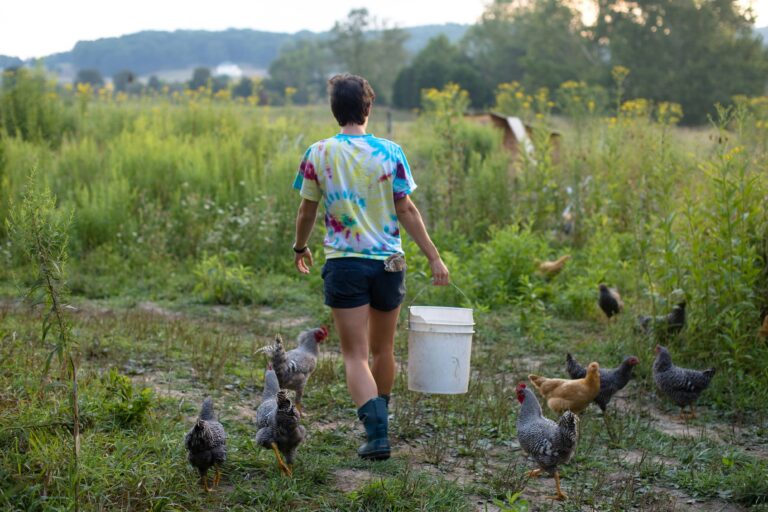
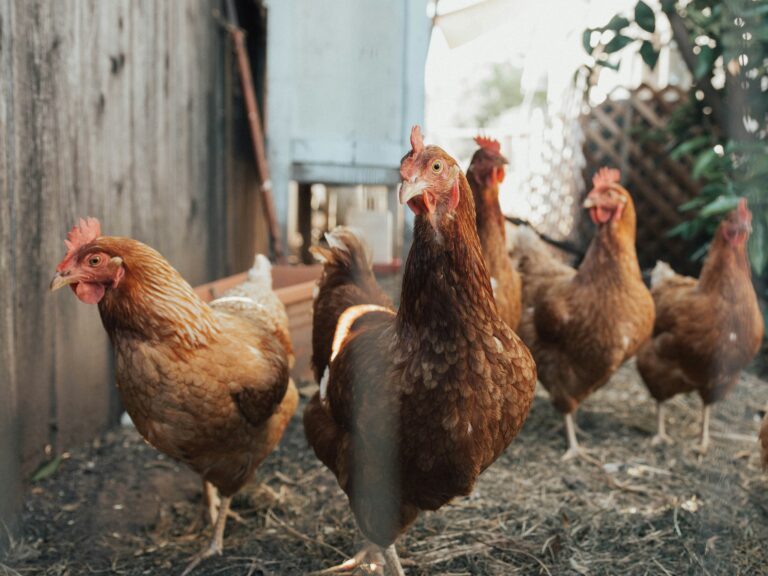
Six laying hens produce enough eggs for a family of four with surplus to sell or trade. Their startup cost is lower than any other productive livestock. Their daily care takes 10 to 15 minutes. Their manure feeds your garden. And there is something about collecting the first egg from your own flock that no other homesteading accomplishment quite matches.
Getting Your First Flock Free or Nearly Free
- Local farmers routinely cull older hens from their laying flocks and give them away
- Post in your county farming Facebook group — offers typically arrive within 24 hours
- Check with your county 4-H club and agricultural extension office for leads
For complete guidance on breeds, coop building from salvaged materials, feeding, and health care, see our complete guide to raising chickens for beginners.
| Check local laws first. Before acquiring any animals, confirm what your local zoning permits. Most suburban zones allow hens but not roosters. Our guide to backyard chicken laws by state covers the legal situation across all 50 states. |
After chickens: Add rabbits next (space-efficient, fast-reproducing, excellent garden manure). Then dairy goats (the most versatile homestead animal). Master one species completely before adding the next — this is the rule.
| Skill 7 of 10Basic Carpentry and Building – Every project you do needs this skill |
Not becoming a professional carpenter. Learning to build and repair the structures a homestead constantly needs. Raised beds, chicken coops, cold frames, tool sheds, fencing — these are constant needs on any homestead.
The Financial Case:
A simple chicken coop purchased from a farm supply store costs $300 to $800. The same coop built from salvaged pallets and second-hand hardware costs $20 to $40 in fasteners and wire. The only difference is the skill to build it.
How to Learn for Free:
- YouTube provides thousands of hours of free instruction on every carpentry skill a homesteader needs
- Start by building something simple — a raised bed, a compost bin, a small cold frame
- A basic hand tool set — hammer, hand saw, tape measure, square, drill — costs $40 to $80 at a thrift store
- Each project builds the skill for the next one — competent in six months, genuinely skilled within two years
| Skill 8 of 10Herbal Medicine and Natural HealthcareThe further from services, the more this matters |
The plants that address most common ailments grow freely in rural areas or can be cultivated in any garden. This skill matters more as your homestead becomes more serious and your distance from emergency services increases.
The Four Plants to Learn First
- Comfrey — fastest-healing plant in the herbal toolkit. Topical application dramatically accelerates healing of bruises, sprains, and minor wounds. Grows in any soil.
- Calendula — antimicrobial, anti-inflammatory. Make infused oil by packing petals into olive oil and leaving in a sunny window for four weeks. Use as a healing salve base.
- Elderberry — antiviral properties that reduce duration and severity of respiratory illness. Make elderberry syrup in autumn. One jar lasts a family through a winter.
- Plantain (the common lawn weed, not the banana) — most useful first-aid plant on any homestead. Chew a fresh leaf and apply to an insect sting or minor wound immediately.
| The USDA National Agricultural Library maintains free plant medicine resources and homesteading guides at nal.usda.gov — available to anyone at no cost. Herbal medicine complements medical care — it does not replace it for serious conditions. |
| Skill 9 of 10: Water Management and Rainwater HarvestingThe most critical resource on any homestead |
Water is the most critical resource on any homestead. Understanding how to collect, store, filter, and conserve it determines the resilience of everything else you build.
Rainwater Harvesting — Where to Start:
A 50-gallon rain barrel connected to a single downspout costs $30 to $60 and captures meaningful free water for the garden and animals. A 1,000 sq ft roof in a region receiving 40 inches of annual rainfall can theoretically capture 25,000 gallons per year. Most homesteaders completely ignore this free resource.
Your county agricultural extension service is the single most underused resource for beginning homesteaders — they run free workshops, connect beginners with experienced mentors, offer free soil testing, and maintain networks of local growers in your area.
Water Conservation Skills That Cost Nothing:
- Mulching garden beds 4 to 6 inches deep reduces watering frequency by 50% or more
- Drip irrigation — available for under $30 — applies water directly to root zones and eliminates evaporation
- Positioning garden beds to capture natural water flow from higher ground reduces additional irrigation needs
| If your homestead has or could have a well, test your water when you arrive at a new property and annually thereafter. Test for bacteria, nitrates, pH, and common contaminants. Contact your county agricultural extension service for free or low-cost water testing options. |
| Skill 10 of 10Homestead Income GenerationThe natural result of mastering Skills 1 through 9 |
Income generation is last because it is most sustainable when it flows from skills already mastered. A homesteader with six months of composting experience, a productive garden, a laying flock, and solid food preservation skills has multiple genuine income streams already available right now.
Fastest Income Streams From Established Homestead Skills:
| Income Stream | Weekly Earnings | Annual Est. | What It Takes |
| Surplus eggs | $25–$40 | $1,200–$2,000 | 6 hens + neighbour route |
| Spring seedlings | $100–$180/flat | $1,000–$1,800 | Sunny window + 4 weeks |
| Fermented products | $60–$100 | $3,000–$5,000 | Skill 3 mastered |
| Skill workshops | $480/session | $5,000–$8,000 | Any mastered skill |
| The USDA EQIP programme pays beginning homesteaders directly for implementing conservation practices including fencing, water systems, and soil improvement — covering up to 90% of project costs for anyone with fewer than ten years of farming experience. |
What Happens When You Follow This Sequence:
Month 1 — You are making bread and sauerkraut. Your food bill is $50 lower. You feel like you have started.
Month 3 — Your first raised bed is planted. Your sourdough starter is reliable. You have fermented six successful batches. You feel like a homesteader.
Month 6 — You have a flock of six chickens, a productive garden, a working compost pile. You are canning your first tomatoes. You are saving seed from your best plants. Your food bill is $150 to $200 lower per month.
Month 12 — You have two months of preserved food in the pantry. You are selling eggs to three neighbours. You harvested your first year of seed. You built a small chicken coop from salvaged materials. Your homestead is paying for itself.
Year 3 — You produce 30% to 40% of your family’s food. You have multiple income streams. You are teaching a neighbour’s canning class. The skills are embedded. The life is genuinely different.
| This is not a fantasy. It is a predictable sequence of outcomes that follows from building the right skills in the right order with patience and consistency. The only way to experience it is to start with Skill 1. |
Frequently Asked Questions:
I live in a suburb or apartment — can I actually homestead?
Yes. Skills 1, 3, 4, 8, and 10 apply completely regardless of where you live. Skill 2 can be practised in containers, on a balcony, in a community garden, or in a neighbour’s unused yard. The homesteading mindset and most of the skills are location-independent. Your apartment kitchen is your first homestead.
How much time does this realistically take each day?
In year one, expect 30 to 60 minutes per day covering kitchen production, garden care, and animal care once livestock is added. As systems become established and efficient, skilled homesteaders often reduce daily active time while increasing output. The time investment decreases as skill increases — which is the opposite of most hobbies.
Do I need to tell anyone before I start keeping chickens or a garden?
For a garden in your backyard — generally no. For chickens, check your local zoning ordinance. Most suburban areas permit small flocks of hens but restrictions vary significantly. See our guide to backyard chicken laws by state for a full breakdown by location.
How do I connect with other beginner homesteaders?
Your county agricultural extension service is the most underused resource for beginning homesteaders. They run free workshops, connect beginners with experienced mentors, and maintain networks of local growers and farmers. Find your local extension office at extension.org.
What is the single most important book for a beginner homesteader?
The Ball Complete Book of Home Preserving for food preservation — the definitive safe guide worth having in physical form. For broader homesteading philosophy and skill building, The Self-Sufficient Life and How to Live It by John Seymour remains the most comprehensive single volume available.
Related Guides on Rediscover Rural:
- How to Start a Homestead With No Money in 2026 — 12 Steps (Article 4)
- 7 Best States for Homesteading in 2026 (Article 5)
- How to Raise Chickens for Beginners in 2026 — Fresh Eggs in 6 Months (Article 27)
- How to Preserve Food Without Refrigeration (Article 12)
- USDA Grants for Homesteaders 2026 (Article 2)
- Backyard Chicken Laws by State 2026 (Article 3)
Official Sources
nrcs.usda.gov/programs-initiatives/eqip-environmental-quality-incentives — USDA EQIP programme
extension.org — Find your local county agricultural extension service
nal.usda.gov — USDA National Agricultural Library (free homesteading resources)