USDA Grants for Homesteaders 2026 — 7 Programs You Can Apply for Today
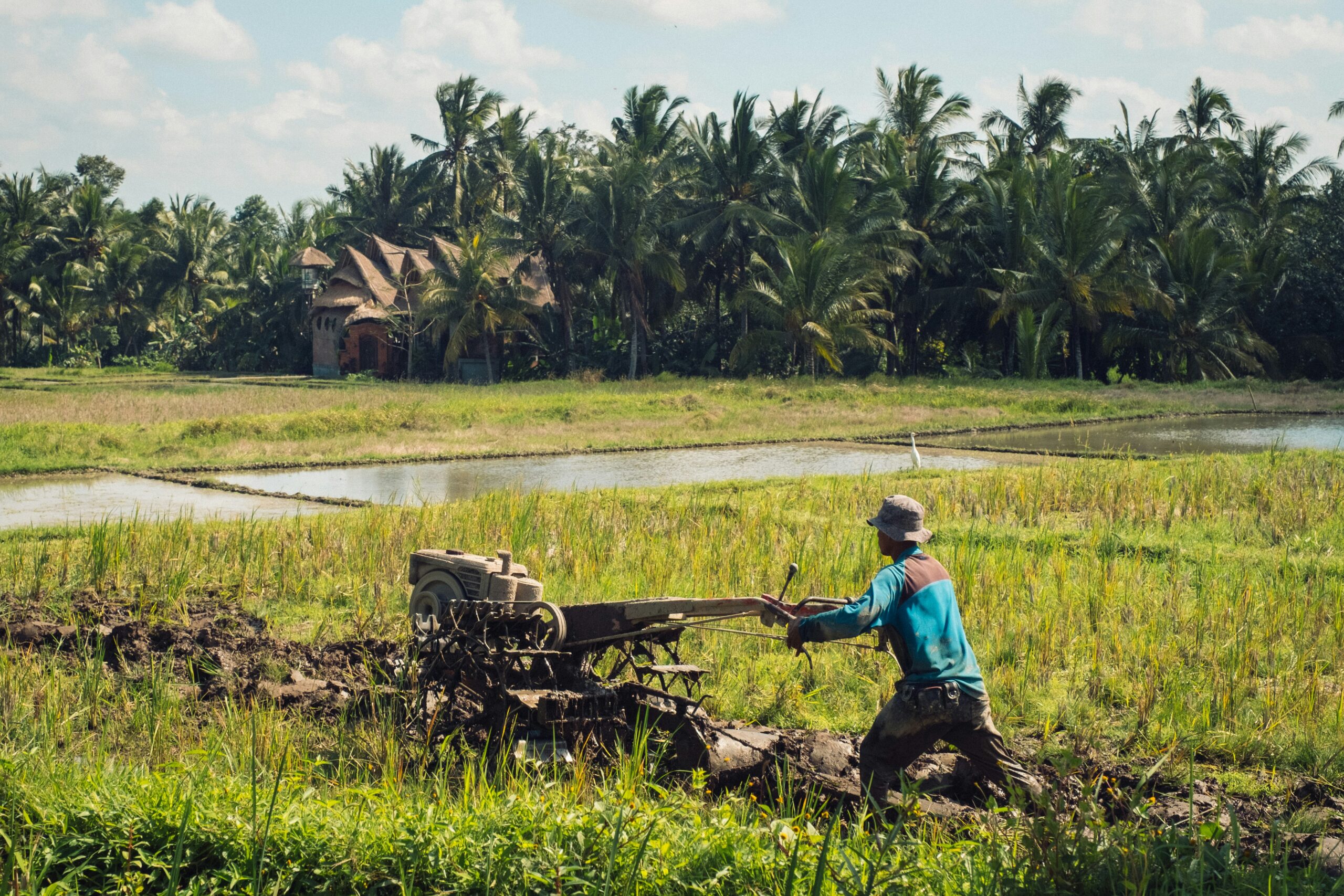
USDA Grants for Homesteaders 2026 — 7 Programs You Can Apply for Today
I want to tell you something that most people in the homesteading world never find out until years into their journey.
The federal government is actively looking for people like you to give money to.
Not loans. Not vouchers. Not tax credits. Actual grants — money that goes into your pocket and never needs to be paid back — for doing the exact things homesteaders already do. Growing food. Raising animals. Installing solar. Conserving soil. Building fences.
The USDA approved a budget of $26.65 billion for agricultural programmes in 2026. A significant portion of that money sits in programmes that beginning farmers, small landowners, and homesteaders qualify for — and most of them go undersubscribed every single year because not enough people apply.
This article covers every major USDA grant programme available to homesteaders in 2026. For each one I tell you what it pays, exactly who qualifies, what you need to apply, and the single most common reason applications get rejected so you can avoid it.
| Quick Tip: Before you read another article or fill out a single form — call your local USDA Service Center and book a free consultation. Tell them you are a beginning homesteader. That one conversation is free and will save you months of wasted effort applying for the wrong programmes. |
The Single Most Valuable Thing to Know Before You Apply
Every USDA programme runs through your local USDA Service Center. There is one in almost every county in the country.
Before you fill out a single form, before you spend another hour researching — call your local USDA Service Center and make an appointment for a free consultation. Tell them you are a beginning homesteader and you want to understand which programmes you qualify for.
That conversation is free, the staff are genuinely helpful, and it will save you months of wasted effort applying for the wrong things.
| Find your nearest office at rd.usda.gov/contact-us/state-offices — this is the single most important link in this entire article. |
| Programme 1EQIP — Environmental Quality Incentives ProgramBest starting programme for most homesteaders · Up to $450,000 |
This is the most practical and widely used USDA programme for homesteaders. If you only apply for one thing this year, apply for this.
EQIP pays you to implement conservation practices on your land. Fencing to keep livestock out of streams. Water storage systems. High tunnels for season extension. Compost facilities. Soil health improvements. Tree planting. These are things most homesteaders want to do anyway — EQIP helps cover the cost of doing them.
What EQIP Pays
- Up to $450,000 over the life of a contract (typically 1 to 10 years)
- Beginning farmers (under 10 years experience) can receive up to 90% of eligible project costs covered
- Standard applicants receive 50% to 75% cost coverage depending on project type
- Historically underserved producers can receive advance payments of at least 50% before implementation
Who Qualifies
Any agricultural producer on eligible land. Homesteaders qualify if they are producing food, fibre, or livestock on their property. You do not need to be a commercial operation. A family growing vegetables, keeping chickens, and managing a few acres absolutely qualifies.
What You Need to Apply
A basic description of what you want to do and why. The NRCS office at your local USDA Service Center will help you develop a conservation plan. They essentially write the technical portions of your application with you — this is not something you need to do alone.
| Most Common Rejection Reason: Failing to connect your project to your state’s published resource concerns. Every state NRCS office publishes a list of priority issues — water quality, soil erosion, drought resilience. Applications that frame their projects around these priorities score higher. Ask your NRCS contact for the current priority list before writing your application. |
Apply at: nrcs.usda.gov/programs-initiatives/eqip-environmental-quality-incentives
| Programme 2REAP — Rural Energy for America ProgramUp to 50% of solar or renewable energy system cost covered |
If you have ever looked at the cost of a solar system for your homestead and thought “there is no way” — REAP is your answer.
REAP provides grants covering up to 50% of the cost of installing renewable energy systems on rural properties. Solar panels. Wind turbines. Geothermal systems. Energy efficiency improvements. All of it is eligible.
What REAP Pays
- $2,500 to $1,000,000 for renewable energy systems
- $1,500 to $500,000 for energy efficiency improvements
- For a typical homestead solar installation of $15,000 to $40,000 — REAP could return $7,500 to $20,000
- Combined with the federal solar tax credit, many homesteaders reduce their net solar cost below 30% of original price
Who Qualifies
Agricultural producers in rural areas with a population under 50,000 people. If your homestead is in a rural area and you produce any agricultural commodity — food, livestock, fibre — you qualify as an agricultural producer.
What You Need to Apply
- An energy audit or technical report demonstrating the need for and expected output of the system
- A quote from a licensed installer
- Farm or business documentation showing agricultural producer status
| Most Common Rejection Reason: Incomplete technical documentation. REAP requires specific engineering or energy assessment data. Always ask your chosen installer if they have worked on REAP-funded projects before — experienced installers know exactly what documentation is needed. |
Apply through your state USDA Rural Development office: rd.usda.gov
| Programme 3VAPG — Value-Added Producer GrantUp to $250,000 for homesteaders who sell farm products |
This one is for homesteaders who are already selling what they produce — or who want to start. If you sell eggs, honey, jam, cheese, dried herbs, meat, or any product you have processed from its raw state, VAPG provides grants to help you expand, market, and improve those operations.
What VAPG Pays
- Up to $250,000 for working capital grants (operating costs like wages, marketing, raw materials)
- Up to $75,000 for planning grants (feasibility studies, business planning, market research)
- Simplified application track for funding requests under $50,000 — far more manageable for small homestead operations
Who Qualifies
Independent agricultural producers who produce a raw agricultural commodity and add value to it before selling. Examples: keeping chickens and selling eggs, growing fruit and selling jam, raising cattle and selling beef direct to customers, producing honey and selling it at market.
| Most Common Rejection Reason: Vague market analysis. The USDA wants to see that real customers exist for what you are selling. Applications with letters of interest from local restaurants, proof of farmers market sales, or existing customer data score significantly higher than applications that simply describe the product. |
| Programme 4BFRDP — Beginning Farmer & Rancher Development Program$44.4 million in 2026 funding · Awards $50,000–$750,000 |
The BFRDP is the only USDA grant programme specifically designed for people at the very start of their agricultural journey. In FY 2026, the BFRDP posted $44.4 million in total programme funding with individual awards ranging from $50,000 to $750,000.
These grants go to organisations that provide training, education, and mentorship to beginning farmers. The direct benefit to you comes through your local agricultural extension service, farming incubator, or homesteading education programme that applies for BFRDP funding.
How You Benefit as a Beginning Homesteader
- Your county agricultural extension service almost certainly receives BFRDP funding and offers free or heavily subsidised training for beginning farmers — search your state’s extension service to access these resources immediately
- If you are involved with a homesteading education co-op, community garden network, or farmer training programme, your organisation can apply directly for BFRDP grants
- The FY 2026 competition closed June 16, 2026 — watch for the FY 2027 cycle which typically opens in autumn
| Programme 5CSP — Conservation Stewardship ProgramPaid for what you are already doing well · $18,000–$30,000/year |
While EQIP pays you to install new conservation practices, CSP pays you for conservation practices you are already doing well. If your homestead already has strong soil health practices, good water management, pollinator habitat, or energy efficiency measures in place, CSP pays you to maintain and improve them over a five-year contract period.
What CSP Pays
- Annual payments averaging $18,000 to $30,000 per year depending on operation size and activities enrolled
- Five-year contract periods with renewal options
- Homesteaders already practising composting, diverse rotations, pollinator gardens, and integrated pest management are well-positioned
| Why Homesteaders Are Well-Positioned for CSP: Homesteaders already practice many of the activities CSP rewards — composting, diverse crop rotations, pollinator gardens, cover cropping. If you are already doing these things, you are leaving money on the table by not enrolling. |
| Most Common Rejection Reason: Applying without first completing a conservation assessment with your NRCS office. CSP applications score based on existing conservation performance — and that score is only calculated through the official NRCS assessment process. |
| Programme 6FSA Microloan ProgramUp to $50,000 at below-market rates · Simplified paperwork |
Technically a loan rather than a grant, but included here because the terms are unlike any conventional lender and because most homesteaders who need startup capital qualify.
FSA Microloans provide up to $50,000 at below-market interest rates specifically for beginning farmers, non-traditional farm operations, and operators who cannot access conventional credit. The paperwork is simplified compared to standard FSA farm loans.
Why This Works Alongside Your Grants
You can stack FSA Microloans with EQIP grants, REAP grants, and VAPG grants simultaneously — as long as the same expense is not double-funded. A homesteader could use an FSA Microloan to purchase livestock and equipment while using an EQIP grant to fund fencing and water infrastructure at the same time.
- Beginning farmers, operators with non-traditional operations, and applicants unable to obtain conventional credit
- Proof of farm experience or training needed
- Simple farm business plan required
- Documentation that conventional credit was sought and declined
Apply at: fsa.usda.gov/programs-and-services/farm-loan-programs/microloans
| Programme 7RBDG — Rural Business Development GrantFor homesteaders building a farm business · $10,000–$50,000+ |
The Rural Business Development Grant is the most overlooked programme on this list and the most useful for homesteaders who want to sell products beyond the farm gate. RBDG funds technical assistance, training, and planning for small rural businesses — including farm-based food businesses.
If you want to develop a processing facility, launch a farm store, build a direct-to-consumer delivery operation, or create a value-added food business, RBDG can fund the planning and startup work.
- Targeted technical assistance grants typically run $10,000 to $50,000
- Enterprise grants can be significantly larger depending on project scope
- Rural small businesses and nonprofits in towns with fewer than 50,000 people qualify
- Broader than VAPG — funds distribution, marketing, infrastructure supporting multiple rural producers
How to Apply for USDA Grants — Step-by-Step Process
Most homesteaders who fail to get USDA grant funding do not fail because their projects are unworthy. They fail because they apply without preparation. Here is the process that consistently works.
- Call your local USDA Service Center this week — this is not optional. The staff know local priority areas, current funding cycles, and the specific documentation your application needs. Find your local office at rd.usda.gov/contact-us/state-offices.
- Identify yourself as a beginning farmer on every application. If you have been homesteading for fewer than ten years, you are a beginning farmer by USDA definition. This single designation gives you higher payment rates on EQIP and priority consideration on most competitive programmes.
- Match your project to your state’s resource concerns. Before submitting any EQIP or CSP application, look up your state NRCS office’s published list of priority resource concerns. Frame your application around these priorities.
- Stack your programmes. Apply for multiple programmes simultaneously — EQIP for infrastructure, REAP for solar, VAPG for farm product sales, FSA Microloan for equipment. These programmes are designed to work alongside each other.
- Apply early in the funding cycle. EQIP and CSP rank and fund applications in periodic cycles. Applications submitted early have more time to be ranked and revised if needed.
- Get help with larger applications. For grants above $50,000 — particularly VAPG and BFRDP — consider working with an agricultural grant writer. Their fee is typically a fraction of the award amount.
What the 2026 Budget Changes Mean for Homesteaders
| Important 2026 Update: Congress approved a USDA budget of $26.65 billion for FY 2026 — higher than proposed. Core programmes including EQIP, CSP, REAP, and VAPG remain fully funded. However local USDA offices are stretched thinner due to staffing cuts, so apply earlier than you would have in previous years. |
The challenges are real but manageable. Nearly $100 million was cut from Conservation Technical Assistance, meaning local USDA offices have less support staff to help farmers navigate applications. Thousands of NRCS employees were laid off in 2025. This means you need to reach out to your local office earlier and be more self-sufficient in your application preparation.
Additionally, mandatory spending programmes including EQIP and CSP face a 5.7% sequestration reduction in FY 2026, resulting in slightly smaller award pools. The programmes are still fully worth applying for — the funding is there. You simply need to apply more carefully and more early.
Frequently Asked Questions
Can I apply for multiple USDA programmes at the same time?
Yes — and you should. EQIP, CSP, REAP, and VAPG are specifically designed to complement each other. You can receive funding from multiple programmes simultaneously as long as the same expense is not funded twice. Your local USDA Service Center can help you identify the right combination for your situation.
How long does it take to receive USDA grant funding?
EQIP and CSP applications are ranked in periodic cycles that vary by state — typically every few months. Once approved, you sign a contract, implement the approved practices, and submit for payment after implementation. From initial application to first payment, plan for six to twelve months. REAP and VAPG have annual or biannual windows with similar timelines.
Do I need to match USDA grant funding with my own money?
It depends on the programme. EQIP covers a percentage of costs — beginning farmers receive up to 90% coverage. VAPG requires matching funds equal to the grant amount. REAP covers up to 50% of project costs. Your local USDA office can give you exact figures for each programme in your state.
What if I have been rejected before?
Reapply. Many successful USDA grant recipients were rejected on their first application. Ask your NRCS or Rural Development contact for specific feedback on why your application scored where it did, address those specific issues, and resubmit in the next cycle. Application quality improves dramatically with each attempt.
Does my homestead need to be profitable to qualify?
No. Many USDA programmes specifically target beginning operations that are not yet profitable. EQIP and CSP focus on conservation value of your practices, not your income. FSA Microloans target operators who cannot access conventional credit — often because they are pre-revenue. You do not need to be making money to apply.
What is the best USDA programme for a brand new homesteader?
Start with EQIP. It has the broadest eligibility, the most flexible project scope, and the best support structure for new applicants through your local NRCS office. Once you have an EQIP contract in place, add CSP and explore REAP if you are planning any energy system installations.
The Most Important Thing I Can Tell You
Every year these programmes go undersubscribed. Every year, money that was allocated to support homesteaders, beginning farmers, and rural landowners goes unclaimed because not enough people applied.
The single barrier between you and thousands of dollars in USDA funding is not your qualifications. It is not your location. It is not the size of your homestead. It is whether you pick up the phone and call your local USDA Service Center to start the conversation.
Do that this week. Tell them you are a beginning homesteader and you want to know which programmes you qualify for. That conversation costs you nothing and could change the financial trajectory of your homestead.
| The money exists. The programmes exist. Your local USDA Service Center is waiting for your call. Find them at rd.usda.gov/contact-us/state-offices. |
Related Guides on Rediscover Rural
- How to Get Free Land in the US 2026 — 7 Real Programs (Article 1)
- How to Start a Homestead With No Money — The Complete Beginner’s Guide (Article 4)
- Best States for Homesteading 2026 — Land, Laws & Lifestyle (Article 5)
- How to Set Up Off-Grid Solar for Beginners — Complete 2026 Guide (Article 7)
- How to Make Money on a Homestead — 15 Proven Income Streams (Article 31)
Official Sources & Links
nifa.usda.gov — USDA National Institute of Food and Agriculture (BFRDP)
rd.usda.gov — USDA Rural Development (all programmes)
nrcs.usda.gov — USDA Natural Resources Conservation Service (EQIP, CSP)
fsa.usda.gov — USDA Farm Service Agency (Microloans, farm loans)