12 Cheapest States to Buy Land for Homesteading in 2026 (Build-Ready Picks)
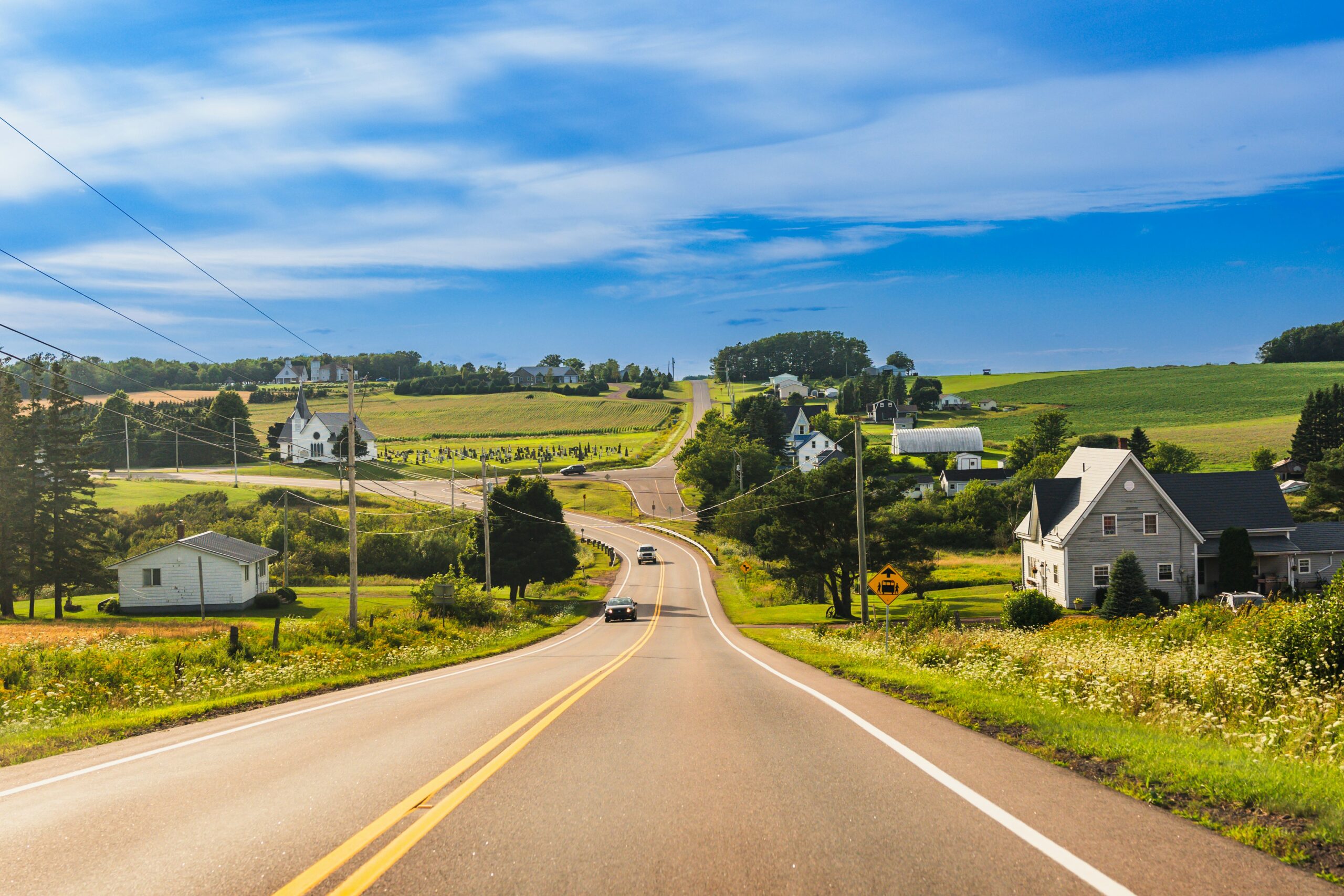
12 Cheapest States to Buy Land for Homesteading in 2026 (Build-Ready Picks): How to Buy Land in the US in 2026 (Without Becoming a Cautionary Tale):
Search “buy land in the US in 2026,” and you will land in one of two camps. Camp one talks about your future five acres the way a hedge fund analyst talks about a logistics asset: price per acre, absorption rates, days on market, and a “market to watch.” Camp two talks about it like an engagement announcement: golden light, big skies, the spirit of the Old West, occasionally a lighthouse photo standing in for a desert property for reasons no one has explained. Neither camp will warn you that your dream parcel might be landlocked, your well might run dry every August, or that the friendly seller offering “easy owner financing” might not actually own the land.
This guide is for the people Google is actually trying to help with that search: not institutional investors deciding between Dallas and Raleigh, and not someone drafting a memoir about wraparound porches. Real buyers, with a real budget, trying to figure out if 2026 is a smart year to do this — and how to do it without getting burned.
What people typing “buy land in the US in 2026” are really asking:
Strip away the keyword, and what is underneath it are five nervous, very reasonable questions.
- Is now actually a good time, or will I be the person who bought at the top?
- What does land really cost once survey, septic, power, and taxes get added — not just the listing price?
- How do I tell a real listing from a scam dressed up with stock photos?
- Can I finance this without an all-cash offer, or am I priced out entirely?
- Will I actually be able to live on this, or am I buying a spreadsheet line item?
A good guide answers all five. Most answer one and call it a day.
What is actually different about buying land in 2026:
Rates settled. They did not drop.
Mortgage rates have spent the better part of two years hovering in the mid-single digits instead of the historic lows people keep waiting for. That has pushed more buyers toward creative financing instead of sitting on the sidelines hoping for a repeat of 2021.
Off-grid stopped meaning “no plan.”
Solar and battery costs have come down enough that buying acreage without utility access is not the gamble it used to be. A lot of 2026 buyers are choosing remote parcels because the off-grid math actually works, not even though it does not.
Insurance got a seat at the table.
In wildfire and flood-prone regions, insurability has become a deal point instead of an afterthought. Buyers who skip checking coverage before closing are increasingly the ones who find out the hard way that “uninsurable” is a real category, not a worst-case hypothetical.
The scams scaled with the listings.
As more land sales move to online marketplaces, so have the scams — stolen listing photos, fabricated deeds, “sellers” who do not actually own the parcel. The fix is not paranoia; it is five minutes on the county GIS or assessor site before anyone wires anything.
Sellers are quietly becoming the bank.
Owner financing and land contracts have become a normal alternative to a bank mortgage for raw land, especially through larger land-sale companies. That opens the door for buyers who would otherwise be stuck, but it deserves the same scrutiny as any other loan, not less.
The two genres of land advice, and the truth in between:
One genre wants you to think about your land the way a REIT thinks about a warehouse: price per acre, absorption, “markets to watch.” Genuinely useful if you are allocating institutional capital. Less useful if you are trying to figure out where to put a chicken coop. The other genre wants you somewhere golden-lit and porch-swinged, heavy on the feeling, light on anything resembling a percolation test.
The honest answer lives in the middle: land is a financial decision and a place you might actually live, and you need to evaluate both, in that order, before you fall for a hillside you have not had surveyed.
Where people are actually buying land in 2026 (and what nobody mentions):
Forget the “markets to watch” built for institutional capital. Here is where buyers who are actually planning to live in the place are looking, plus the catch each state comes with.
| State | Why is it appealing | What nobody mentions |
| Tennessee | No state income tax, terrain ranging from mountains to rolling pasture | Popularity is pushing prices up fast near any town with a Trader Joe’s |
| Arkansas | Genuinely low price per acre, Ozark and Ouachita scenery | “Remote” can mean a 40-minute drive for groceries, not a quirky inconvenience |
| Texas | Huge variety of land and a culture that protects property rights | Property taxes are steep, even with no income tax, and zoning varies wildly by county |
| Idaho | Booming outdoor economy, strong hunting and fishing access | Prices have moved quickly in the last few years as word got out |
| Georgia | Mild climate, long growing season, timberland still affordable | Coastal-plain parcels can hide drainage and flood issues; a drive-by will not reveal |
Meanwhile, the “best places to buy land” lists built for investors keep including Las Vegas and New York City. That is not wrong, exactly; it is just answering a different question. If your land strategy involves air rights and a logistics corridor, great. If it involves a barn, you can skip those entries.
The due diligence checklist that keeps you off the local news
This is the part every romantic land article skips, because “verify legal access via the county recorder” does not photograph well next to a sunset.
- Zoning and permitted use — confirm what you are actually allowed to build, not what the listing implies
- Legal access — a recorded easement or road frontage, not a handshake about using the neighbor’s driveway
- Water — well feasibility, water rights, or confirmed utility access before assuming there is water at all
- Septic — a percolation test, since not every parcel can support one
- Flood and fire risk — pull the FEMA flood zone and get an insurance quote before closing, not after
- Mineral rights — confirm what is actually included in the sale
- Deed restrictions and HOA rules — read them before you buy, not after you have planned the barn
- Utility access — get a real cost estimate to bring in power if it is not already there
How to actually pay for land in 2026
You do not need to show up with a duffel bag of cash, though it would make for a better opening scene.
- Owner or seller financing and land contracts — common for raw land, but get the contract reviewed before signing
- USDA Rural Development and beginning farmer loan programs — worth checking even if you assume you will not qualify
- Credit unions and local banks that specialize in raw land or agricultural loans, since national banks often will not touch it
- Buying a smaller, cheaper parcel first to build equity before scaling up
- Treating any “rent-to-own” land offer with the same scrutiny as a financing contract, since this is a common spot for predatory terms
Red flags that mean “run,” not “run the comps”
- Price is dramatically below comparable listings nearby, with no clear explanation
- Pressure to wire funds quickly, especially before a survey or title work
- The deed does not match what the county recorder shows, or there is not one
- Listing language is “as-is, no survey, no recourse” with no room to negotiate
- The parcel does not show up under the seller’s name on the county GIS or assessor map
Frequently asked questions:
Is 2026 a good year to buy land in the US?
It depends more on the parcel than the calendar. Mortgage rates are not dropping fast, but raw land prices in most non-coastal markets have stayed far calmer than the headlines about housing. A parcel that checks out on access, water, and zoning matters more than the year on the calendar.
How much does land cost in the US in 2026?
It varies enormously by state, access, and utilities. A remote, unimproved acre in parts of Arkansas or Tennessee can cost a fraction of an acre near a growing metro. The listing price is also rarely the full cost once survey, septic, and power are added, so budget for those before comparing states.
Can I buy land in the US with no money down in 2026?
Sometimes, through owner financing or certain USDA rural programs, but no-money-down offers are also where predatory land contracts tend to hide. Treat any no-down offer with the same scrutiny you would give a mortgage, including a real contract review.
What is the cheapest state to buy land in 2026?
States like Arkansas, Tennessee, and parts of the rural South and Midwest consistently show some of the lowest prices per acre. Cheap land without road access, water, or buildable zoning usually is not actually cheap once those gaps get filled in.
Do I need a real estate agent to buy raw land?
It is not legally required, but an agent or attorney who specializes in land, not just houses, is worth it for verifying access, easements, and title before closing. General residential agents do not always know what to check on raw land.
If you made it this far, you are already ahead of most buyers — you are asking the boring questions before the exciting ones. For state-specific detail, see Rediscover Rural’s guides to buying land in Florida, Texas, Georgia, and Alabama, plus the full breakdown of financing through USDA programs.
Official Sources:
- rd.usda.gov/programs-services/farm-loan-programs/beginning-farmers-and-ranchers
- consumer.ftc.gov — land and real estate scam guidance
- msc.fema.gov — FEMA Flood Map Service Center, for flood-zone lookups
- nass.usda.gov — USDA land value reports, for price-context data.
Related Guides on Rediscover Rural
- How to Get Free Land in the US 2026 — 7 Real Programs (Article 1)
- USDA Grants for Homesteaders 2026 — 7 Programs You Can Apply for Today (Article 2)
- How to Start a Homestead With No Money in 2026 — 12 Steps (Article 4)
- How to Find the Perfect Homestead Land (Article 26)