Is It Legal to Collect Rainwater in Your State? — All 50 States (2026)
Is It Legal to Collect Rainwater in Your State? — All 50 States (2026)
| Legal All 50 States | 38 States Zero Restrictions | Colorado110 gallon cap | Utah2,500 gal + registration |
Here is a piece of information that surprises almost everyone who discovers it for the first time.
The water falling from the sky onto your roof — falling on YOUR property, through YOUR air — is technically regulated by your state government.
I know. It rains. It lands on your house. And in some states, collecting it in a barrel requires navigating a set of laws that date back to frontier cattle disputes from the 1800s. Welcome to American water law, which is wonderfully strange.
Here is the reassuring part: as of 2026, collecting rainwater is legal in all 50 states. Not sort of legal. Not technically legal. Actually, genuinely legal in every single state in the country. The old stories about states where collecting rain was a crime? Most of those laws have been repealed, relaxed, or were never as strict as the internet claimed.
That said — three states still have restrictions worth knowing about. This guide covers everything: which states are completely unrestricted, which have limits, what those limits actually are, and how to set up your first collection system on the right side of the law.
The Short Answer — All 50 States at a Glance –
| Rainwater harvesting laws by state |
- Completely unrestricted (38 states): No permit, no registration, no volume limit for residential rainwater collection. If it rains on your roof, you can catch it. Full stop.
- Encouraged with incentives (12 states): Legal and unrestricted, plus your state actively pays you to do it. Tax credits, rebates, and financial incentives are available. These include Arizona, California, Texas, Virginia, Rhode Island, Oregon, and Florida.
- Minor restrictions (3 states): Colorado, Utah, and Nevada maintain volume limits on residential collection. None of them banned it. They just set caps on how much you can store without a permit.
| There is no state in America where putting a rain barrel under your downspout is illegal in 2026. Zero. None. The fear is understandable, but the legal reality is far more permissive than most homesteaders realise. |
Why Was Rainwater Harvesting Ever Restricted? — The Actual History
The answer is something called prior appropriation — one of the oldest and most counterintuitive doctrines in American water law.
In the American West during the 1800s, water was scarce and fights over it were genuinely violent. States solved this by creating a system where the first person to use a water source got legal rights to continue using it — the “first in time, first in right” doctrine. The argument that led some states to restrict rainwater collection ran like this: if rainwater lands on your property and you collect it, it cannot flow downstream into a river where someone downstream has already established a water right.
The counterargument, which science and updated legislation have now largely won: residential rainwater collection is so small in scale compared to total watershed flows that it has essentially zero measurable impact on downstream water rights. One homesteader’s rain barrel does not deprive anyone of anything.
| The Rainwater Capture Act of 2012 (California AB 1750) was a landmark moment — explicitly legalising residential collection and removing the ambiguity that had previously made homeowners hesitant. Colorado followed with HB 16-1005 in 2016. The overall direction of US water law has been toward expanding collection rights, not restricting them. |
States With Restrictions — The Three to Know
Colorado — The Most Restrictive State
| Colorado allows residential collection up to 110 gallons (two standard 55-gallon rain barrels) from rooftop surfaces for outdoor non-potable use. No permit required within this limit. This was significantly liberalised under HB 16-1005 in 2016 — before which residential collection was effectively banned. |
- Maximum 110 gallons residential collection (two standard rain barrels)
- Collection from rooftop surfaces only
- Water must be used on the same property where collected
- Outdoor non-potable use only — garden irrigation, lawn watering, vehicle washing
- No permit required for systems within the 110-gallon limit.
For federal-level guidance on rainwater collection systems, the EPA rainwater harvesting policy provides technical guidance on system design, water quality considerations, and best practices for residential and commercial installations across the United States.
Utah — More Generous Than Most People Think
Utah allows up to 2,500 gallons of rainwater storage without any volume restriction. Systems above 100 gallons must be registered with the Utah Division of Water Resources — registration is free and straightforward. For most homesteaders, 2,500 gallons is far more storage than a first or even second system would require.
Nevada — County-Level Permit Requirements
Nevada requires a permit for rainwater harvesting systems in most counties. The permit process is generally straightforward and low-cost, but requirements vary by county. Check with your county water authority before installation.
States That Encourage Collection — And Pay You For It
- Arizona — State income tax credit for rainwater harvesting equipment. No volume restrictions. Actively encouraged as part of state water conservation strategy.
- California — No state-level restrictions. SB-558 (2018) provides property tax exemption for new residential systems. County rebates available in Los Angeles, San Diego, Santa Clara, and many other counties.
- Texas — SB 769 (2011) prevents HOAs from prohibiting rainwater collection systems. New state buildings legally required to incorporate harvesting. No volume limits for residential use.
- Virginia — Tax deduction available for rainwater harvesting equipment. No volume restrictions. Actively encouraged as a stormwater management tool.
- Rhode Island — Financial incentives available for residential rainwater collection. No restrictions on residential collection.
- Oregon — Local water districts offer rebates for system installation. Standard rain barrel systems are unrestricted. Permit required for large cisterns above 1,000 gallons in some counties.
- Florida — No state restrictions. County-level rebates available in Tampa Bay and several other counties.
Complete State-by-State Reference — All 50 States
Restricted states are highlighted in red. Cells showing “Legal + Incentives” indicate states with financial programmes. This table was updated June 2026.
For a comprehensive database of current state-level water collection legislation, the National Conference of State Legislatures maintains an updated resource covering rainwater harvesting laws, regulations, and policy developments across all 50 states.
| State | Status | Volume Limit | Notes |
| Alabama | Legal | None | No state restrictions |
| Alaska | Legal | None | No state restrictions |
| Arizona | Legal + Incentives | None | State income tax credit available |
| Arkansas | Legal | None | Residential collection unrestricted |
| California | Legal + Incentives | None | Property tax exemption (SB-558 2018) |
| Colorado | RESTRICTED | 110 gallons | Two 55-gal barrels max · outdoor use only |
| Connecticut | Legal | None | No state restrictions |
| Delaware | Legal | None | No state restrictions |
| Florida | Legal + Rebates | None | County rebates available (Tampa Bay etc.) |
| Georgia | Legal | None | Actively encouraged |
| Hawaii | Legal | None | No state restrictions |
| Idaho | Legal | None | No state restrictions |
| Illinois | Legal | None | No state restrictions |
| Indiana | Legal | None | No state restrictions |
| Iowa | Legal | None | No state restrictions |
| Kansas | Legal | None | No state restrictions |
| Kentucky | Legal | None | No state restrictions |
| Louisiana | Legal | None | No state restrictions |
| Maine | Legal | None | No state restrictions |
| Maryland | Legal | None | No state restrictions |
| Massachusetts | Legal | None | No state restrictions |
| Michigan | Legal | None | No state restrictions |
| Minnesota | Legal | None | No state restrictions |
| Mississippi | Legal | None | No state restrictions |
| Missouri | Legal | None | No state restrictions |
| Montana | Legal | None | No state restrictions |
| Nebraska | Legal | None | No state restrictions |
| Nevada | Permit Required | Varies by county | Check local county requirements |
| New Hampshire | Legal | None | No state restrictions |
| New Jersey | Legal | None | No state restrictions |
| New Mexico | Legal | None | No state restrictions |
| New York | Legal | None | No state restrictions |
| North Carolina | Legal | None | No state restrictions |
| North Dakota | Legal | None | No state restrictions |
| Ohio | Legal | None | No state restrictions |
| Oklahoma | Legal | None | No state restrictions |
| Oregon | Legal* | None residential | Permit for large cisterns 1,000+ gal |
| Pennsylvania | Legal | None | No state restrictions |
| Rhode Island | Legal + Incentives | None | Financial incentives available |
| South Carolina | Legal | None | No state restrictions |
| South Dakota | Legal | None | No state restrictions |
| Tennessee | Legal | None | SB 2417/HB 1850 supports collection |
| Texas | Legal + Incentives | None | HOA cannot prohibit (SB 769 2011) |
| Utah | Restricted* | 2,500 gallons | Free registration required above 100 gal |
| Vermont | Legal | None | No state restrictions |
| Virginia | Legal + Incentives | None | Tax deduction for equipment |
| Washington | Legal* | None residential | Permit for large cisterns in some counties |
| West Virginia | Legal | None | No state restrictions |
| Wisconsin | Legal | None | No state restrictions |
| Wyoming | Legal | None | No state restrictions |
How to Set Up Your First Rainwater Collection System
Now that you know it is legal where you live, here is how to actually do it.
System Type 1 — The Basic Rain Barrel (Best for Beginners)
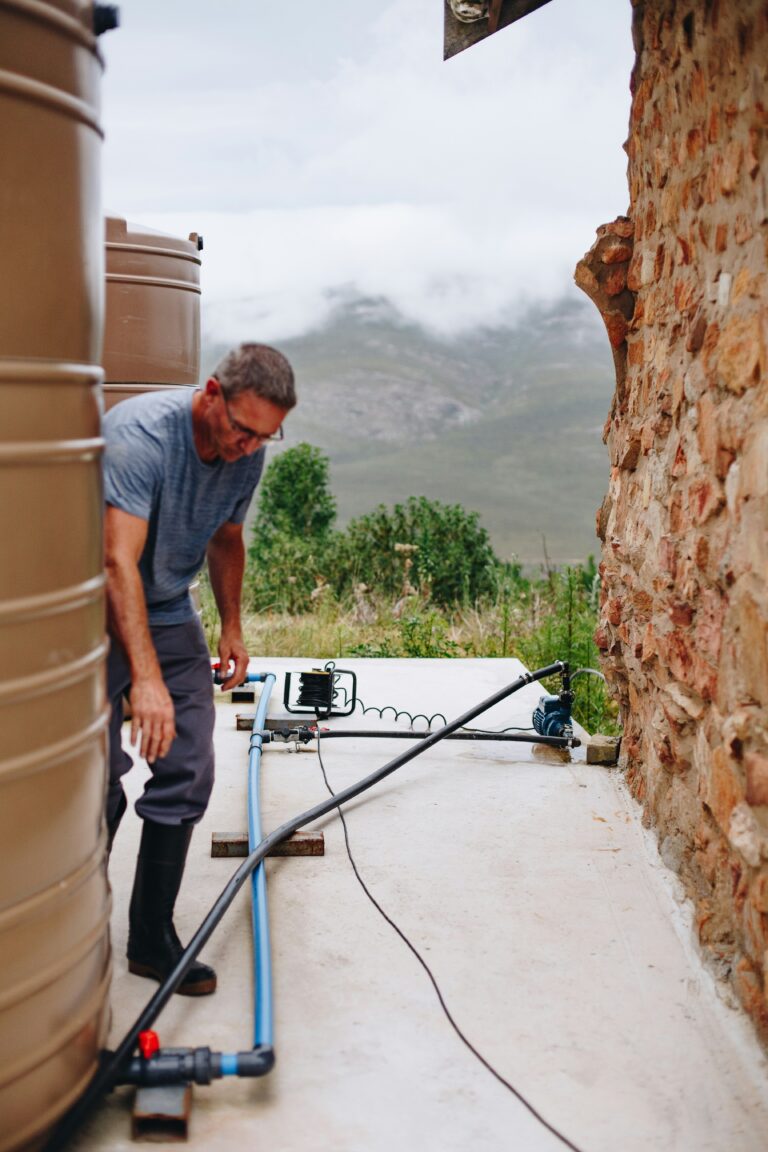
A single rain barrel connected to one downspout is the starting point. It is inexpensive, requires no tools beyond a drill, and can be installed in an afternoon.
- A 50 to 55-gallon food-grade rain barrel with an overflow outlet — $30 to $80 on Amazon
- A downspout diverter kit — $15 to $25
- A garden hose fitting at the base — usually included with the barrel
- A mesh screen cover to prevent mosquito breeding — critical in warm climates
| Mosquito prevention is not optional. Rain barrels that are not covered become mosquito breeding grounds within days in warm weather. Every reputable rain barrel includes a screened top. This is also a legal requirement in many countries for health reasons. |
System Type 2 — The Linked Barrel System
Two to four barrels connected in series dramatically increase your storage without additional downspout connections. A linked 220-gallon system provides meaningful irrigation capacity for most garden sizes and costs under $300 in materials. This is the maximum storage permitted in Colorado. In unrestricted states, you can expand to as many linked barrels as your space allows.
System Type 3 — The Cistern System
For homesteaders wanting serious water independence, underground or above-ground cisterns store 500 to 5,000+ gallons from multiple collection points. Check your state and county requirements before installing any cistern above approximately 500 gallons. Most states require no permits for residential cisterns at this scale, but Oregon, Washington, and Nevada have notification or permit requirements for larger systems.
Calculate Your Collection Potential
A 1,000-square-foot roof area collects approximately 600 gallons of water per inch of rainfall (at 90% runoff efficiency). If your area receives 40 inches of rainfall annually, that roof section could theoretically capture 24,000 gallons per year. Most homesteaders capture 15 to 30% of their theoretical maximum with standard rain barrel systems.
Frequently Asked Questions:
Is it illegal to collect rainwater?
No. As of 2026, rainwater collection is legal in all 50 US states. Three states — Colorado, Utah, and Nevada — have restrictions on volume or permit requirements, but none ban the practice. In 38 states, there are zero restrictions on residential collection whatsoever.
Which state has the strictest rainwater laws?
Colorado is the most restrictive, capping residential collection at 110 gallons (two standard rain barrels) from rooftop surfaces for outdoor non-potable use. This is significantly more permissive than Colorado’s pre-2016 rules, which effectively banned residential collection entirely.
For federal-level guidance on rainwater collection systems, the EPA rainwater harvesting policy provides technical guidance on system design, water quality considerations, and best practices for residential and commercial installations across the United States.
Is it illegal to collect rainwater in California?
No. California actively encourages rainwater collection. SB-558 (2018) provides a property tax exemption for new residential systems. There are no volume limits for residential use. County rebates available in many areas.
Is it illegal to collect rainwater in Texas?
No. Texas is one of the most permissive states. SB 769 (2011) prevents HOAs from prohibiting collection systems. New state buildings are legally required to incorporate rainwater harvesting. No volume limits for residential use.
Is it illegal to collect rainwater in Colorado?
Not exactly. Colorado allows residential collection up to 110 gallons (two 55-gallon barrels) from rooftop surfaces for outdoor non-potable use on the same property. No permit required within this limit. Significantly liberalised under HB 16-1005 in 2016.
Do I need a permit for a rain barrel?
In 48 US states, no permit is required for standard residential rain barrel systems. Utah requires free registration for systems above 100 gallons. Nevada requires county-level permits in most areas. Oregon and Washington require permits only for large cistern systems typically above 1,000 gallons.
Can I use collected rainwater for drinking?
Rainwater collected from rooftops should be treated and tested before any potable use — it contains potential contaminants including bacteria, bird droppings, and atmospheric pollutants. For non-potable uses — irrigation, livestock watering, toilet flushing — no treatment is required in most jurisdictions.
Why is collecting rainwater regulated at all?
The regulation comes from prior appropriation water law dating to the 1800s in western states. The original concern was that collecting rainwater would reduce downstream water flows and harm those with established water rights. Modern science has largely disproven this for small residential systems, and most states have responded by removing or significantly relaxing restrictions.
What This Means for Your Homestead
Rainwater harvesting is one of the most practical and cost-effective investments a homesteader can make in water independence. Even a basic two-barrel system at your primary downspout provides meaningful irrigation capacity, reduces runoff that can cause erosion, and gives you a backup water supply during pump failures or drought restrictions.
For homesteaders in states with incentives — particularly Arizona, California, Texas, and Virginia — the financial case is even stronger. A system that pays for itself through tax credits and lower water bills while providing increased self-sufficiency is a straightforward investment.
If you are planning a more comprehensive water system, see our guide to USDA grants for homesteaders — the USDA EQIP programme covers water storage and conservation infrastructure, covering up to 90% of project costs for beginning farmers.
If you are planning a larger rainwater collection system as part of your homestead infrastructure, the USDA rural water programmes offer funding for water storage and conservation infrastructure — covering significant portions of project costs for rural homesteaders and beginning farmers.
| The water falling on your roof is yours. In 2026, the law in every single US state agrees. |
Related Guides on Rediscover Rural
- Best States for Homesteading in 2026 — Ranked by Price, Laws & Land (Article 5)
- USDA Grants for Homesteaders 2026 — 7 Programs You Can Apply for Today (Article 2)
- Off-Grid Solar for Beginners in 2026 — How to Power Your Homestead (Article 7)
- Homesteading for Beginners in 2026 — 10 Skills Every New Homesteader Must Learn First (Article 6)
- How to Start a Homestead With No Money in 2026 — 12 Steps (Article 4)
Official Sources
rd.usda.gov — USDA rural water programmes
epa.gov/waterreuse — EPA rainwater harvesting policy
ncsl.org — National Conference of State Legislatures (state law database)