15 Best Vegetables to Grow for Self-Sufficiency in 2026 — Ranked by Calories & Storage
15 Best Vegetables to Grow for Self-Sufficiency in 2026 — Ranked by Calories & Storage
Here is a confession from someone who learned this the hard way.
I spent my first homestead season growing the most beautiful garden of my life. Rainbow chard. Heirloom tomatoes. Purple basil. Three varieties of lettuce. Edible flowers. It looked exactly like the photos on Pinterest and produced enough food to make roughly fourteen salads.
Fourteen. Salads.
Meanwhile my family needed approximately 730 dinners that year. The maths were not working in my favour.
The problem was not my gardening. The problem was my selection. I had planted what looked pretty without ever asking the most important question a self-sufficiency gardener needs to ask: which vegetables will actually keep my family fed?
The vegetables that build genuine food security are the ones that produce the most calories per square foot, store the longest without refrigeration, and grow reliably enough to count on year after year. That is what this guide is about.
| Fifteen vegetables ranked not by how impressive they sound at dinner parties, but by how well they will actually feed you when it matters. |
How These 15 Vegetables Were Ranked
- Calorie density per square foot — The most important metric. A garden producing calorie-dense staple crops is a food system. One hobby is producing beautiful low-calorie vegetables.
- Storage life without refrigeration — A vegetable storing for six months feeds your family through winter. One lasting three days contributes three days of food security.
- Ease of growing for beginners — Every vegetable on this list is reliably growable by a beginner following basic guidance.
- Kitchen versatility — A vegetable used twenty different ways provides twenty times more food security than one with a single use.
How Much Do You Actually Need to Grow?
Most gardening guides skip this step. Before deciding what to grow, decide how much you need to grow.
| Goal | Calories/Year | Potato Equivalent | Garden Size Needed |
| 10% self-sufficient | 73,000 cal | 73 lbs of potatoes | ~200 sq ft |
| 25% self-sufficient | 182,500 cal | 182 lbs of potatoes | ~500 sq ft |
| 50% self-sufficient | 365,000 cal | 365 lbs of potatoes | ~1,000 sq ft |
| 100% self-sufficient | 730,000 cal | 730 lbs of potatoes | ~2,000+ sq ft |
| A realistic first-year goal is 10 to 25% of calorie needs from your garden — achievable on 200 to 500 square feet if you choose the right crops. Which is exactly what this list helps you do. |
| Category 1: The Calorie Powerhouses. Plant these first — they are the foundation of everything |
These four vegetables produce more calories per square foot than almost anything else you can grow. For genuine self-sufficiency, these are not optional.
| #1 of 15Potatoes — The True Staple77 kcal/100g · 4–6 months storage · Very Easy |
| 77 kcalCalories/100g | 4–6 months Storage Life | 15–20 lbsYield/10 sq ft | Very EasyDifficulty |
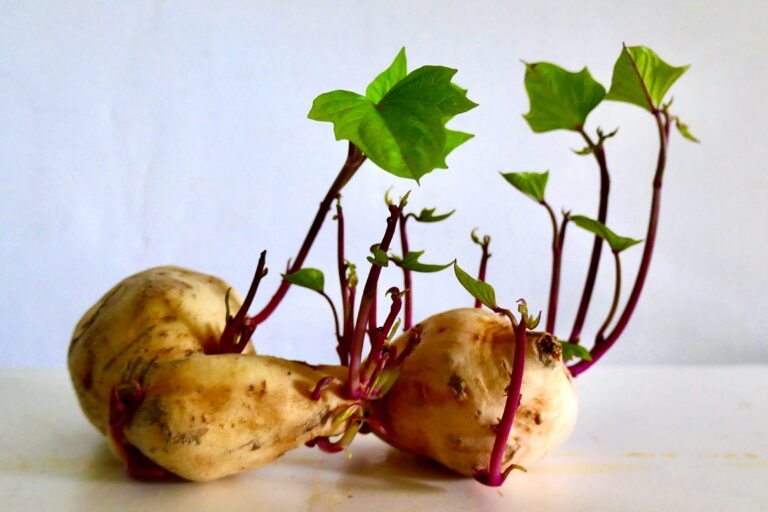
Potatoes produce more edible calories per square foot than any other common vegetable. They grow in almost every US climate. They start from kitchen scraps — any potato with sprouts is a seed potato. They store for months in a cool, dark place without refrigeration. Versatile in a way that prevents the food boredom that defeats many self-sufficiency attempts.
- Best varieties: Yukon Gold (excellent flavour), Kennebec (outstanding storage), Red Pontiac (disease resistant)
- Plant in spring after the last frost. Hill soil around stems as they grow.
- Harvest when tops die back. Cure for two weeks, warm, then store cool and dark.
| #2 of 15Sweet Potatoes — The Calorie King86 kcal/100g · 3–5 months storage · Easy (zones 5+) |
| 86 kcalCalories/100g | 3–5 months Storage Life | 10–15 lbsYield/10 sq ft | Easy (zone 5+)Difficulty |
Higher in calories per pound than regular potatoes. More nutritious — significant vitamins A, C, and B6. Drought-tolerant once established. Grow from slips that established growers give away freely every spring. For a complete guide, see our sweet potato growing guide.
| #3 of 15Winter Squash — The Storage Miracle 34–45 kcal/100g · 3–6 months at room temp · Very Easy |
| 34–45 kcalCalories/100g | 3–6 months room tempStorage Life | 8–15 lbsYield/10 sq ft | Very EasyDifficulty |
The only vegetable that stores at room temperature for months with zero processing. No canning. No freezing. Pull from the garden, cure for two weeks warm, set on your shelf. Done. Butternut stores up to 6 months. Hubbard has the highest calorie density. Two or three plants produce more food than most beginners expect.
| #4 of 15Dry Beans — Protein in a Tiny Package 329 kcal/100g dried · 12+ months · Easy |
| 329 kcal (dried)Calories/100g | 12+ months Storage Life | 0.5–1 lb driedYield/10 sq ft | EasyDifficulty |
The most calorie-dense vegetable you can grow and store. A single pound of dried beans contains 1,500 calories. They also fix nitrogen into the soil — improving your garden while they grow. Let pods mature completely on the plant until dry and papery. Shell, dry two weeks indoors, store in sealed jars.
| Category 2: The Nutrition Powerhouses: Vitamins and minerals that make staple crops safe to live on |
These vegetables provide the nutrients that prevent deficiency diseases when living primarily on calorie-dense staples. A self-sufficient diet without these is a diet heading for trouble.
| #5 of 15Kale — The Winter Green That Will Not Quit35 kcal/100g · Months when dehydrated · Very Easy |
In zones 6 and warmer, kale can be harvested almost year-round. It is one of the few vegetables that grows through winter and actually improves in flavour after a frost. Keeps feeding you when the garden is otherwise bare — genuinely critical for a self-sufficient food system. Dehydrates exceptionally well, preserving months of nutritional value in a fraction of the space.
| #6 of 15:Spinach — Fast, Nutritious, Cold Hardy23 kcal/100g · Freezes beautifully · Easy |
Fills the spring and autumn gaps when other vegetables are not producing. Plant as soon as the ground can be worked in spring. Plant again in late summer for an autumn harvest. Freezes easily — blanch briefly, squeeze dry, freeze in portions. Provides vitamins through the months when fresh greens are unavailable.
| #7 of 15Garlic — Small Space, Enormous Value149 kcal/100g · 6–9 months · Very Easy |
One bulb planted in autumn produces a full head the following summer. Ten square feet of garlic provides a full year of cooking, with surplus to replant. Stores hanging in a dry space for 6 to 9 months without any processing. Plant in October. Harvest in July when the tops fall over. Cure 3 to 4 weeks. Braid or hang. Done.
| #8 of 15Cabbage — The Fermentation Partner25 kcal/100g · Months fresh or longer fermented · Easy |
Belongs in every self-sufficient garden because of what you can do with it after the fresh eating season ends. A head of cabbage fermented into sauerkraut lasts months and provides vitamin C, scarce in a winter diet of root vegetables and dried beans. For a complete guide to fermentation, see our food preservation guide.
| #9 of 15Carrots — The Root That Stores Itself41 kcal/100g · 4–6 months in damp sand or ground · Easy |
In many climates, you can leave carrots in the ground through winter and harvest as needed. Cold temperatures actually increase their sugar content. Store packed in barely damp sand for 4 to 6 months, where winters are harder. Requires deep, loose soil — use raised beds if your native soil is heavy clay.
| #10 of 15Onions — The Flavour Backbone40 kcal/100g · 6–8 months when cured · Easy from sets |
A self-sufficient kitchen without onions is a miserable place. Every staple crop on this list tastes dramatically better with onions. They make everything else worth eating. Cure for three weeks after harvest. Hang in a net bag or braid for six to eight months without any processing.
| Category 3: The Storage Crops for Winter Feed you through the months when nothing is growing |
| #11 of 15Beets — The Double-Purpose Root43 kcal/100g · 3–5 months in damp sand · Easy |
Two crops from one plant. Roots store for months like carrots. Greens eat like spinach and can be harvested throughout the growing season. One packet of beet seeds provides double the food value of almost any other. Beets also pickle beautifully in simple vinegar brine — extending storage months further.
| #12 of 15Parsnips — The Forgotten Winter Staple75 kcal/100g · Months in ground or damp sand · Easy |
The most overlooked vegetable on this list. Exceptional calorie density for a root vegetable. Like carrots, they improve in sweetness after frost, making winter-harvested parsnips one of the most pleasant eating experiences a stored-crop garden produces. Seeds germinate slowly over two to three weeks — plant early and be patient.
| #13 of 15Turnips — The Fastest Storage Crop28 kcal/100g · 3–5 months · Very Easy |
Seed to harvest in 45 to 60 days — faster than almost any storage crop. Plant late summer for an autumn harvest that goes directly into storage. Plant again in early spring for a crop ready before any summer vegetable gets going. Greens are fully edible — another double-purpose crop.
| #14 of 15Leeks — The Cold Hardy Allium61 kcal/100g · Stands in ground through winter · Easy |
Solves a specific self-sufficiency problem: the gap between when your stored onions run out in late winter and when your new onion crop is ready in summer. Leeks stand in the ground through the harshest winters available for harvest whenever needed. Start from seed in February. A row of leeks standing in your January garden is one of the most valuable things a self-sufficient gardener can have.
| Category 4: The Herbs and Multipliers. Multiply the value of everything else in your garden |
| #15 of 15Herbs — The Silent Force MultipliersMinimal space · Months dried · Very Easy |
No calorie count here. But herbs belong because they determine whether you will still want to eat your stored food in February. After two months of eating potatoes, beans, and squash every day, the right herbs are the difference between a satisfying meal and one you endure.
The Five Herbs Every Self-Sufficient Garden Must Include:
- Rosemary — perennial in zones 7+, essential for roasted root vegetables
- Thyme — a nearly indestructible perennial, preserves well, medicinal properties
- Oregano — aggressive grower, air-dries in days, doubles as a medicinal herb
- Parsley — biennial, provides fresh flavour and vitamin C through cool seasons
- Sage — perennial, excellent with dried beans and squash
| All five herbs dry easily by hanging in bunches for two weeks. Your herb harvest takes about two hours to process and lasts the full twelve months. |
The Self-Sufficient Garden Layout — 500 Square Foot Plan:
This is the section the audience searches for, and no competitor provides. Here is a practical 500 sq ft layout producing approximately 20 to 25% of one adult’s annual calorie needs.
| Zone | Content | Size | Key Crops |
| Zone 1 — Perennials | Permanent beds — plant once, harvest forever | 4×8 ft | Herbs, asparagus, rhubarb |
| Zone 2 — Root Crops | Rotate annually | Two 4×8 ft | Potatoes one year, carrots/parsnips/turnips next |
| Zone 3 — Brassicas | Spring and late summer planting | 4×8 ft | Kale, cabbage, turnip greens |
| Zone 4 — Legumes | High trellis along the north edge | 4×20 ft | Dry beans — highest calorie per row foot |
| Zone 5 — Alliums | Garlic in October, leeks in winter | 4×8 ft | Garlic, leeks, onion sets |
| Zone 6 — Sprawlers | Most space, ground cover | 4×20 ft | Squash, sweet potatoes |
| Zone 7 — Cool Greens | Spring and autumn harvest | 4×8 ft | Spinach, beets |
Calorie Harvest from This Garden:
| Crop | Space | Yield | Calories |
| Potatoes | 32 sq ft | 25 lbs | 8,500 |
| Sweet potatoes | 40 sq ft | 20 lbs | 8,600 |
| Dry beans | 60 sq ft | 5 lbs dried | 7,600 |
| Winter squash | 60 sq ft | 30 lbs | 11,000 |
| Carrots | 16 sq ft | 10 lbs | 4,100 |
| Parsnips | 16 sq ft | 8 lbs | 6,000 |
| Cabbage | 16 sq ft | 15 lbs | 3,750 |
| Onions & Garlic | 16 sq ft | 6 lbs | 3,600 |
| Kale & Spinach | 16 sq ft | 10 lbs | 2,300 |
| Total | ~272 sq ft | ~129 lbs | ~55,500 cal |
55,500 calories from 272 square feet — approximately 7.5% of one adult’s annual calorie needs. With herbs, leeks, beets, and turnips filling the remaining space, you approach 10 to 12%. Genuine 50% food self-sufficiency requires a much larger growing area, but 10 to 25% on a standard suburban plot represents real food security that no supply chain disruption can take from you.
Cool Season vs Warm Season — Year-Round Production:
| Season | Vegetables | When to Plant | Frost Tolerance |
| Cool Season | Potatoes, kale, spinach, cabbage, carrots, parsnips, turnips, beets, leeks, onions, garlic | Early spring and late summer | Tolerates hard frost — most improve after it |
| Warm Season | Sweet potatoes, dry beans, winter squash | After the last frost when the soil is above 60°F | Damaged by frost — wait until safe |
The goal is staggered plantings so something is always growing. Cool-season spring crops make way for warm-season plants in early summer. Late-summer cool-season planting fills the beds as warm-season crops finish. For fruit crops to complement this plan, see our guide to the best fruit trees for your homestead — apples, pears, and plums provide storage fruits that pair perfectly with these vegetables.
The Books Worth Owning
The Self-Sufficient Life and How to Live It by John Seymour covers everything in this article and much more — available on Amazon for $18 to $25. The second book worth having is The Resilient Gardener by Carol Deppe — her five crops to survive and thrive framework (potatoes, corn, beans, squash, eggs) aligns closely with the calorie-first thinking throughout this article.
Frequently Asked Questions
What is the single most important vegetable for self-sufficiency?
Potatoes. No other commonly grown vegetable produces more calories per square foot, grows in more US climates, stores as long without processing, or provides more culinary versatility. If you can only grow one thing for self-sufficiency, grow potatoes.
What vegetables grow in cool seasons for self-sufficiency?
Potatoes, kale, spinach, cabbage, carrots, parsnips, turnips, beets, leeks, garlic, and onions all grow in cool conditions — most tolerate hard frost, and several improve in flavour after cold exposure. These form the backbone of a year-round self-sufficient garden.
Which vegetables store the longest without refrigeration?
Ranked by storage life: dry beans (12+ months), garlic and onions (6 to 9 months), winter squash (5 to 6 months), potatoes (4 to 6 months), carrots and parsnips in damp sand (4 to 6 months), sweet potatoes (3 to 5 months), cabbage as sauerkraut (6+ months). Together, they provide a complete winter pantry from one growing season.
How much land do I need to be 100% self-sufficient in vegetables?
For one adult eating 2,000 calories per day from garden vegetables, you need 2,000 to 3,000 square feet of intensively managed growing space focused on calorie-dense crops. Most homesteaders aim for 50% vegetable self-sufficiency as a realistic long-term goal.
Should I grow fruit as well as vegetables for self-sufficiency?
Yes — fruit trees are the highest-value long-term addition to any homestead garden. A single apple tree produces 200 to 400 lbs of fruit per year from a tiny footprint once established. See our guide to the best fruit trees for your homestead for which varieties to plant first in your climate.
Related Guides on Rediscover Rural
- How to Preserve Food Without Refrigeration — 8 Proven Methods (Article 12)
- Best Fruit Trees for Your Homestead — What to Plant First (Article 30)
- How to Grow Sweet Potatoes — Complete Growing Guide (Article 19)
- Homesteading for Beginners in 2026 — 10 Skills Every New Homesteader Must Learn First (Article 6)
- How to Start a Homestead With No Money in 2026 (Article 4)
Official Sources
nal.usda.gov — USDA National Agricultural Library (free homesteading resources)
websoilsurvey.nrcs.usda.gov — USDA Web Soil Survey
planthardiness.ars.usda.gov — USDA Plant Hardiness Zone Map