Free Land Is Real — 7 US Programs Still Active in 2026
Over 19 US states still offer free land programs in 2026 or heavily subsidised land to people willing to settle, build, and stay. If you have been dreaming of owning your own piece of rural America but assumed it was financially out of reach, you are not alone — and you are not out of options.
In this guide, we break down exactly how to get free land in the US in 2026, including 7 real free land programs US residents can apply for today, the eligibility requirements for each, and a complete step-by-step process for applying. Whether you are looking for free homestead land, free residential lots, or simply the most affordable path to land ownership, this guide covers it all.
| Quick Fact: The original Homestead Act of 1862 distributed over 270 million acres — more than 10% of all US land — to private citizens. While the federal program ended in 1976, dozens of small towns and counties have revived the concept with their own modern free land programs that US residents can access today. |
What Is a Free Land Program?
Free land programs are government or municipal initiatives designed to attract new residents to rural areas that are losing population. Towns and counties offer free or deeply discounted land in exchange for a commitment to build on it, live there for a set period, or develop it agriculturally.
In 2026, free land is technically an incentive-based land grant. Towns provide the deed to a residential or commercial lot in exchange for your commitment to build a home and contribute to the local economy. These programs are completely legitimate, backed by local governments, and have helped thousands of American families access free homestead land they never thought they could afford.
The primary objectives of free land programs include attracting new residents, promoting economic development, revitalising rural areas, increasing local tax revenues, and fostering community growth.
7 Real Free Land Programs in the US (2026)
The following programs are active and accepting applications in 2026. Contact each directly to confirm current lot availability — programs run in funding cycles and lots can fill quickly.
| Program 1Beatrice, Nebraska — Homestead Act 2.0 |
Beatrice, Nebraska runs one of the most well-known free land programs in the country, appropriately called the Homestead Act of 2010 — a modern replacement for the original inoperative Homestead Act of 1862. Qualifying applicants receive free residential lots in exchange for agreeing to build a home within a set timeframe of typically 18 to 24 months.
Beatrice is located only 40 miles south of Lincoln, Nebraska, with a population of over 12,000 people — making it one of the more accessible towns on this list with strong schools, full services, and good infrastructure.
Eligibility Requirements
- Must agree to build a permanent home on the lot as your primary residence
- Income and credit requirements vary by funding cycle
- Must begin the building process within the specified timeframe
- Construction must meet local building code minimum standards
How to Apply
Contact the Beatrice Economic Development office directly at cityofbeatrice.com. Ask specifically about the Homestead Act of 2010 lot availability and request the current application form.
| Program 2Mankato, Kansas — Free Building Lots (Johnson Addition) |
Mankato in Jewell County, Kansas, offers 26 free lots in the Johnson Addition on a beautiful horseshoe-shaped drive on the east side of the community. The lots average 18,000 square feet (just over 0.4 acres) and are close to a high school, hospital, and shopping centre — with all utilities at or near every lot. This is one of the best free land programs US residents can access in 2026.
Key Requirements
- Build a single-family home with a minimum of 3 bedrooms, 1,200 sq ft, and a 2-car garage
- Begin construction within 6 months of deed transfer
- Complete construction within 2 years
- Must establish primary residency — no investment or vacation properties
- Provide a construction loan pre-approval letter with your application
Contact
City of Mankato — 785-378-3141 — mankatoks.com/free-land — 215 N Commercial St, Mankato, KS 66956
| Program 3Marquette, Kansas — Free Lots in the Westridge Addition |
Marquette, Kansas, presents a unique opportunity for families looking to build a new home with free residential lots available in the Westridge Addition — a picturesque development on the town’s west side. Lots vary in size from 11,000 to 25,000 square feet and offer beautiful sunset views. Marquette also has an established community garden programme that new residents can participate in.
Key Requirements for free land in the USA 2026:
- Construction must be completed within 1 year of lot allocation
- Minimum 1,000 sq ft home required
- No mobile homes or manufactured homes on temporary foundations
- Must establish primary residency
| Program 4Curtis, Nebraska — Free Residential Lots |
Curtis, Nebraska offers free residential lots to individuals and families willing to relocate and build. The town supports agricultural education and rural living and provides access to town utilities including water, sewer, and electricity with the free lots.
- Build within 24 months and establish primary residency
- Access to full town utilities included
- Contact: Village of Curtis, Nebraska official website
| Program 5Marne, Iowa — Free Homestead Land for Families |
Marne, Iowa is a small town hoping to expand its population by offering free homestead land to new residents. Iowa’s residential growth has slowed significantly in its most rural counties, making this one of the more accessible free land programs in the Midwest.
- Must build at least a 1,200 sq ft house (no mobile homes)
- Construction must be completed within 18 months of claiming the land
- Must establish primary residency
- Contact: City of Marne, Iowa — Audubon County
| Program 6USDA Rural Development — Zero Down Land Financing |
While not technically free government land, the USDA Rural Development loan program offers zero down payment or extremely low down payment financing for rural land and home purchases. Combined with low interest rates, this effectively makes land accessible with almost no upfront cost — functioning as one of the most powerful free land programs US buyers can access nationwide.
- No down payment required for qualifying buyers
- Available nationwide in eligible rural areas
- No income maximum in most programs
- Below-market interest rates through the Farm Service Agency
Apply at: rd.usda.gov and fsa.usda.gov
| Program 7Alaska — Remote Land Sales & Permanent Fund Dividend |
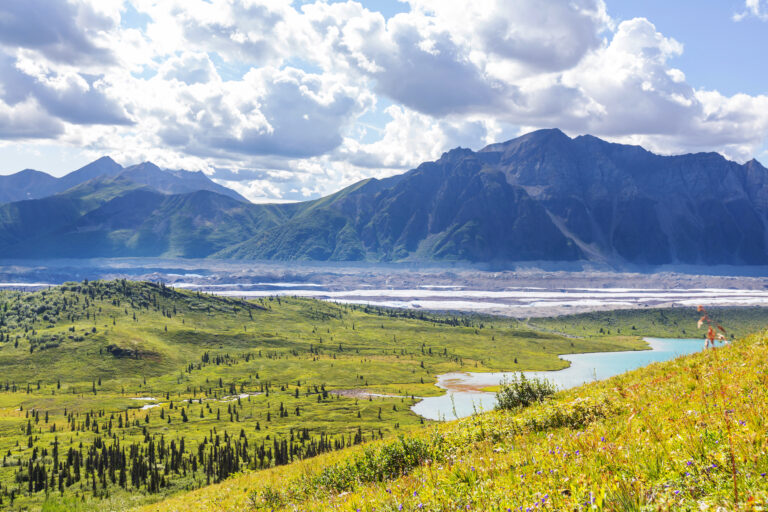
Alaska continues to offer state land sales at deeply discounted prices — often under $1,000 per acre for remote parcels — through the Alaska Department of Natural Resources. While the traditional Homestead Land Program officially ended in 1986, Alaska uniquely rewards residents with the Alaska Permanent Fund Dividend (PFD) — an annual cash payment to every qualifying resident. In 2025 the payout was $1,000 per eligible resident, meaning a family of four received $4,000 simply for living there.
The 2026 PFD application window runs January 1 to March 31, 2026.
- Remote land sales often under $1,000 per acre
- Annual cash dividend paid to all qualifying residents
- Best suited for experienced off-grid homesteaders
- Apply at: dnr.alaska.gov
States With the Best Free Land Opportunities in 2026
| State | Active Programs | Why It Stands Out | Best For |
| Kansas | Mankato, Marquette, Plainville, Lincoln | Most active free land state in the US — multiple towns with current programs | Families, remote workers, homesteaders |
| Nebraska | Beatrice, Curtis, Elwood | Most established programs — 10+ years of track record | First-time buyers, rural lifestyle seekers |
| Iowa | Marne and several counties | Slowest population growth = most motivated towns | Budget buyers wanting maximum acreage |
| Minnesota | Claremont workforce housing | Strong community support, close to Twin Cities | Working families with income requirements |
| Alaska | State land sales statewide | Lowest price per acre in the US + annual cash dividend | Off-grid homesteaders, adventure seekers |
| New York | Buffalo Urban Homestead Program | Free urban lots in a growing city — unique opportunity | Urban buyers, renovation enthusiasts |
The Hidden Costs of Free Land — What Programs Don’t Always Tell You
Free land is real — but “free” refers only to the cost of the land itself. Before applying for any free land program US residents should budget for these additional costs:
| Cost Item | Estimated Range | Notes |
| Home construction | $120,000 – $350,000 | Stick-built required in most programs — no mobile homes |
| Good faith deposit | $500 – $1,000 | Refunded after construction completion in most programs |
| Utility connection | $0 – $5,000 | Many lots have utilities “at the street” — you run lines to house |
| Building permits | $500 – $3,000 | Required before construction begins in all programs |
| Property taxes (annual) | $400 – $2,000/year | On the new structure — land is assessed separately |
| Moving and relocation | $1,500 – $8,000 | Varies enormously by distance and household size |
| Architectural/building plans | $1,500 – $5,000 | Required for application in most programs |
| Important: Construction costs in 2026 typically run $200,000 to $350,000 for a stick-built home meeting program requirements. Budget this before applying — most programs require a construction loan pre-approval letter confirming you can afford to build. |
Step-by-Step: How to Apply for Free Land
- Research your target state and town — Visit the official town or county website. Look for an Economic Development or Housing Department. Many programs publish their application requirements and available lots online.
- Contact the program directly — Call or email the contact listed. Programs often run in cycles with limited lots. Getting your name on a waiting list early is important.
- Get construction loan pre-approval — Most programs require a letter from a bank or lender confirming you can afford to build before they will accept your application.
- Prepare your home plans — You need a basic floor plan showing minimum square footage, bedroom count, and garage space to submit with your application.
- Submit your application — Follow the specific submission instructions. Some accept online applications, others require in-person or mailed submissions.
- City Council review — Many programs include a brief interview or review by the City Council to confirm you are a committed applicant.
- Deed transfer — Once approved the town transfers the deed to you. Your construction clock starts from this date.
- Begin building — You must begin construction within the required timeframe (typically 6 months) and complete within 1 to 2 years.
Is Free Land Really Free?
The land itself costs nothing. But “free” in this context means free of purchase price — not free of all financial commitment. Here is an honest comparison of free land versus buying a home in a metro area:
| Scenario | Upfront Cost | Ongoing Annual Cost | Total 5-Year Cost |
| Suburban home purchase (3bed) | $30,000 down + closing costs | $18,000 mortgage | $120,000+ |
| Free land + build in Kansas | $0 land + $150,000 build loan | $9,000 mortgage | $45,000+ |
| Free land + modular home | $0 land + $120,000 modular | $7,200 mortgage | $36,000+ |
Even accounting for all associated costs, free land with a build commitment saves most buyers $60,000 to $150,000 compared to purchasing an equivalent property in a US suburban market.
Important Warnings Before You Apply
| Warning: The federal government no longer distributes free government land for homesteading. The federal Homestead Act ended in 1976. Do not trust any website claiming to distribute free land on behalf of the federal government — these are scams. Legitimate free land programs are administered by individual towns and counties. |
- Livestock restrictions — Many free land towns do not permit chickens, goats, or other livestock within town limits. If raising animals is essential to your homestead plans, confirm this before applying.
- Residential zoning — Most free residential lots are zoned residential — not agricultural. Farming and commercial food production may be restricted.
- Minimum home size — All programs require a minimum home size (typically 1,000 to 1,300 sq ft). Tiny homes of 200 to 400 sq ft do not qualify.
- Stick-built only — Most programs require stick-built or modular homes. Mobile homes and manufactured homes on temporary foundations are generally not permitted.
- Primary residence required — You must live in the home as your primary residence. You cannot take free land for investment, rental, or vacation purposes.
Quick Comparison — All 7 Programs at a Glance
| Program | Location | Lots Available | Min Build | Build Deadline | Contact |
| Homestead Act 2.0 | Beatrice NE | Varies by cycle | Permanent home | 18–24 months | cityofbeatrice.com |
| Johnson Addition | Mankato KS | 26 lots | 3bed/1,200 sqft/2-car | 2 years | mankatoks.com/free-land |
| Westridge Addition | Marquette KS | Varies | 1,000 sqft min | 12 months | City of Marquette |
| Free Residential Lots | Curtis NE | Varies | Permanent home | 24 months | Village of Curtis |
| Homestead Land | Marne IA | Varies | 1,200 sqft min | 18 months | City of Marne |
| USDA Zero Down | Nationwide | Unlimited | Per USDA guidelines | Flexible | rd.usda.gov |
| State Land Sales | Alaska | Rolling | Varies by parcel | Flexible | dnr.alaska.gov |
Frequently Asked Questions
Can I apply for free land if I live in another state?
Yes. Most programs are open to applicants from anywhere in the US. You do not need to be a current resident of that state to apply.
Do I have to build immediately?
No. Most programs give you 18 to 36 months to complete your build. However, you must begin the process and show progress.
What if there are no lots available right now?
Contact the program office and ask to be added to their waiting list. New lots become available regularly as programs are funded in cycles.
Final Thoughts
Free land in the US is real, and in 2026 there are more opportunities than most people realise. These free land programs US residents can access today offer a genuine path to land ownership that bypasses the enormous financial barrier of purchasing land at market rates.
The key is acting early and acting prepared. Programs are competitive, lots are limited, and the towns offering this land want committed, genuine community members — not speculative applicants. If you approach the process with honesty, financial preparation, and genuine enthusiasm for the community, your chances of approval are strong.
Start by contacting two or three of the programs listed above this week. Request current lot availability, ask about the application timeline, and get your construction loan pre-approval process started. The land is out there — and in 2026 it is waiting for the right person to claim it.
Related Guides on Rediscover Rural
- USDA Grants for Homesteaders 2026 — Complete Guide to Free Funding
- Best States for Homesteading in 2026 — Land, Laws & Lifestyle Compared
- How to Start a Homestead With No Money — The Complete Beginner’s Guide
- Homesteading for Beginners — The Complete Step-by-Step Guide (2026)
- Mankato Kansas Free Land Program 2026 — How to Apply Step by Step
Sources & Official Program Links
mankatoks.com/free-land — Mankato Kansas Free Lots (official)
rd.usda.gov — USDA Rural Development (official)
fsa.usda.gov — USDA Farm Service Agency (official)
dnr.alaska.gov — Alaska Dept of Natural Resources (official)
cityofbeatrice.com — Beatrice, Nebraska Free Land Program (official)