How to Raise Goats for Beginners in 2026 — 12 Essential Things to Know Before You Start
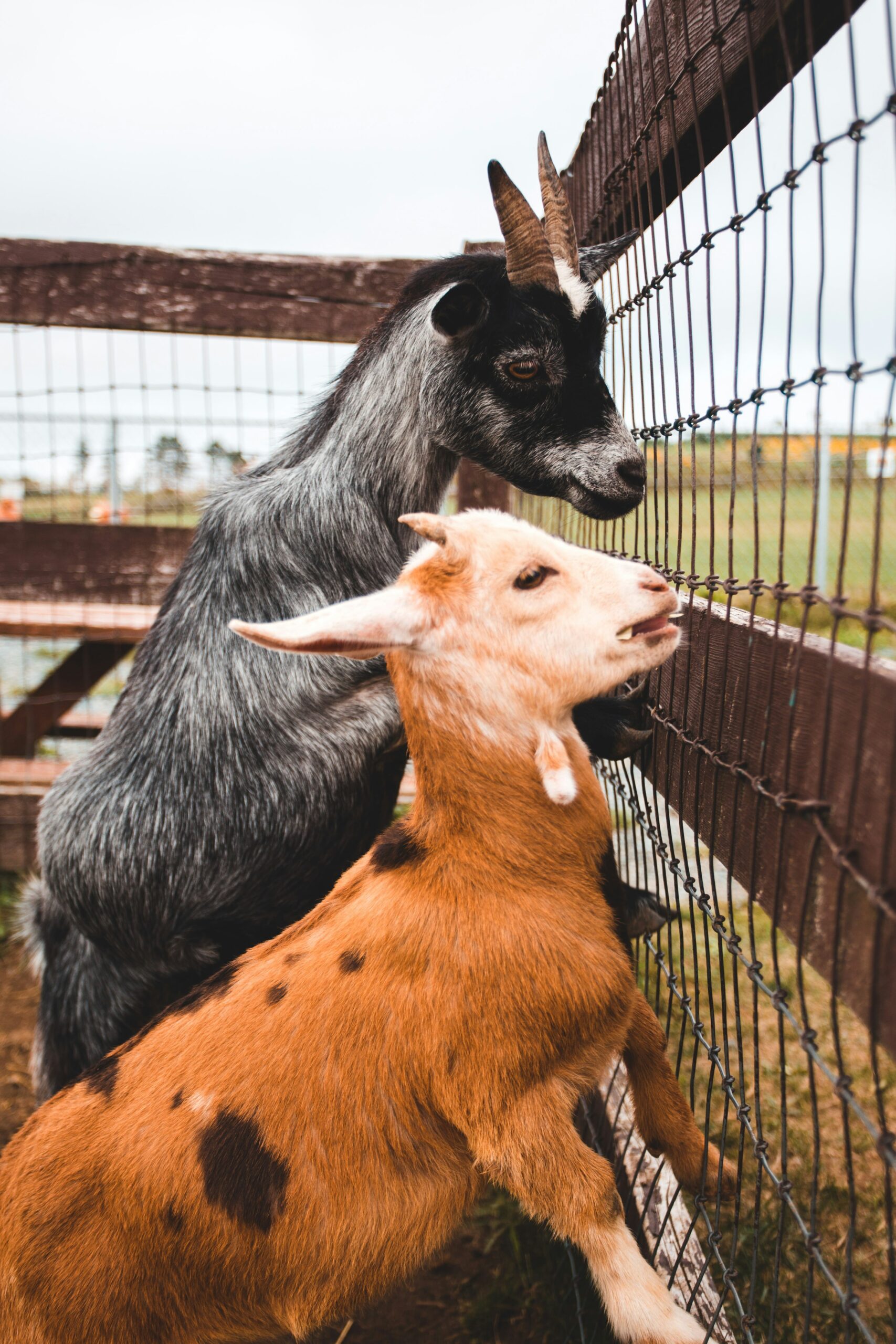
How to Raise Goats for Beginners in 2026 — 12 Essential Things to Know Before You Start
Let me tell you something about goats that no beginner’s guide ever leads with.
They will absolutely destroy your fence.
Not because they are mean. Not because they are poorly trained. Because they are goats. And fence-testing is simply what goats do the way dogs fetch, and cats knock things off tables. The day your goats discover a weak spot in your fencing — and they will discover it, with the investigative determination of a forensic scientist — is the day they will be in your neighbour’s garden eating their prize tomatoes while you chase them around in your pyjamas at 6 am.
I am not telling you this to discourage you. I am telling you this because I wish someone had told me.
Goats are genuinely wonderful animals. They are intelligent, affectionate, hilarious, and deeply useful on any homestead. They produce more milk per pound of body weight than almost any other dairy animal. Their manure is some of the best garden fertiliser available. They clear brush with ruthless efficiency. They bond with their owners in a way that surprises people who have only ever kept chickens. And yes — they taste excellent.
But they are also, without question, the most personality-forward animals you will ever keep. Every goat has opinions. Strong opinions. About your fencing, your feeding schedule, your choice of hay, and whether you are paying them adequate attention.
| This guide gives you 12 things every beginner needs to know before the first goat sets hoof on your property. Read everyone. Your fence will thank you. |
Before the 12 Things — The Question You Have to Answer First
What do you actually want from your goats? This determines your breed, infrastructure, daily routine, and costs.
- Dairy — Fresh milk for drinking, cheese, yoghurt, soap, and butter. Dairy does need milking twice daily, every day, for about 10 months of the year. Not sometimes — every day.
- Meat — An efficient, affordable protein source. Meat goats are hardier and less labour-intensive. No milking required. Boer goats are the breed of choice for most beginner meat operations.
- Brush clearing — You have land that needs managing, and you want something productive to do the work. Almost any breed works. They will eat what deer, cattle, and horses ignore.
- Companionship and multi-purpose — A couple of friendly goats providing some milk, improving your land, and enriching your homestead. Nigerian Dwarfs are the classic choice.
| Thing 1 of 12: Goats Cannot Live Alone. The single most important thing on this list |
A single goat is not a contented pet. It is a stressed, lonely animal that will cry loudly and continuously, refuse to thrive, and become significantly more escape-prone as it desperately tries to find the herd it knows must exist somewhere.
The minimum is two goats. Always. Whether you want one milking doe or one companion animal, you need two. Budget for two, build space for two, plan for two. The second goat is not optional. This is non-negotiable.
| The good news: two goats eat only slightly more than one, keep each other company in ways that reduce your daily time investment, and are genuinely more fun to watch. |
| Thing 2 of 12: Goat Fencing Is a Whole Different Thing. Build it right before buying a single goat |
Standard farm fencing fails with goats. The old saying: if you can throw a bucket of water through your fence, your goat will find a way out through it. They push on it. They lean on it. They find the low spot and hop over. They teach each other their techniques.
What Actually Works
- Electric fencing — the most reliable containment. Two or three strands at 10, 20, and 32 inches from the ground. Trains goats quickly and maintains that lesson reliably.
- Woven wire field fence at 48 inches height with no holes larger than 4 by 4 inches — must be pulled tight and secured at the base.
- T-posts every 8 feet rather than the usual 10 or 12 — goats are stronger than they look.
- No horizontal rails in wooden fencing — goats use horizontal rails as climbing ladders.
| Build your fencing before you buy your goats. Check it. Then check it again the day after your goats arrive — because they will have already found anything you missed. |
| Thing 3 of 12: Choose the Right Breed for Your Goals. Matched to purpose — not just availability |
Here are the breeds beginners consistently have success with, matched to the purpose that fits each one.
| Breed | Primary Use | Size | Milk Vol. | Difficulty |
| Nigerian Dwarf | Dairy + companion | Small 40–75 lbs | Moderate high fat | Easy |
| Nubian | Dairy | Med 120–135 lbs | Moderate rich | Easy–Mod |
| Alpine | Dairy | Med 130–150 lbs | High volume | Easy |
| Boer | Meat | Large 150–200 lbs | N/A | Easy |
| Kiko | Meat | Med 100–150 lbs | N/A | Very Easy |
| Pygmy | Companion/meat | Small 50–75 lbs | Low | Easy |
For most first-time homesteaders, start with Nigerian Dwarfs if your interest is dairy or Boers if your interest is meat. Master one breed before adding more.
| Thing 4 of 12: Goats Are Browsers, Not Grazers. They prefer shrubs and leaves over grass |
Grazing means eating close to the ground. Browsing means eating above the ground — leaves, bark, shrubs, brambles, weeds, and anything interesting at head height. Given a choice, a goat will choose the blackberry thicket over the lush grass paddock every time.
This makes them extraordinary for land management. It also means your vegetable garden is at serious risk if your fencing is not perfect. A goat that gets into a vegetable garden will not nibble politely — it will eat everything in reach with the focused efficiency of a very small, very determined combine harvester.
What to Feed Them
- Quality hay — the foundation of any goat’s diet. Grass hay for general maintenance, alfalfa for does in milk or late pregnancy.
- Grain in small quantities for dairy is consumed in milk or in the last six weeks of pregnancy.
- Fresh browse and pasture as much as they can access.
- Loose goat-specific minerals free-choice at all times — see Thing 5.
| What they cannot eat: anything from the nightshade family, azaleas, rhododendrons, wild cherry leaves, and any plant treated with pesticides. Ask your county agricultural extension service for a region-specific toxic plant list before your goats arrive. |
| Thing 5 of 12: Minerals Are Not Optional. The thing experienced goat keepers wish they had known earlier |
Goats have specific mineral requirements that hay and grain alone do not cover. Copper deficiency causes a faded coat, rough hair, reduced milk production, and reproductive issues. Selenium deficiency causes white muscle disease in young kids. Iodine deficiency causes reproductive failures.
The Simple Fix
Provide free-choice loose goat minerals — note the word goat, not livestock, not horse, not cattle. Goat-specific minerals formulated for your region in a covered feeder that they can access at all times.
| Do not use a mineral block instead of loose minerals. Goats cannot consume adequate quantities from a block — their tongues are not rough enough. Loose minerals in a feeder that they can dip into freely is the correct approach. This single change has a more visible positive impact on goat health than almost any other management addition. |
| Thing 6 of 12: Goats Need Shelter — Not a Palace. Dry and draught-free is what matters |
Good news: goats do not need expensive or elaborate housing. They need a dry, draught-free shelter they can access at will. What goats cannot tolerate is wet, not cold, wet. A goat standing in the rain will be miserable. A goat in a dry shelter during a blizzard is generally fine.
- A basic three-sided shelter open to the south works in most US climates.
- Fully enclosed barn with good ventilation for colder northern regions — emphasise ventilation, not insulation.
- Minimum space: 15 square feet per standard-size goat, 8 to 10 per Nigerian Dwarf or Pygmy.
- Bedding: straw or pine shavings only. Never cedar shavings — cedar is toxic to goats.
| Thing 7 of 12: The Parasite Problem Is RealLearn FAMACHA before you need it |
Barber pole worm. If you keep goats long enough, those three words will become the bane of your existence. Haemonchus contortus is a blood-sucking internal parasite that is the single biggest killer of goats in the United States. It thrives in warm, humid conditions, has developed resistance to most chemical dewormers, and kills fast — a heavily infected goat can die within days of showing first symptoms.
The Modern Management Approach — FAMACHA
FAMACHA is a system for assessing the colour of a goat’s lower eyelid to detect anaemia caused by barber pole worm, and deworming only when necessary rather than on a fixed schedule. This prevents the development of drug-resistant worm populations on your property.
| Take a FAMACHA training course before or immediately after getting your goats. Your county agricultural extension service typically offers them. This single skill — correctly reading FAMACHA scores and making informed deworming decisions — will save goat lives on your property. |
Additional Parasite Management
- Rotate pastures regularly to break parasite life cycles
- Do not overstock your pasture
- Avoid grazing the lowest 2 inches of grass where larvae concentrate
- Feed hay in a rack above the ground, never directly on the ground
| Thing 8 of 12: Learn to Trim Hooves Before You Need To. Every 6 to 8 weeks — simple once you know how |
Goat hooves grow continuously, and in domesticated conditions, they do not wear down naturally. Overgrown hooves fold under and create pockets where moisture and bacteria accumulate — causing hoof rot, which is exactly as unpleasant as it sounds and extremely painful for the goat.
Ask your seller or a local goat keeper to show you how before your goats arrive. Watch it done in person twice before doing it yourself. Trim every 6 to 8 weeks. Frequent trimming means less material removed each time and less stress for everyone.
- Felco orange-handled hoof trimmers — the standard tool
- Hoof pick for cleaning before and during trimming
- Blood stop powder in case you cut too deep
- Total tool cost: $30 to $40 for a kit that lasts for years
| Thing 9 of 12: Understand the Breeding and Kidding Cycle. Twins are normal — be prepared |
If you have done it, at some point, you will have kids. This is both wonderful and logistically important to understand before it happens.
- Breeding cycle: most breeds are seasonal (late summer to early winter as days shorten). Nigerian Dwarfs breed year-round.
- Gestation: 150 days — approximately 5 months.
- Kidding: twins are the most common outcome. Triplets are not unusual in productive dairy breeds.
- Colostrum is critical: every kid must nurse or be bottle-fed within 2 hours of birth — the first milk carries essential immune protection.
| Establish a relationship with a large animal veterinarian before kidding season. Know the number before you need it. Assistance may be needed if a doe has been in active labour for more than 30 minutes with no progress, or if only one leg is presenting rather than two front legs with the head. |
| Thing 10 of 12: Three Mistakes Most Beginners Make in Year One: Learn from others — not from expensive experience |
Mistake 1 — Starting With Too Many Goats
The correct number of goats for a first-time beginner is two. Not four. Not six. Two. You are learning management systems, feed requirements, health assessment, hoof trimming, and fencing — all simultaneously. Two goats give you the full educational experience. Six goats give you chaos and a very expensive learning curve. Add more once you have a working system. Not before.
Mistake 2 — Buying the Cheapest Goats Available
Free goats and extremely cheap goats are frequently cheap for a reason — they may be old, unhealthy, infested with parasites, or have problems their previous owners were glad to see leave. Buy from a reputable breeder who will show you the herd, provide health records, and answer questions honestly. The premium for healthy registered animals is worth every dollar for the peace of mind and genetic quality you are starting with.
Mistake 3 — Assuming Sick Goats Will Recover On Their Own
Goats are prey animals biologically hardwired to hide illness until they cannot. A goat that looks sick is frequently very sick. A goat that “seems a bit off” may be at the early stage of something that will kill it within days. Check your goats daily with your hands and eyes. Trust your instincts when something feels wrong. Call your vet early rather than watching and waiting.
| Thing 11 of 12: Goats Can Make You Money. The part that surprises new goat owners most pleasantly |
A productive dairy doe can supply your family with 1 to 2 gallons of fresh milk per day during peak production. At retail goat milk prices of $8 to $12 per quart, the daily production has a retail value of $32 to $96 — real savings on purchased dairy.
Income Streams From Goats
- Goat milk soap — sells for $8 to $14 per bar at farmers’ markets. One of the most consistent small-farm products available.
- Goat milk cheese (chèvre, feta, fresh mozzarella) — $15 to $25 per pound at farmstands.
- Kid sales — quality registered Nigerian Dwarf does sell for $200 to $500 each. Boer kids sell for $150 to $400.
- Goat manure — one of the best garden fertilisers available. Sells to gardeners, or feeds your own food production.
| The USDA EQIP programme can fund fencing, water systems, and feeding infrastructure — covering up to 90% of project costs for beginning farmers. See our complete guide to USDA grants for homesteaders for full details. |
| Thing 12 of 12: Start With Two, Keep Records, Enjoy the Chaos. The fundamentals you build now serve you for life |
Everything in the previous eleven sections will make sense in a completely different way once actual goats are on your property. Goats are teachers. They will show you your fencing weaknesses, your feed storage inadequacies, and every assumption you made that turned out to be slightly wrong. This is not a problem — it is the education.
Keep a simple notebook for each goat. Record weight, FAMACHA scores, health observations, dates bred, dates kidded, medications given, and anything notable. This record becomes invaluable when something goes wrong, when you talk to a vet, or when you sell an animal.
And when your new Nigerian Dwarf doe escapes through the gap in the fence you were absolutely certain was secure, wanders into the house through the back door you left open, and eats half your sourdough starter — and this will happen, or something exactly like it will happen — just know that every experienced goat keeper has a story like this. Usually several.
| They are ridiculous animals. That is exactly why we love them. |
Quick Reference — What to Have Ready Before Goats Arrive
- Fencing checked, repaired, and checked again
- Dry draught-free shelter with adequate space (15 sq ft per standard goat)
- Hay feeder positioned off the ground
- Water buckets or automatic waterers installed
- Loose goat-specific minerals in a covered feeder
- Basic first aid kit: thermometer, blood stop powder, syringes, vitamin B complex, electrolytes
- Hoof trimmers and hoof pick
- FAMACHA card (available from your county extension service)
- Large animal vet identified and number saved in your phone
- Two months of hay supply on hand
- Grain if feeding dairy does or pregnant animals
Frequently Asked Questions:
How much land do goats need?
A general rule is 250 square feet of pasture per standard goat for light grazing. Two Nigerian Dwarfs can be kept comfortably on a half-acre with good supplemental hay. What matters more than total acreage is pasture quality and management.
Can I keep goats in a suburb?
It depends entirely on your local zoning ordinance. Some suburban areas permit small goats — Pygmies and Nigerian Dwarfs specifically — while prohibiting larger livestock. Call your county planning office before acquiring any goats. Neighbours are also worth a conversation before a goat crying at 5 am tests the relationship.
How much does it cost to keep goats?
Realistic startup cost for two quality Nigerian Dwarfs, including animals, basic shelter, and fencing: $800 to $2,500. Ongoing monthly costs for two goats — hay, grain, minerals, and veterinary expenses averaged annually — run $80 to $150 per month, depending on your region and available pasture.
Do I need a buck to get milk?
No, but you need a doe that has been bred and has kidded. A doe begins producing milk after giving birth. You do not need to own a buck — most breeders offer stud services for a small fee, or you can borrow a buck from a local farm.
How long do goats live?
Well-cared-for goats typically live 10 to 15 years. Dairy breeds often remain productive for 8 to 10 milking years. This is a long-term commitment — factor the full lifespan into your planning and living arrangements.
Are goats good for beginners?
Goats are fantastic for beginners who have done their homework, built adequate fencing, and started with just two animals. They are challenging for beginners who underestimated the fencing, started with too many, or did not research their breed for their specific goals. The difference between wonderful and disaster is almost entirely preparation.
Related Guides on Rediscover Rural
- How to Raise Chickens for Beginners in 2026 — Fresh Eggs in 6 Months (Article 27)
- Homesteading for Beginners in 2026 — 10 Skills Every New Homesteader Must Learn First (Article 6)
- USDA Grants for Homesteaders 2026 — 7 Programs You Can Apply for Today (Article 2)
- How to Make Money Homesteading in 2026 — 15 Proven Income Streams (Article 31)
- Best Fruit Trees for Your Homestead — What to Plant First (Article 30)
Official Sources
merckvetmanual.com/management-and-nutrition/goats — Merck Veterinary Manual goat health guide
extension.org — Find your local county agricultural extension service (FAMACHA training)
nrcs.usda.gov — USDA EQIP programme (funding for goat infrastructure)