Find the Perfect Homestead Land in 2026: The Complete 6 -Point Before-You-Buy Checklist (Plus Free Tools to Check Each One)
Find the perfect homestead land: what to look for before you buy?
Buying the wrong piece of land is one of the few homesteading mistakes you cannot easily undo. The wrong tool gets replaced. The wrong crop gets a second season. The wrong land can mean no legal water rights, no buildable access, or a six-figure cost to bring in power you assumed was already there. This guide walks through exactly what to check before you buy, organised the same way Google itself now answers this question, plus the specific free tools that let you verify each item yourself instead of taking a listing’s word for it.
Everyone’s homestead goals are different, so there is no single formula. But the categories below apply no matter what you are planning to raise, build, or grow.
How much land do you actually need?
Before anything else, get realistic about acreage. Plenty of new homesteaders assume they need 50 or 100+ acres, then either overpay for land they will never fully use or get priced out of homesteading entirely. In practice, a working homestead with a couple of large animals, a milking cow, and a serious garden can run comfortably on 10 to 15 acres once you account for pasture, growing space, and building footprint. On the other end, intensive market gardeners have built six-figure vegetable operations on under two acres using tight, well-managed growing space rather than sprawling land. The right number for you depends on your goals, your budget, and how much of the work you actually want to do yourself, not on what sounds impressive.
Water rights and availability:
Most rural properties need a well, and it is a real advantage to also have a creek, pond, spring, or lake on site, especially if you are planning to go off-grid or partially off-grid. But physical access to water is only half the picture.
Owning land does not automatically give you the legal right to use the water on or under it. In the eastern United States, most states use riparian rights, where landowners adjacent to a water source can generally make reasonable use of it. In much of the western US, prior appropriation governs instead, where water rights belong to whoever used that water first, regardless of who owns the land today, and a handful of states blend both systems. Before you fall in love with a property because of the creek running through it, confirm what you are actually allowed to do with that water in your state.
Flood risk deserves the same upfront check, not necessarily as a dealbreaker. A flood-prone section of land can still be a genuine asset for elderberries, wetland wildlife habitat, or seasonal grazing, as long as you have enough dry, buildable ground elsewhere on the property for your home and outbuildings.
Legal access and easements:
Access is not something most home buyers think about, but it matters enormously with raw land. You want a property with road frontage, whether that is privately maintained by you and your neighbours or maintained by the public or state. Land without road frontage can be a real hindrance to securing a construction loan, and a lack of legal access can stall building entirely since most construction requires heavy equipment that needs a viable road to reach the site. A landlocked parcel is not automatically a dealbreaker, but it does require confirming a legal easement exists, or can be obtained, before you commit.
Zoning and building regulations:
Rural land typically carries fewer zoning restrictions than suburban or urban property, but “typically” is not good enough when your plans involve animals, outbuildings, or a home-based business. Call the county planning department directly and confirm the land is zoned for what you actually intend to do, livestock, poultry, off-grid structures, or anything else specific to your plans.
Separately, check for Covenants, Conditions, and Restrictions, often called CCRs, which are common in some rural neighbourhoods even without a formal HOA. CCRs are usually far more flexible than HOA rules, designed to protect land values rather than control every detail of your property, but they can still restrict things like outbuildings or unconventional housing. Walk the property with a licensed contractor before you settle on a homesite, since the building site you picture may not be feasible once access, excavation costs, septic requirements, and flood risk are factored in.
Soil, topography, and climate:
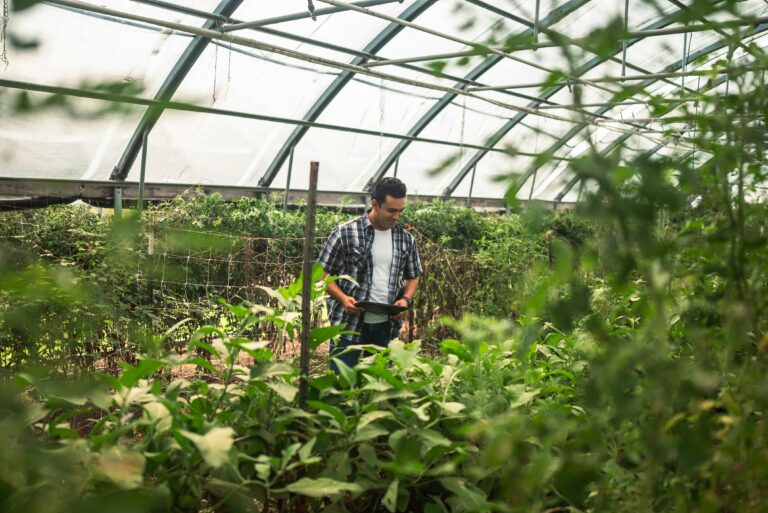
If you are planning to grow your own food or raise animals on pasture, soil quality is not optional homework, it is foundational. At minimum, rule out contamination, and get an actual soil test rather than guessing, especially if organic certification is part of your plan. Poor soil can usually be amended over time, but you want to know what you are starting with.
A mix of open pasture and wooded land gives you flexibility, growing space and grazing in the open, shade and timber value in the trees, and fully wooded land is often cheaper to buy and clear to your own specifications than land that is already cleared. Topography matters too: gently rolling land is far easier and cheaper to build on and drain than steep or low-lying ground, so make sure there is ample dry, well-drained space for your home and outbuildings before you commit.
Utilities and infrastructure:
Raw land usually means electricity, water, septic, and sometimes propane all need to be installed from scratch, and the cost varies enormously by location, topography, and how far your homesite sits from the road. Some power companies run the first few hundred feet of overhead line for free, with underground lines costing extra. The only way to know your real number is to get an actual estimate from the power company before you buy and before you pick a homesite.
A well’s cost depends on depth and location, and a percolation test is required to confirm the land can support a septic system at all, a test most buyers skip until it is too late. Internet and cell service are worth checking directly with neighbours and providers rather than assuming, since rural connectivity has improved but remains inconsistent, and a weak signal is usually fixable with a booster, but better to know in advance than discover it after closing.
Community and location:
Where you buy matters in a way that is almost impossible to change later. Some people want true seclusion; others want to be twenty minutes from a grocery store, good schools, or a short commute. Be honest about which one you actually are, not which one sounds better.
Spend real time in the area before you commit, visit farmers markets, local festivals, and the Chamber of Commerce, and once you find land you are serious about, introduce yourself to the neighbours. Most are glad to share what they know about the property and the area, and a good relationship with the people next door often matters more to a homestead’s success than anything written in a listing.
Free tools to verify before you buy:
Do not take a listing’s word for any of the above. These tools let you check it yourself, for free, before you make an offer.
- USDA Web Soil Survey — pull detailed soil maps and data for any specific parcel before assuming it will support a garden, pasture, or septic system.
- FEMA Flood Map Service Center — confirm a property’s actual flood zone status rather than relying on a seller’s description.
- Your county GIS or assessor website — verify legal access, parcel boundaries, and zoning designation directly from the public record.
What a realistic land search budget looks like in 2026?
| Category | What’s included | Approximate cost |
| Due diligence | Soil test, percolation test, land survey, water rights check | $500–$1,500 |
| Utility setup | Well drilling, septic installation, and power line extension | $8,000–$25,000+ |
| Land itself | Highly variable by state, acreage, and access — see your state-specific guide | varies widely |
Run your own numbers through the Homestead Cost Calculator once you have a specific property in mind — utility and due diligence costs shift significantly by location.
Frequently asked questions?
How much land do I need for a homestead?
Most functional homesteads with a few large animals and a serious garden run comfortably on 10 to 15 acres. Intensive market gardens have produced six-figure income on under two acres. The right number depends on your goals and how much of the work you want to do yourself, not on acreage alone.
Do I need to worry about water rights when buying homestead land?
Yes. Owning land does not automatically grant you the right to use water on or under it. Eastern states generally use riparian rights tied to adjacent landowners, while many western states use prior appropriation, where rights belong to whoever used the water first. Confirm your state’s system before counting on a creek, pond, or well.
What is the difference between zoning and a CCR?
Zoning is a county-level legal designation that determines what you are allowed to do with land, livestock, structures, or business use. A CCR, or Covenant, Condition, and Restriction, is a private agreement tied to the deed that can add further limits even without a formal HOA. Check both separately before buying.
How do I check if land is in a flood zone before buying?
Use the FEMA Flood Map Service Center to look up a property’s official flood zone designation before making an offer. A flood-prone section is not automatically a dealbreaker, but you need ample dry, buildable ground elsewhere on the parcel.
Is landlocked property worth buying?
It can be, but only if you confirm a legal easement exists or can realistically be obtained before you buy. Without it, you may struggle to secure a construction loan or get heavy equipment to the site at all.
Once you’ve checked these six categories against a specific property, the rest of the decision gets a lot less overwhelming. For state-specific guidance on water laws and land costs, see our Rainwater Harvesting Laws by State guide and 7 Best States for Homesteading article.
Related Guides on Rediscover Rural:
- How to Get Free Land in the US 2026 — 7 Real Programs (Article 1)
- USDA Grants for Homesteaders 2026 — 7 Programs You Can Apply for Today (Article 2)
- Best States for Homesteading 2026 — Land, Laws & Lifestyle (Article 5)
- How to Raise Chickens for Beginners in 2026 — Fresh Eggs in 6 Months (Article 27)
- How to Make Money Homesteading in 2026 — 15 Ways That Actually Work (Article 31)
- Homestead Cost Calculator → /homestead-cost-calculator/
Official Sources:
- websoilsurvey.nrcs.usda.gov/app — USDA Web Soil Survey, for the soil section
- msc.fema.gov — FEMA Flood Map Service Center, for the water and flood-risk section
- nationalaglawcenter.org/overview/water-law — National Agricultural Law Center’s overview of riparian vs. prior appropriation water rights