How to Buy Land: A Step-by-Step Guide to Buying Rural Land (2026)
The short answer: to buy rural land, set an all-in budget, line up how you will pay, choose a state and county, search for parcels, check each one against a due-diligence checklist, make an offer with contingencies, verify title and boundaries, and close through a title company that records the deed. This guide walks through how to buy land in nine steps and links to a detailed guide for each.
Buying land is not the same as buying a house. There is no home inspection to catch problems, lenders are stricter, and the parcel’s value depends on things you cannot see: access, water, soil and zoning. The process of buying land below is built around those differences.
How to buy land: the 9 steps at a glance
| Step | What you do | Where to go next |
|---|---|---|
| 1. Budget | Price plus survey, perc test, well, septic, power and closing costs | Land loan calculator |
| 2. Financing | Choose cash, a land loan, a USDA/FSA loan, VA or owner financing | Step 2 below |
| 3. Location | Pick a state and county that fits your budget and plans | Cheapest states to buy land |
| 4. Search | Find parcels through listings, agents and public land sales | Step 4 below |
| 5. Due diligence | Check access, title, zoning, water, septic, flood and more | 12-point land checklist |
| 6. Offer | Make an offer with contingencies | Step 6 below |
| 7. Title | Title search and owner’s title insurance | Step 7 below |
| 8. Survey | Confirm boundaries, acreage and encroachments | Step 8 below |
| 9. Closing | Sign, pay, record the deed, then plan permits | Step 9 below |
Step 1: Set an all-in budget
Learning how to buy land starts with money, and the asking price is only the start. Before you compare parcels, add the costs that turn raw land into a place you can live: a survey, a perc test, a well, a septic system, bringing in power, a driveway, closing costs and property taxes. A cheap parcel that needs all of these can cost more than a pricier one that already has them. Use our land loan calculator to see the monthly payment and our homestead cost calculator to plan the rest.
Step 2: Decide how you will pay
How to buy land depends a lot on how you pay. Cash buyers move fastest and negotiate best. If you need financing, these are the main routes:
- Land loans from local banks, credit unions and Farm Credit lenders. Expect stricter terms and a larger down payment than a home loan.
- USDA FSA Farm Ownership loans if you will farm: direct loans up to $600,000 with terms up to 40 years; the November 2026 rate is 6.25%. Beginning farmers can use the down payment loan, with 5% down and a 2.25% rate (FSA, November 2026 rates).
- FSA microloans up to $50,000 for smaller purchases (FSA).
- USDA Section 502 direct home loan for low-income buyers: it can cover a home together with its site, typically with no down payment, at 6.25% from November 1, 2026. It does not finance bare land (USDA Rural Development).
- VA home loan for veterans: it can buy a lot or build a home you will live in, with no down payment if the price is not above the appraised value (VA.gov).
- Texas Veterans Land Board land loan for eligible Texas veterans: up to $200,000 for at least one acre, with 5% down (Texas GLO).
- Owner financing, where the seller acts as the bank. It can work, but insist on a title search, a recorded contract or deed, and an attorney or title company to handle closing.
Step 3: Choose a state and county
Where you buy matters as much as how to buy land. Price per acre varies more than tenfold across the country. In the USDA Land Values 2026 Summary, farm real estate averaged $735 an acre in New Mexico against $4,500 nationally and $23,600 in Rhode Island. See all 48 states in our cheapest states to buy land guide.
Price is not the only factor. Check water availability, growing season, property taxes, and the laws that matter to your plans, such as rainwater harvesting laws and chicken and livestock rules. If you are open to incentives, our free land programs guide lists the town programs we could confirm.
Step 4: Search for land
- Listing sites and land brokers for the widest choice of parcels.
- Local agents and surveyors, who often hear about land before it is listed.
- County records: the county assessor’s map shows owners of parcels you like, so you can contact them directly.
- Public land sales, such as Alaska’s over-the-counter state land sales, which sell listed parcels at a set price, first come, first served.
- Driving the area: “for sale by owner” signs on rural roads rarely appear online.
Step 5: Do your due diligence
This is the most important step in the process of buying land. Before you commit, confirm legal access, a clean title, zoning, deed restrictions, water, septic suitability, flood risk, wetlands, utility costs, boundaries, taxes and mineral rights. Free tools help: the FEMA Flood Map Service Center for flood zones and the NRCS Web Soil Survey for soils. Our 12-point rural land buying checklist covers each check and where to verify it.
Step 6: Make an offer with contingencies
Knowing how to buy land safely means never making an unconditional offer. Put your offer in writing and make it depend on the checks you still need. Common contingencies for land are:
- a satisfactory survey;
- a passing perc test or septic site evaluation;
- a clear title and owner’s title insurance;
- confirmed legal access;
- financing approval, if you are borrowing.
Agree on earnest money held by a title company or attorney, a due-diligence period long enough for the survey and perc test, and a closing date.
Step 7: Verify the title
Have a title company search the public records for liens, unpaid taxes, easements and competing claims, and buy an owner’s title insurance policy. The Consumer Financial Protection Bureau explains that owner’s title insurance “protects the homeowner if someone sues and says they have a claim against the home from before the homeowner purchased it.”
Step 8: Survey the land and finish inspections
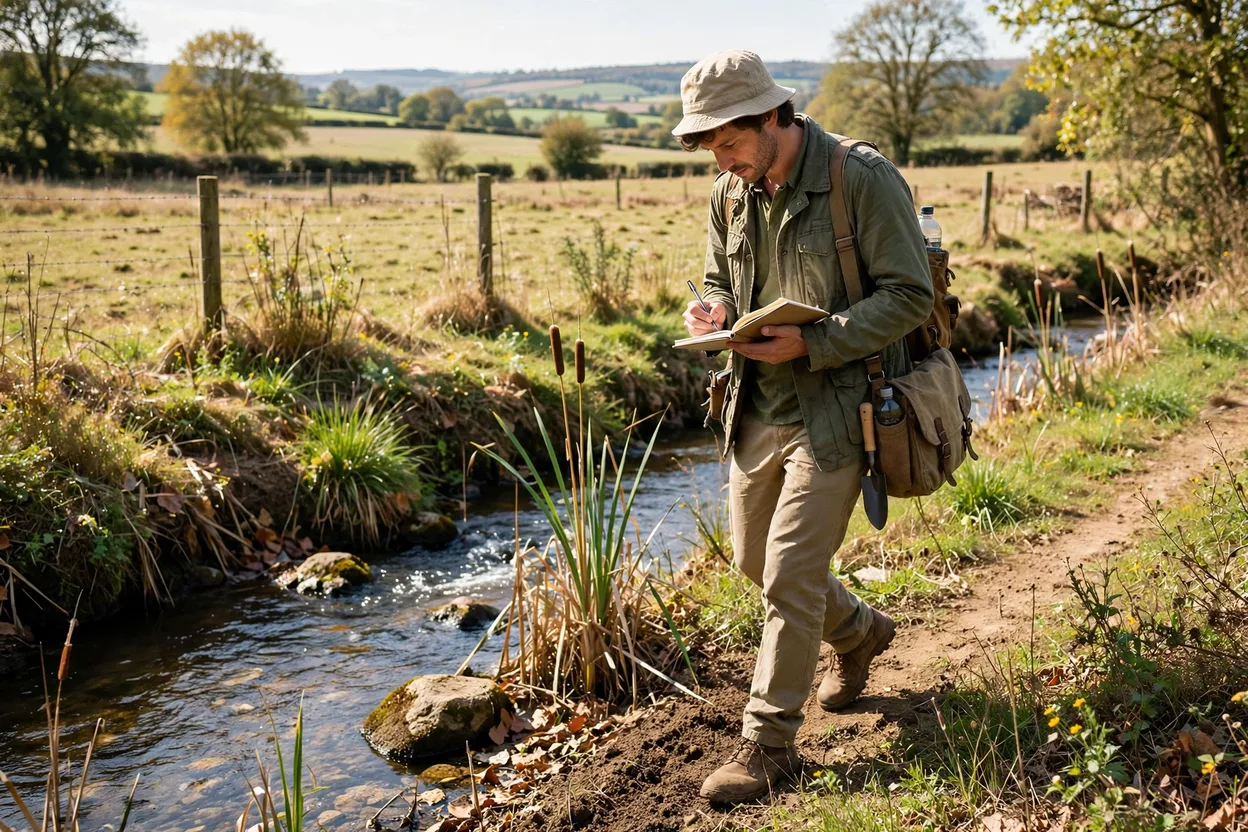
A licensed surveyor confirms the corners, the acreage and any encroachments. Use this period to finish the perc test, test any existing well (the EPA notes private well owners are responsible for their own water safety), and get written quotes for power and a driveway. If anything fails, your contingencies let you renegotiate or walk away.
Step 9: Close and record the deed
The last step in how to buy land is closing. At closing you sign the deed and loan documents, pay the balance, and the title company records the deed with the county. Keep your recorded deed, survey and title policy together. Then check permits with the county before you clear land, drill a well or build.
How long does it take to buy land?
A cash purchase with few contingencies can close quickly. A financed purchase usually takes longer, because the lender, survey, perc test and title work all need time. The due-diligence period in your contract usually sets the pace, so ask the surveyor and county how long their work takes before you agree to a closing date.
Common mistakes when buying land
- Buying without recorded legal access.
- Skipping the survey or perc test to save money.
- Budgeting for the land but not for well, septic and power.
- Paying a seller directly instead of through a title company.
- Assuming zoning allows a home, animals or an RV without asking the county.
Frequently asked questions
Can you buy land with no money down?
Sometimes. USDA’s Section 502 direct home loan typically needs no down payment, and a VA loan needs none if the price is not above the appraised value, but both are for a home you will live in, not bare land. FSA’s down payment loan for beginning farmers asks for 5% down. Most loans for bare land need a larger down payment, and no-money-down owner financing deserves extra scrutiny.
Is it hard to get a loan to buy land?
It is harder than getting a home loan, because bare land has no house to secure the loan. Local banks, credit unions and Farm Credit lenders are the usual sources, and many buyers use owner financing or USDA FSA loans if they plan to farm.
Do I need a real estate agent to buy land?
No, but a land-savvy agent, a real estate attorney or a title company protects you on contracts, contingencies and closing. At a minimum, close through a title company and buy owner’s title insurance.
How is buying land different from buying a house?
You have more to verify yourself: legal access, water, septic suitability, zoning and the cost of power. Lenders are also stricter, so expect a bigger down payment and plan your due diligence before you make an offer.
Related Guides on Rediscover Rural
- What to Look for When Buying Land: The 12-Point Checklist
- Cheapest States to Buy Land in 2026: All 48 Ranked
- Land Loan Calculator
- USDA Grants and Loans for Homesteaders
- Free Land Programs in 2026
Official Sources
- USDA NASS — Land Values 2026 Summary
- fsa.usda.gov — Farm Ownership Loans
- fsa.usda.gov — November 2026 lending rates
- rd.usda.gov — Section 502 Direct Home Loans
- va.gov — VA purchase loans
- glo.texas.gov — Texas Veterans Land Board land loans
- consumerfinance.gov — Owner’s title insurance
- msc.fema.gov — FEMA Flood Map Service Center
- websoilsurvey.nrcs.usda.gov — NRCS Web Soil Survey