Residential Rainwater Collection Systems in 2026: Costs, Sizes & What’s Safe to Drink
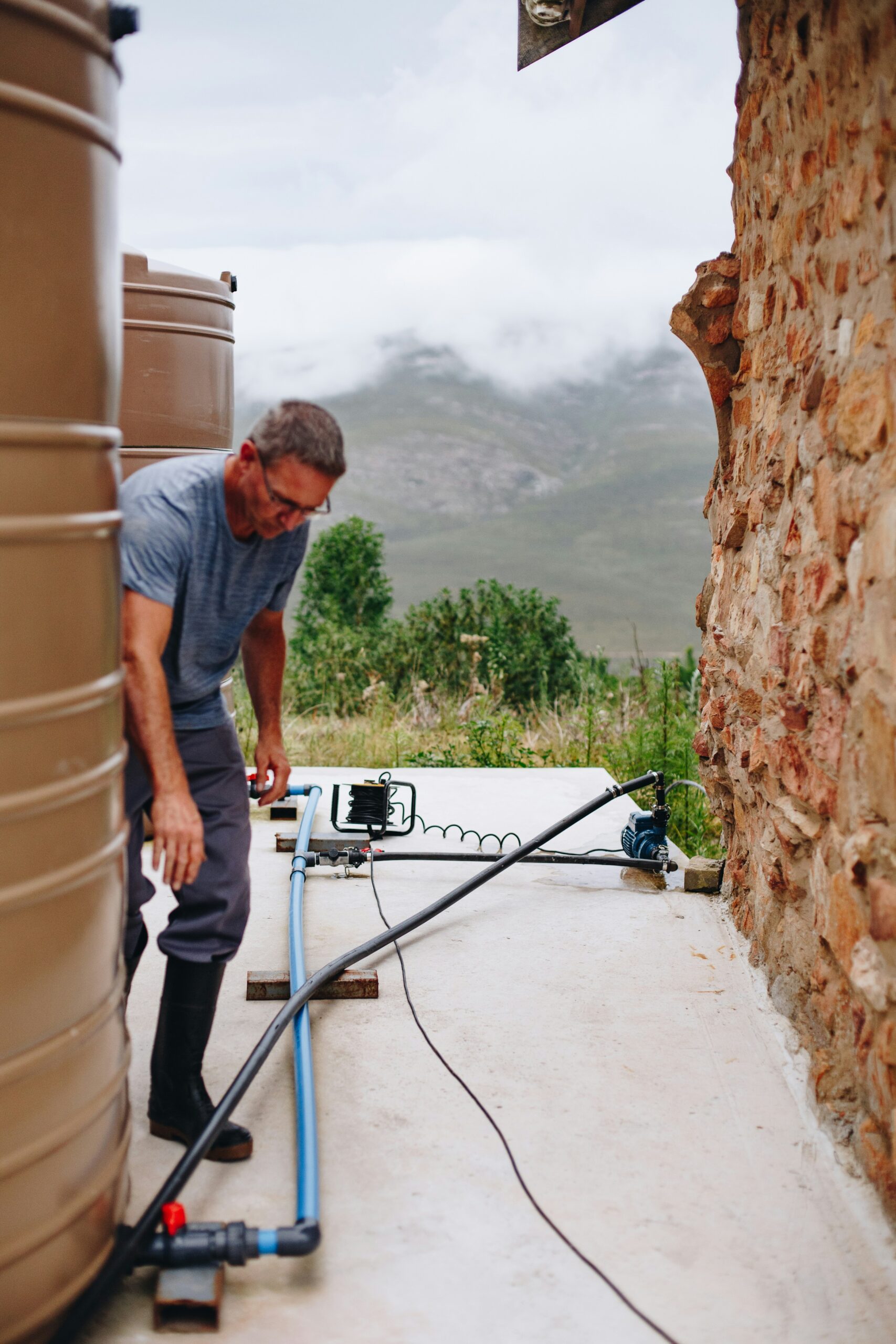
Residential rainwater collection systems
Why rainwater collection is having a moment in 2026:
Three things changed the math recently. Municipal water and well-drilling costs keep climbing, which shortens the payback period on even a mid-sized system. Off-grid living went from fringe to financed, with solar and battery costs falling far enough that full off-grid setups are a mainstream homestead plan — and water is the next utility people want to own. And drought cycles across the West and Southwest turned water security from a prepper concern into an ordinary homeowner one. If you are buying land or building a homestead this year, a rainwater system is no longer the eccentric add-on. It is line three on the infrastructure list, right after power and septic.
How a residential system actually works
Every system, from a $100 barrel to a $15,000 buried cistern, is the same five-part chain. Your roof catches the rain. Gutters and downspouts move it. A diverter or first-flush device discards the first dirty runoff and screens out leaves and debris. A storage tank holds the water. And, for anything beyond garden use, a pump and filtration stage delivers it where you need it. Once you see every product on the market as some version of this chain, comparing systems gets much less confusing — you are really just choosing how big the tank is and how clean the water needs to be at the end.
The sizing math nobody shows you
Here is the rule of thumb that answers most sizing questions: your roof collects roughly 600 gallons per 1,000 square feet for every inch of rain. A typical 1,500-square-foot roof in a region getting 40 inches of rain a year can theoretically capture over 36,000 gallons annually — far more than most people expect. The practical question is not how much you can catch, it is how much you can store and how fast you use it. Garden irrigation for a serious vegetable plot runs a few hundred gallons a week in summer. Livestock, laundry, and household use scale from there. Size your storage to bridge your longest realistic dry stretch, not to capture every drop that falls.
The four system tiers, with real 2026 costs
| System | Best for | Realistic 2026 cost |
| Rain barrel (50–100 gal) | Garden beds, container plants, testing the waters | $80–$300 installed |
| Multi-barrel or IBC tote setup (250–600 gal) | Serious gardens, small livestock, laundry | $300–$1,200 |
| Above-ground cistern (1,000–5,000 gal) | Whole-garden irrigation, livestock, backup household supply | $1,500–$6,000 installed |
| Buried cistern + pump + filtration (5,000–15,000+ gal) | Primary or full household supply, off-grid builds | $8,000–$25,000+ installed |
Two cost notes worth knowing before you shop. Installation, site prep, and pump/filtration gear routinely cost as much as the tank itself at the cistern tiers, so quotes that only mention the tank are telling you half the number. And secondhand IBC totes are the great budget hack of this space — just confirm they only ever held food-grade contents before trusting them with anything you will grow food with.
What’s actually safe to drink
This is the section every tank seller tiptoes around, so here is the straight version. Rainwater collected from a typical roof is not safe to drink as-is. Roofs collect bird droppings, dust, insect matter, and traces of roofing materials, and per CDC guidance, untreated rainwater can carry bacteria, parasites, and chemical contaminants. Garden irrigation, livestock watering, laundry, and toilet flushing are all reasonable uses for filtered-but-untreated rainwater. Drinking, cooking, and bathing water needs a proper treatment train — typically sediment filtration, carbon filtration, and UV purification or an equivalent disinfection stage — and even then, periodic water testing is the difference between “probably fine” and “actually verified.”
If potable use is your goal, budget $1,500–$4,000 for the treatment stage on top of the system cost, plan the system as potable from day one rather than upgrading later, and check whether your state or county has specific requirements for potable rainwater systems, because a number of them do.
Is it legal in your state?
Mostly yes, sometimes with conditions, occasionally with real restrictions. A handful of states regulate collection volume, require registration, or limit what you can use the water for, while others actively encourage harvesting with tax credits and rebates. Rather than compress fifty states into a paragraph, we keep a full state-by-state breakdown updated separately — see the rainwater harvesting laws by state guide before you buy anything, because in a few states the rules genuinely change what size and type of system makes sense.
Where to buy without getting oversold
Tank retailers are not the enemy — they are just not neutral. Go in knowing your tier, your target capacity from the sizing math above, and whether you need potable-grade components, and the shopping part becomes straightforward. Local farm and ranch stores frequently beat online prices on barrels and totes once shipping is counted, while cisterns are usually cheapest through regional suppliers who include delivery and site placement. Get the installed price, not the tank price, in every quote you compare.
Frequently asked questions:
How much does a residential rainwater collection system cost in 2026?
How much rainwater can my roof collect?
Roughly 600 gallons per 1,000 square feet of roof per inch of rain. A 1,500-square-foot roof in a 40-inch rainfall region can capture over 36,000 gallons a year — storage capacity, not catchment, is almost always the real limit.
Is collected rainwater safe to drink?
Not without treatment. Untreated roof runoff can carry bacteria, parasites, and chemical contaminants per CDC guidance. Drinking-water use requires sediment and carbon filtration plus UV or equivalent disinfection, and periodic testing to verify the system is working.
What size rainwater tank do I need?
Size storage to cover your longest realistic dry stretch, not your annual catchment. A serious summer garden can draw a few hundred gallons a week, so a 1,000–2,500 gallon cistern suits most irrigation-focused homesteads, while household supply typically starts around 5,000 gallons.
Is rainwater harvesting legal everywhere in the US?
It is legal in most states, but a few regulate volume, require registration, or restrict uses, while others offer incentives. Check your state’s specific rules before buying — the laws genuinely affect what system makes sense in some states.
Start with the sizing math, pick your tier, and check your state’s rules before spending a dollar. For the legal side, see the rainwater harvesting laws by state guide, and if you are budgeting a full off-grid build, run the numbers through the Homestead Cost Calculator alongside your solar and septic estimates.
Official Sources:
- cdc.gov — CDC rainwater collection guidance, for the drinking-water safety section
- epa.gov/soakuptherain — EPA Soak Up the Rain program, for benefits and basic system guidance
- nationalaglawcenter.org/overview/water-law — water rights context (already used in the homestead land article; consistent sourcing)
Related Articles:
- rainwater harvesting laws by state → Rainwater Harvesting Laws by State article
- Homestead Cost Calculator → /homestead-cost-calculator/
- off-grid solar setup → Off-Grid Solar guide (off-grid cluster crossover)
- What to look for before buying land → Find the Perfect Homestead Land article (water section crossover)
- best states for homesteading → 7 Best States for Homesteading article