Self Sufficient Homestead Guide: Food, Water, Energy and Income
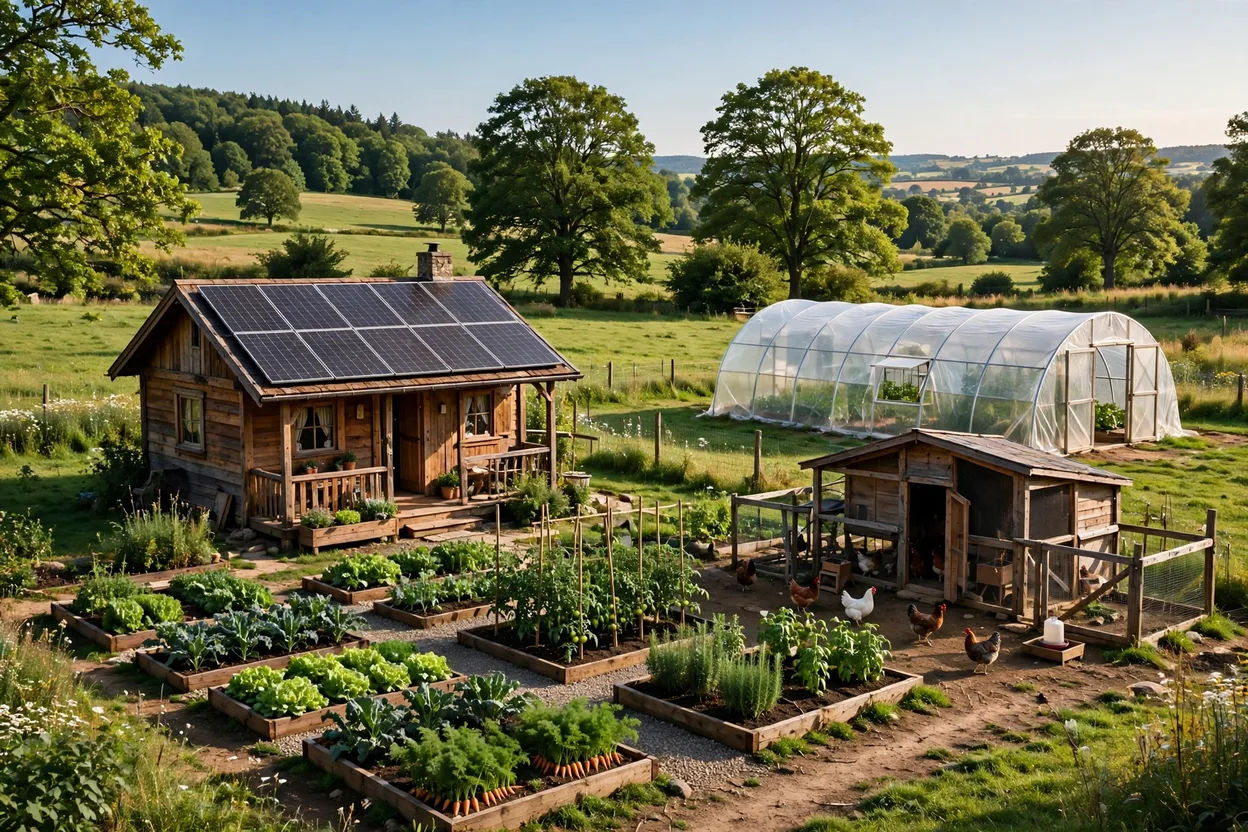
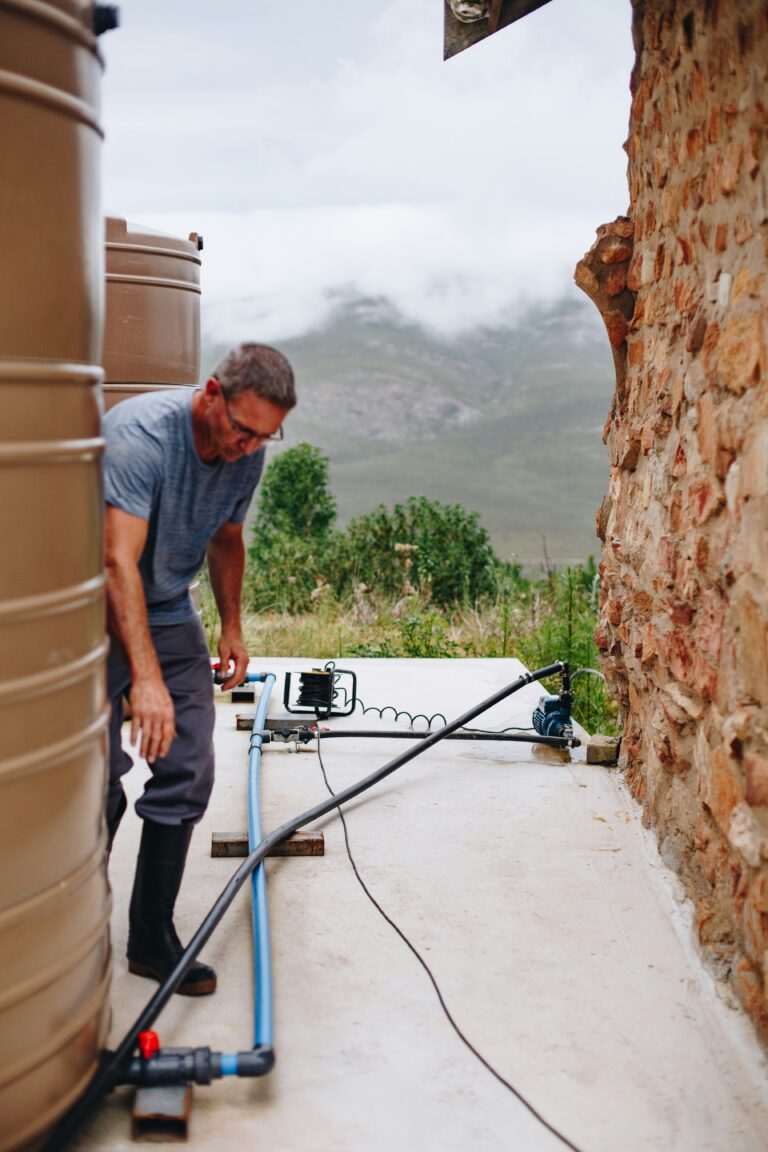
A self sufficient homestead is a working property that produces most of a household’s food, water, heat and energy on site, building food security and cutting reliance on stores and utilities. Nobody gets there in one leap. Families who start a homestead from scratch reach that goal in phases: legal checks, soil and water, gardens, small livestock, preservation, then energy and income.
Key Takeaways
- A self sufficient homestead produces most of a household’s food, water, heat and energy on site, but almost every US homestead still buys some outside inputs.
- Legal checks come first, because county zoning, livestock ordinances, state water rights, and well and septic permits decide what a US property can legally support.
- A soil test from the county Cooperative Extension Service and the U.S. Department of Agriculture (USDA) Plant Hardiness Zone Map anchor every planting decision on a homestead.
- A high tunnel gives most rural homesteads the most growing space per dollar, and the Natural Resources Conservation Service (NRCS) offers cost-share for eligible high tunnels.
- Laying hens are the best first livestock for beginners, and a pressure canner is required for safely canning low-acid foods such as green beans and meat.
- Tracking food, water, energy, heat and income as separate categories turns homestead self-sufficiency into a measurable, phased goal.
What Is a Self Sufficient Homestead?
A self sufficient homestead is a home and land system that meets a household’s core needs, mainly food, water, heat and some energy, through its own production, storage and skills. The name is surprisingly old. It traces back to the Homestead Act of 1862, which handed federal land to settlers willing to live on and farm it.
Modern self sufficient living isn’t subsistence farming. Subsistence growers raise food purely to survive, with little else coming in. Today’s homestead blends what the land produces with off-farm paychecks, and it still keeps store-bought tools and grid backups on hand for the jobs home systems can’t cover.
“Homestead” has a legal meaning, too. On tax paperwork, a homestead property tax exemption is a state tax break on a primary residence, and it has nothing to do with growing food.
Books helped spread the idea. British author John Seymour helped popularize the lifestyle with The Self-Sufficient Life and How to Live It, a classic planning reference for small-scale food production.
Self-Sufficient vs Self-Sustaining
A self-sufficient property meets its own needs, while a self-sustaining property also regenerates the inputs that make production possible. This table compares the two terms.
| Term | Meaning | Outside Inputs | Example |
|---|---|---|---|
| Self-sufficient homestead | Produces what the household consumes | Accepted, such as feed or fuel | Buying hay to feed dairy goats |
| Self-sustaining homestead | Regenerates its own inputs over time | Minimized by design | Saving seed and composting manure |
Does a self-sustaining farm need outside inputs? Yes. Even a well-designed self sustaining farm still buys the occasional bag of seed, mineral supplements for its animals, replacement breeding stock or a tank of fuel.
Permaculture design tries to shrink outside purchases every year by linking one system to another, such as chickens fertilizing garden beds. The idea is simple. Farmer and author Joel Salatin runs a similar loop at Polyface Farm in Virginia through rotational pasture systems.
Is Full Self-Sufficiency Realistic in the USA?
No. Full self-sufficiency is rare in the USA because property taxes, insurance, medicine, salt, tools and vehicle fuel all require cash or outside trade.
Aim narrower instead. A realistic target is high self-sufficiency in a handful of categories, with vegetables and eggs as common starting points, firewood next, and steady gains in water and energy over several seasons.
How Much Land Do You Need to Be Self-Sufficient?
No verified single acreage figure exists, because land needs depend on climate, soil, diet and livestock; a family can run a productive vegetable garden, laying hens and fruit trees on under 1 acre (0.4 ha), while pasture animals and a firewood woodlot need several more acres. Plan around use, not acreage.
This table compares what each acreage tier realistically supports.
| Lot Size (Acres / Ha) | Realistic Focus | Livestock Fit |
|---|---|---|
| Under 1 acre (0.4 ha) | Intensive vegetables, berries, dwarf fruit trees | Laying hens, meat rabbits, bees |
| 1 to 5 acres (0.4 to 2 ha) | Large garden, orchard, high tunnel | Hens, meat chickens, dairy goats, pigs |
| Over 5 acres (2 ha) | Pasture, hay, firewood woodlot | Sheep, cattle, rotational grazing |
Can you homestead on less than 1 acre (0.4 ha)? Yes. Suburban lots handle raised beds, a small flock, a rain barrel system and food preservation, provided local ordinances allow the animals.
Bigger isn’t always better. More acreage opens up options, but it also piles on fencing, mowing, taxes and labor, so buy only the land you can manage well in the first five years.
How to Start a Homestead with No Experience
To start a homestead with no experience, check local zoning first, test the soil, start one small garden and one livestock species, and add skills in phases rather than buying land, animals and equipment all at once. Each phase builds the knowledge the next one needs. Patience pays.
Knowing how to start a homestead comes down to sequence, and beginners who jump ahead tend to pay for it in money and lost time. Work through these steps in order.
- Define goals by category: food, water, heat, energy and income.
- Check zoning, deed restrictions and homeowners association (HOA) covenants before buying anything.
- Find your zone on the USDA Plant Hardiness Zone Map to set planting dates and crop choices.
- Order a soil test through your county Cooperative Extension Service office.
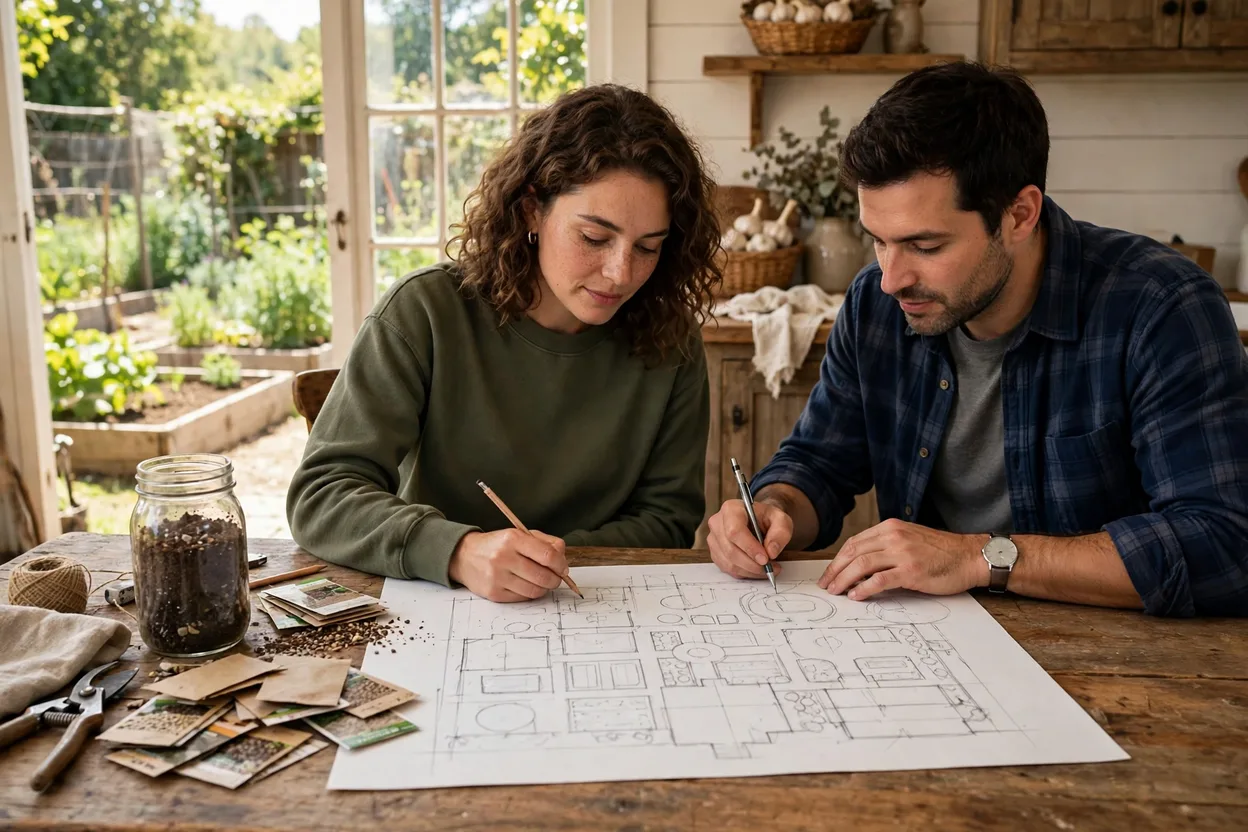
- Draw a homestead layout plan that places daily-use areas, such as the garden and coop, closest to the house.
- Build a compost system and a small garden of raised beds.
- Add one livestock species, usually laying hens.
- Learn food preservation using tested methods.
- Add water storage and backup heat and power.
- Record yields, costs and hours every season.
What a Beginner Homesteader Should Do First
A beginner homesteader should start a small garden and order a soil test first. Both are cheap. Neither one requires buying land, and together they quickly reveal whether the homestead lifestyle actually suits the people who’d be living it every day.
Buying rural land? Confirm road access, easements, well output and septic condition before closing. A beautiful parcel without legal water access or an approvable septic site can’t support a homestead, no matter how good the view looks.
Legal Checklist for Building a Homestead in the USA
Before building a homestead in the USA, confirm county zoning, livestock ordinances, HOA covenants, state water rights, well and septic permits, and cottage food rules, because these laws decide which animals, structures and sales a property legally allows. Rules vary by county, so local offices hold the final answer. Call before you build.
This table lists each legal area, who controls it and where to check.
| Legal Area | Who Controls It | Where to Check |
|---|---|---|
| Zoning ordinance | County or city | County planning department |
| Livestock limits | County, city or HOA | Municipal code and HOA covenants |
| Water rights | State | State water resources agency |
| Rainwater collection | State, sometimes county | State water or environmental agency |
| Private well permit | State or county | County health department |
| Septic system | County | County environmental health office |
| Cottage food sales | State | State agriculture or health department |
| Right-to-farm protection | State | State statutes |
Zoning and Livestock Ordinances
A zoning ordinance sets which land uses a parcel allows, covering everything from farm animals and outbuildings to roadside sales. Rural zones are looser. Agricultural and rural residential districts usually permit more than suburban ones.
Livestock ordinances often cap how many animals of each species a lot can hold and how far pens must sit from property lines. Many towns ban roosters outright. Get the written code from the county or city instead of trusting a neighbor’s word.
Water Rights and Prior Appropriation
Many western states follow prior appropriation, a “first in time, first in right” system that gives older water rights priority during shortages. Land and water are separate there. Owning a parcel in those states doesn’t automatically grant the right to use a creek or pond.
The East works differently. Most eastern states follow riparian rights, a doctrine that ties reasonable water use to owning land along the water’s edge rather than to who claimed it first. Check with the state water resources agency before diverting any surface water.
Cottage Food and Right-To-Farm Laws
State cottage food laws decide which homemade foods, such as bread or jam, a homestead can sell without a commercial kitchen. No two states match. Each one writes its own approved product list, and the rules on sales venues and labeling differ just as much from one state to the next.
Every state has some form of right-to-farm law that shields qualifying agricultural operations from certain nuisance lawsuits brought by neighbors. Hobbyists shouldn’t assume coverage. Protection hinges on how each state defines a farm, so a backyard hobby flock may not qualify.
Which US States Are Best for Homesteading?
No single state is best for homesteading, because the right choice depends on growing season, rainfall, land prices, property taxes, water law and county zoning, and county rules often affect a homestead more than state rules do. Match the state to your food goals and budget first. Then narrow it down.
This table compares the factors that matter most when choosing a state.
| Factor | Why It Matters | How to Check |
|---|---|---|
| Growing season | Sets crop range and greenhouse needs | USDA Plant Hardiness Zone Map |
| Rainfall | Decides irrigation and catchment value | NOAA climate data |
| Water law | Controls well and surface water use | State water resources agency |
| Property taxes | Sets yearly carrying cost | County assessor website |
| Zoning | Limits animals, buildings and sales | County planning office |
Which states have the fewest homesteading restrictions? No verified ranking is available. Unincorporated rural areas generally carry fewer livestock and building limits than cities, so compare counties within each shortlisted state.
Gardening and Food Production on the Homestead
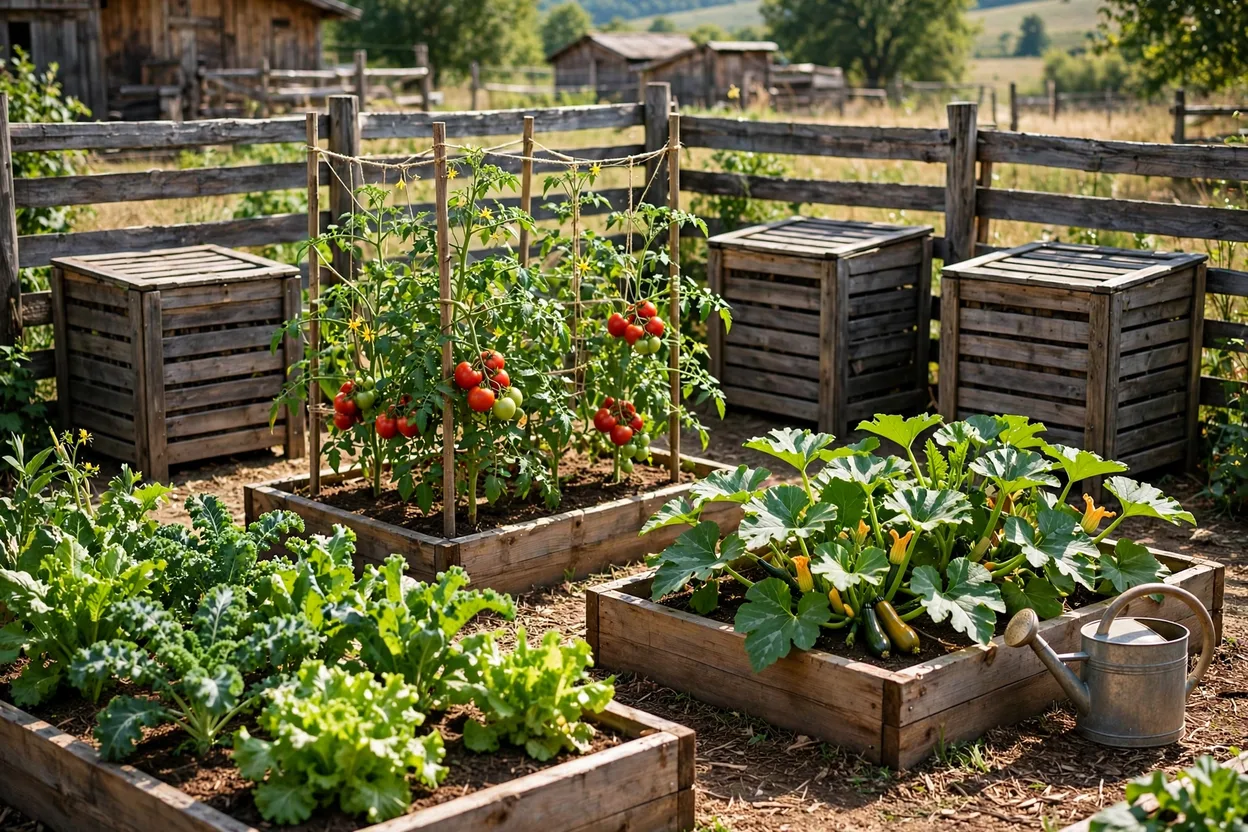
The garden is the foundation of a self sufficient homestead, because vegetables, herbs and fruit return food faster than livestock or orchards and build the soil, composting and planning skills every later project depends on. Grow calorie-dense staples alongside salad crops.
Lettuce alone won’t carry a family. A vegetable garden plan for self-sufficiency needs storage staples such as potatoes, winter squash, dry beans and onions, which keep for months after harvest. Greens cover summer meals, and staples carry the household through winter.
Compost is free fertilizer. Kitchen and garden waste breaks down alongside animal manure, and a three-bin system lets one pile cure while the next one fills, so there’s a steady supply of finished compost.
Raised Beds, Succession and Companion Planting
Raised beds warm faster in spring and drain well, which makes them a good fit for sites where the native soil is poor or rocky. Fill them with topsoil and finished compost.
Succession planting sows a new round of quick crops, such as lettuce or radishes, every few weeks for a steady harvest. Mark the dates on a calendar. Companion planting, by contrast, pairs crops that help each other, such as marigolds near tomatoes to attract beneficial insects.
Heirloom Seed Saving
Heirloom seed saving keeps a homestead’s seed supply independent of stores. Variety choice matters. Open-pollinated heirloom varieties grow true to type, while hybrid seeds don’t reliably reproduce the parent plant, so seed saved from a hybrid often gives unpredictable results.
Begin with easy self-pollinating crops such as beans, peas, lettuce and tomatoes, which rarely cross with neighboring varieties in a home garden. Dry the seed fully. Store it in labeled envelopes somewhere cool and dark.
Fruit Trees and a Backyard Orchard
Fruit trees take several years to bear. Plant them in the first season, and pick backyard orchard varieties of apples, pears, plums or peaches that match both the local hardiness zone and the chill-hour requirements of your area.
Dwarf and semi-dwarf rootstocks fit small lots and keep pruning and harvest within easy reach of a ladder or even the ground. Berries fill the gap. Raspberries and blueberries produce sooner and keep the household fed while trees mature.
What Is the Best Greenhouse for a Self-Sufficient Homestead?
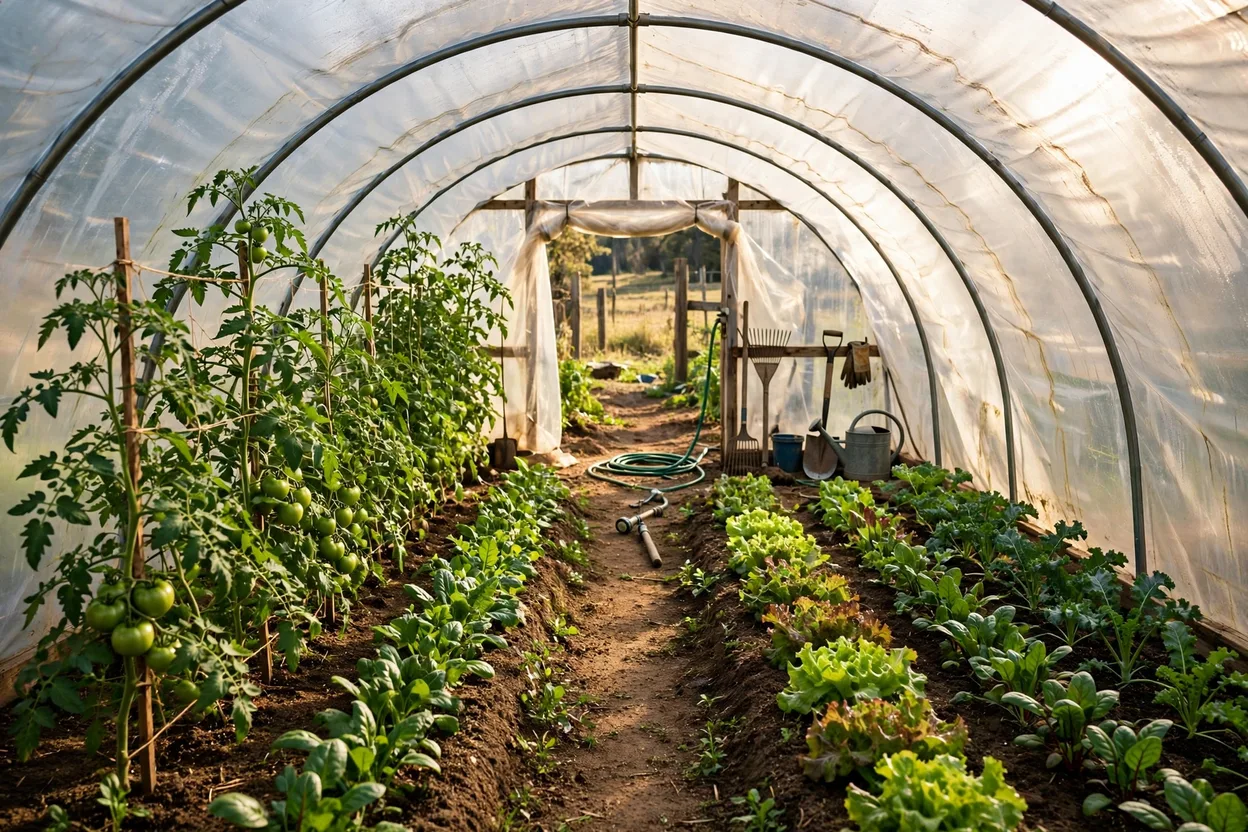
The best greenhouse for self-sufficient homestead gardening is a high tunnel for most rural properties, a polycarbonate greenhouse for snowy or windy sites that need winter heat, and a walipini pit greenhouse for cold, high-elevation sites with dry, well-drained soil. All three extend the growing season.
This table compares season extension structures by climate, cost and tradeoffs.
| Structure | Best Climate | Cost Level | Main Advantage | Main Drawback |
|---|---|---|---|---|
| Cold frame | All US regions | Low | Cheap early and late greens | Small, needs daily venting |
| High tunnel | Most temperate regions | Medium | Large in-ground growing space | Plastic film needs periodic replacement |
| Polycarbonate greenhouse | Cold, snowy or windy regions | Medium to high | Rigid panels insulate well | Higher cost per square foot |
| Walipini | Cold, dry, high-elevation regions | Low to medium | Earth-sheltered warmth | Fails where water tables are high |
| Shade house | Hot Southern and Southwestern regions | Low | Protects crops from extreme sun | Offers no frost protection |
Year round growing depends on matching the structure to the coldest month. Plan for the worst week. Unheated high tunnels keep hardy greens going through much of the winter in many regions, while heated greenhouses push warm-season crops well past their normal window.
High Tunnel vs Polycarbonate Greenhouse
A high tunnel is better for most homesteads that want to grow food year round at the lowest possible cost. Harsh winters change that. For heated winter production and seed starting in bad weather, a polycarbonate greenhouse wins.
This table compares the two structures feature by feature.
| Feature | High Tunnel | Polycarbonate Greenhouse |
|---|---|---|
| Growing method | In-ground beds | Benches or beds |
| Heating | Usually unheated | Often heated |
| Relative cost | Lower | Higher |
| Snow handling | Needs bracing and clearing | Rigid panels shed snow better |
| NRCS cost-share | Eligible if criteria are met | Confirm with local NRCS office |
NRCS High Tunnel Cost-Share
The NRCS Environmental Quality Incentives Program (EQIP) High Tunnel Initiative offers financial assistance for qualifying high tunnels built on agricultural land. Apply at the local USDA Service Center.
Program details shift over time, including eligibility rules and payment rates, so confirm current criteria and planting requirements with the local NRCS office before ordering a kit. No verified payment figure is included here.
What Animals Should a Self-Sufficient Homestead Have?
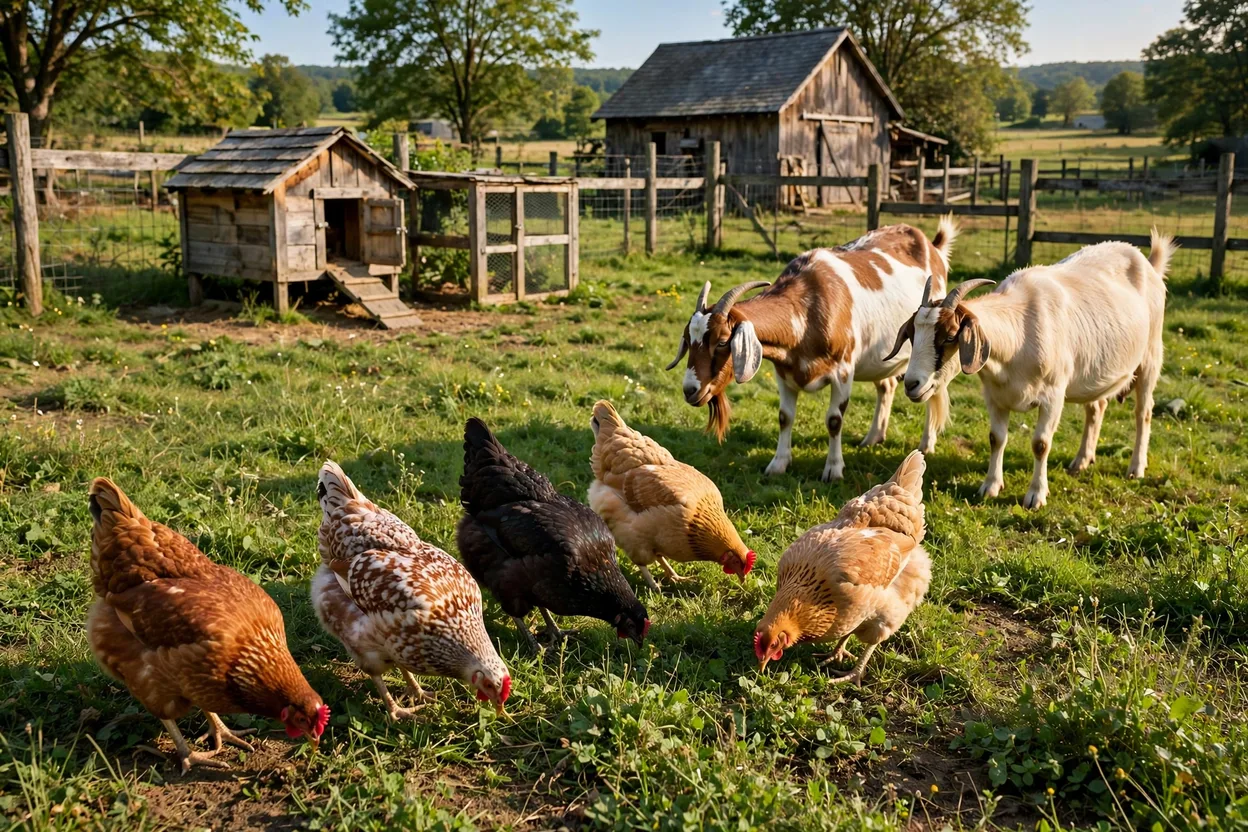
A self-sufficient homestead should start with laying hens, then add meat chickens or meat rabbits, and only later add dairy goats, pigs or cattle, because larger animals need more land, fencing, feed, daily labor and legal clearance. Heritage breeds suit low-input systems.
This table compares common homestead livestock for beginners.
| Animal | Main Products | Space Needs | Beginner Fit |
|---|---|---|---|
| Laying hens | Eggs, manure | Small coop and run | Excellent |
| Meat chickens | Meat | Small, short-term housing | Good |
| Meat rabbits | Meat, manure | Hutches or colony pen | Good, quiet |
| Dairy goats | Milk, kids | Pasture and strong fencing | Moderate, twice-daily milking |
| Pigs | Meat, land clearing | Pen or rotated paddock | Moderate |
| Honeybees | Honey, pollination | Small footprint | Moderate, steep learning curve |
Raising chickens for eggs teaches daily care and predator control at little risk, and it’s an easy way to learn feed budgeting before bigger animals arrive. Meat birds bring extra rules. Families who raise meat chickens should confirm state rules on home processing and on any sale of poultry.
Chickens or Goats for Beginners
Chickens are better than goats for beginners. Laying hens need less space and lighter fencing than goats, and backyard chickens are legal in more US municipalities too. Hens also need no milking.
Dairy goats suit homesteads with pasture and goat-proof fencing already in place. Milking runs twice a day, so somebody has to be available every morning and every evening without fail, holidays included. Goats are herd animals. Plan for at least two.
How Do Homesteaders Get Water Off-Grid?
Homesteaders get water off-grid from a private well, rainwater catchment, springs or surface water, and they back every source with water storage, filtration and testing so the household keeps drinking water during droughts, freezes and power outages. Wells remain the primary rural source.
This table compares off-grid water sources and their requirements.
| Water Source | Best Use | Key Requirement |
|---|---|---|
| Private well | Year-round household water | Permit, yearly water test |
| Rainwater catchment | Garden, livestock, filtered household use | State law compliance, storage tanks |
| Spring or surface water | Livestock and irrigation | Water rights, treatment for drinking |
| Greywater | Irrigating ornamental plants | Local code approval |
A well water system needs a pump and pressure tank, and the pump depends on a reliable power source to move water into the house. Outages happen. Solar pumps or a hand pump add backup when the grid goes down.
Drinking water needs extra care. An off grid water system for drinking needs both filtration and disinfection, and well water should go to a state-certified lab for testing. Ask the county health department which contaminants are common locally.
Is Rainwater Harvesting Legal in Every State?
Yes. Rainwater harvesting is legal in some form in every state, but several states attach conditions, especially in the arid West. Some limit storage volume or restrict how the water is used, and others require permits.
Colorado caps residential rain barrel storage. Before installing large tanks, check with the state water agency or look up current state rules through the National Conference of State Legislatures.
Off-Grid Energy and Heat for a Self Sustaining Homestead
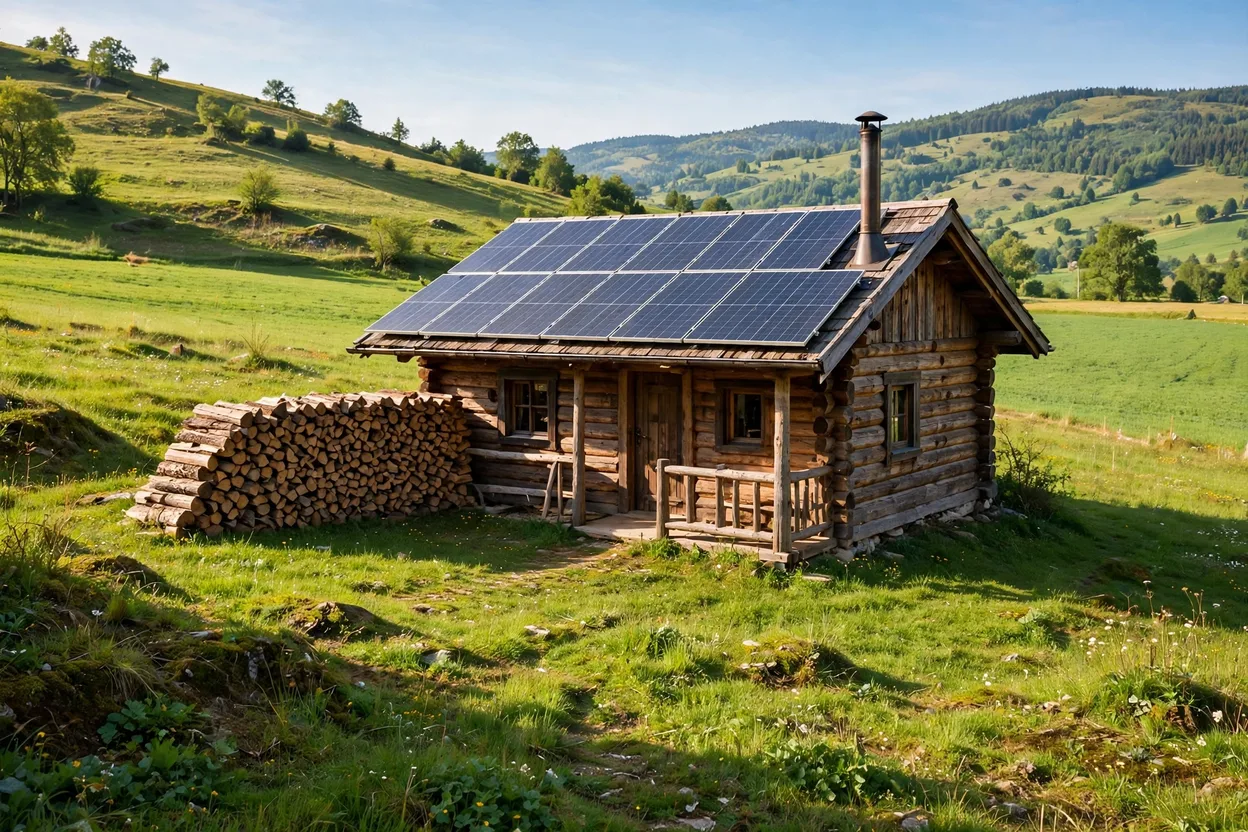
A self sustaining homestead meets energy needs by cutting demand first, then heating with a wood stove fed from its own woodlot and producing electricity with off-grid solar power, batteries and a backup generator sized to essential loads. Firewood is renewable on wooded acreage.
Off grid living starts with efficiency. Good insulation and efficient appliances shrink the solar array and battery bank a household needs, and swapping in light-emitting diode (LED) bulbs trims the load even further.
A wood stove heats the home and doubles as a cooktop during outages. Install it properly. That means meeting manufacturer clearances and local code, and seasoning every load of firewood before it goes into the firebox.
Solar power suits most of the USA, with output varying by latitude and cloud cover. Grid-tied systems need utility approval. Incentives are a moving target, since federal and state programs change often, so confirm what’s currently available before buying any panels.
Food Preservation and Root Cellar Storage
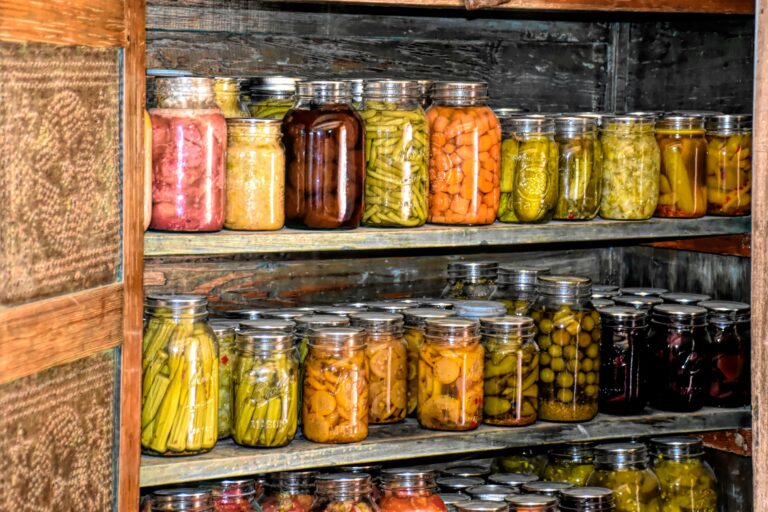
Food preservation turns a seasonal harvest into a year-round pantry, using pressure canning for low-acid foods, water bath canning for high-acid foods, dehydrating, fermentation, freezing and root cellar storage, following tested methods from the National Center for Home Food Preservation. Unsafe canning risks botulism.
This table compares preservation methods by food type and equipment.
| Method | Best Foods | Equipment |
|---|---|---|
| Pressure canning | Green beans, corn, meat, stock | Pressure canner |
| Water bath canning | Jams, pickles, acidified tomatoes | Water bath canner |
| Dehydrating | Herbs, fruit, jerky | Dehydrator or solar dryer |
| Fermentation | Sauerkraut, kimchi, fermented pickles | Crocks or jars with airlocks |
| Freezing | Meat, berries, blanched vegetables | Freezer with power backup |
| Root cellar | Potatoes, carrots, apples, cabbage | Cool, humid, dark space |
A pressure canner is required for low-acid foods because boiling water doesn’t reach the temperature that destroys botulism spores. Test dial gauges yearly. Many Extension offices check them, so call the county office before canning season starts.
A root cellar stores produce without electricity. It doesn’t have to be fancy: a basement corner or a hillside cellar works, and so does a buried cooler, as long as the space stays cool and humidity stays high.
How Much Does It Cost to Start a Homestead?
No verified national average exists for homestead startup costs, because land price, existing buildings, well and septic condition, fencing and chosen livestock drive the total far more than seeds or hand tools. Existing infrastructure saves money. Land that already has a working well and septic system, along with usable outbuildings, removes several of the largest upfront expenses before the first seed goes in.
This table ranks common startup costs by relative size.
| Cost Category | Relative Cost | Ways to Reduce |
|---|---|---|
| Land | Highest | Buy smaller acreage with existing infrastructure |
| Well drilling | High | Buy property with a tested, working well |
| Septic system | High | Inspect the existing system before closing |
| Off-grid solar | High | Start with critical loads only |
| Fencing | Medium | Build in phases as livestock arrive |
| High tunnel | Medium | Apply for NRCS EQIP cost-share |
| Hens and coop | Low | Convert an existing shed |
| Pressure canner | Low | Buy new and test the gauge yearly |
Financing exists, too. Farm Service Agency (FSA) microloans offer federal financing for small and beginning farm operations, and current loan limits and eligibility rules are listed on the FSA website or available at any USDA Service Center.
Homestead on a Budget
Can you homestead on a low budget? Yes. A budget homestead grows on land you already own or rent and adds systems one at a time, using salvaged materials wherever they’ll do the job.
- Start a garden and compost before buying land.
- Buy used tools at farm auctions and estate sales.
- Trade labor or surplus with neighbors through bartering.
- Track every expense in a simple homestead budget spreadsheet.
Can a Homestead Make Money?
Yes, a homestead can make money through a farm stand, egg sales, cottage foods, plants, meat sold under state and federal rules, and bartering, though income depends on local demand, labor and sales rules. Sell what you already overproduce.
What sells best from a small homestead? No verified sales data is available. Common starting products include eggs and seasonal vegetables, along with seedlings, honey and baked goods sold under cottage food rules.
Each product carries its own rules. States regulate both egg sales and cottage foods. Meat sales are regulated at the state level too, and meat for sale generally has to be processed at an inspected facility before it reaches a customer.
Self-Sufficiency Scorecard by Phase
A self-sufficiency scorecard tracks food, water, energy, heat and income as separate categories in three phases, so homesteaders measure partial progress honestly instead of judging the whole project as success or failure. Review the scorecard after each growing season and set one goal per category. Keep it simple.
This table sets milestones for each category across three phases.
| Category | Phase 1 Goal | Phase 2 Goal | Phase 3 Goal |
|---|---|---|---|
| Food | Greens and herbs | Most vegetables plus eggs | Meat, fruit and stored staples |
| Water | Rain barrels for garden | Tank storage and filtration | Well or catchment for household |
| Energy | Lower household use | Solar for critical loads | Off-grid solar with backup |
| Heat | Wood stove installed | Firewood bought locally | Firewood from own woodlot |
| Income | Bartering surplus | Farm stand or egg sales | Steady market or cottage sales |
Making a homestead self sufficient is a multi-year project. Expect slow years. Used honestly, the scorecard shows where the household already stands and which single upgrade will move it furthest next season.
Frequently Asked Questions
How Do I Become Self-Sufficient on My Land?
Pick one category, usually vegetables, and master it for a full season. Then expand. Add eggs, preservation, water storage and heat in later phases, and track each category separately so progress stays measurable from year to year.
What Is the Easiest Way to Start Homesteading?
Build a small raised-bed garden and a compost pile in your current yard. No land purchase needed. Those two projects teach soil care and planting timing, then build harvest skills, all before any money goes into land or animals.
Can I Live Off-Grid Legally in My State?
Yes, in many areas, though county building codes and septic rules still apply, and so do occupancy permits. Check first. Some counties require approved wastewater systems or utility connections before anyone can legally move into a dwelling built on the property.
How Many Chickens Do I Need to Feed My Family?
No verified per-person figure is available, because egg output varies by breed, age, season and daylight. Start small. Keep the flock within local limits and record weekly egg counts, then add birds once you know what the household actually eats.
What Does Homestead Mean on a Property Tax Bill?
On a tax bill, homestead refers to a homestead property tax exemption, a state program that reduces taxes on a primary residence. Farming has nothing to do with it. Application rules vary by state.
Conclusion
A self sufficient homestead is built one season at a time, not purchased in a single weekend. Shortcuts rarely last. Households that succeed check the law first and feed the soil, then add animals slowly while measuring progress honestly at the end of every season.
Next season, choose one category from the scorecard and push it a full phase forward. Even a soil test counts. A high tunnel application or a first flock of hens moves the property closer to lasting food security, and every finished phase brings steady water and home-grown heat a little nearer.