9 Best Fruit Trees for Your Homestead in 2026 — What to Plant First
9 Best Fruit Trees for Your Homestead in 2026 — What to Plant First
Fruit trees are among the most valuable long-term investments a homesteader can make. Plant an apple tree this year and it will feed your family for 50 to 100 years. Plant a peach tree and you will have bushels of fruit in just 3 to 4 years. Fruit trees represent the definition of working smarter — a single weekend of planting returns decades of harvests.
This complete guide covers the best fruit trees for homesteads across different US climates, how to plant them, how to care for them, and how to choose the right combination to give you fresh fruit from late spring through autumn.
Why Fruit Trees Are Essential on Every Homestead
- Plant once, harvest for decades — Most fruit trees produce for 25 to 100 years. The initial investment is minimal compared to a lifetime of harvests.
- High calorie and sugar production — Fruit provides calories, natural sugars, vitamins, and minerals that complement your vegetable garden.
- Preservable abundance — Apple sauce, pear preserves, cherry jam, dried peaches — one productive tree can supply your family’s fruit needs year-round.
- Wildlife and pollinator habitat — Fruit trees in bloom provide essential early-season nectar for bees and pollinators that benefit your entire garden.
- Property value — Established fruit trees significantly increase the desirability and value of homestead properties.
- Low maintenance after establishment — A mature fruit tree requires far less weekly attention than an annual vegetable garden.
Best Fruit Trees for Homesteads — Ranked by Value
| Tree | Years to First Fruit | Years of Production | Best Climates | Difficulty | Self-Fertile? |
| Apple | 3–5 years | 50–100 years | All US zones | Beginner | No — needs pollinator |
| Peach | 2–4 years | 10–15 years | Zones 5–9 | Beginner | Yes — most varieties |
| Pear | 3–5 years | 50–75 years | Zones 4–8 | Beginner | No — needs pollinator |
| Plum | 3–5 years | 20–40 years | Zones 4–9 | Beginner | Varies by variety |
| Cherry (sweet) | 4–7 years | 30–50 years | Zones 5–7 | Moderate | No — needs pollinator |
| Fig | 2–3 years | 25–50 years | Zones 7–10 (South) | Easy | Yes — self-fertile |
| Persimmon | 3–6 years | 60–100 years | Zones 5–9 | Easy | Varies by variety |
| Mulberry | 3–5 years | 75–100 years | Zones 4–9 | Very Easy | Most self-fertile |
| Paw Paw | 5–7 years | 30–50 years | Zones 5–8 | Moderate | No — needs pollinator |
| Quince | 4–6 years | 30–50 years | Zones 5–8 | Easy | Yes — self-fertile |
The 6 Best Fruit Trees for Beginners
1. Apple — The King of Homestead Fruit Trees
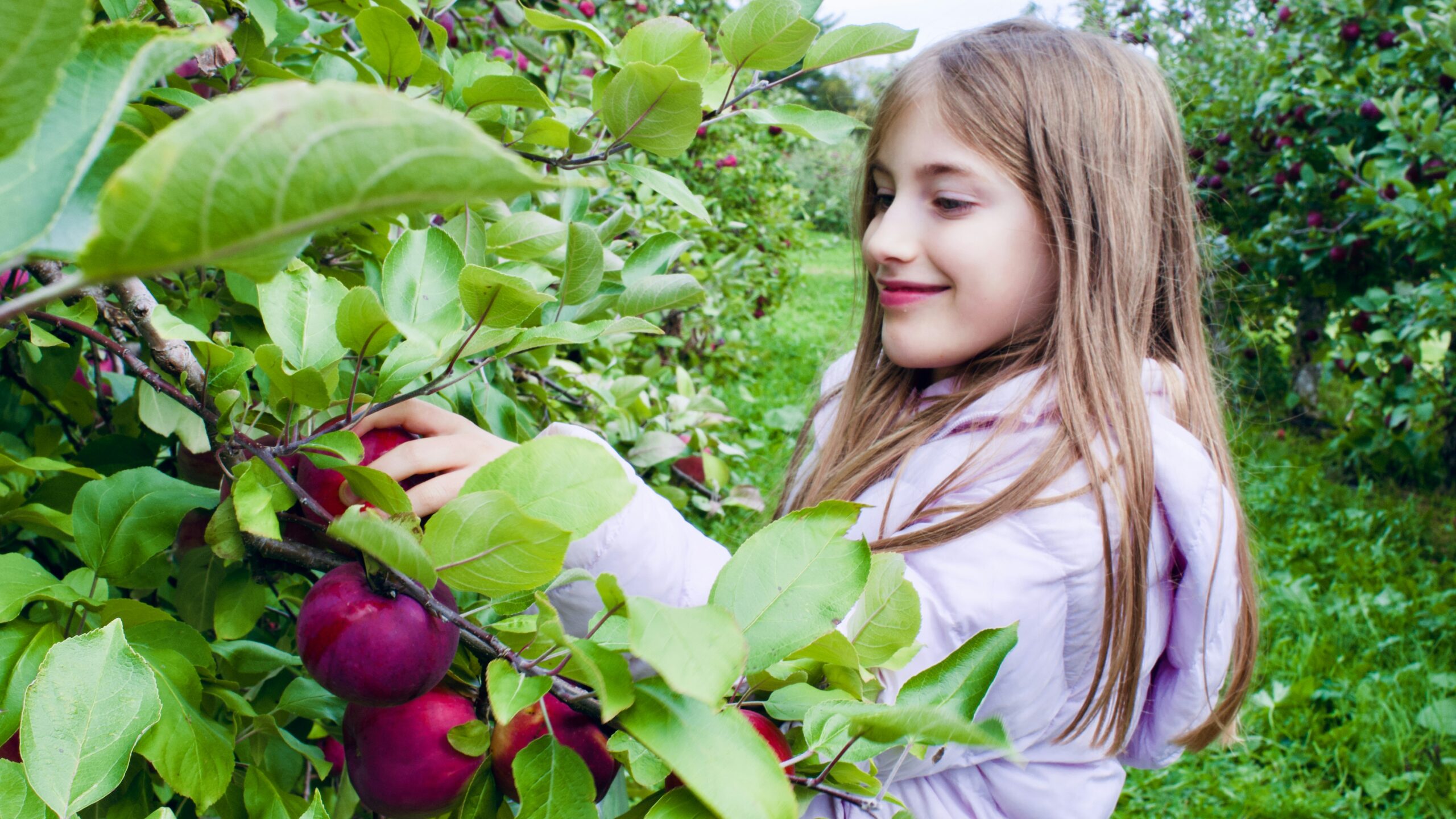
Apple trees are the most valuable fruit tree on most American homesteads. They are adaptable to almost every US climate, produce abundantly after year 5, store for months without processing, and provide one of the highest calorie yields of any fruit tree.
- Best beginner varieties: Honeycrisp (fresh eating), Cortland (cooking), Fuji (long storage), Liberty (disease resistant)
- Requires cross-pollination: plant at least 2 varieties that bloom at the same time
- Rootstock matters: Dwarf rootstock (M9) produces fruit faster on smaller trees. Semi-dwarf (MM106) balances production and longevity
- Storage: Apples stored in a root cellar at 32–40°F can last 2 to 6 months depending on variety
2. Peach — Fastest First Harvest
Peaches are the best choice for homesteaders who want fruit quickly. Many varieties produce their first full crop within 3 to 4 years. Peaches do not store as long as apples but are excellent for canning, drying, and making jam.
- Best beginner varieties: Reliance (cold hardy to Zone 4), Contender (disease resistant), Redhaven (classic flavor)
- Self-fertile: most peach varieties do not need a second tree for pollination
- Pruning is essential: peaches must be pruned annually to remain productive and healthy
- Winter hardiness: choose cold-hardy varieties like Reliance for Zone 4–5 homesteads. For cold-hardy varieties, the University of Minnesota Extension apple variety guide is the most reliable resource for northern homesteaders.
3. Pear — Low Maintenance and Long-Lived
Pears are one of the easiest fruit trees to grow once established, requiring less pruning and pest management than apples. European pears ripen off the tree (pick before fully ripe and bring inside) while Asian pears ripen on the tree like apples.
- Best beginner varieties: Bartlett (classic), Bosc (long keeping), Anjou (winter storage), Moonglow
- Requires cross-pollination: plant at least 2 compatible varieties
- Fire blight resistance: choose resistant varieties like Moonglow or Harrow Sweet for humid climates
4. Fig — Easiest Fruit Tree for Warm Climates
For homesteaders in the South and warm climate states (Zone 7 and warmer), the fig is possibly the most productive and lowest-maintenance fruit tree available. Figs are self-fertile, pest-resistant, drought-tolerant once established, and can produce two crops per year in warm climates.
- Best varieties for the South: Brown Turkey (most adaptable), Celeste (small sweet fruit), Chicago Hardy (survives to Zone 6)
- Can be container grown: figs thrive in large pots and can be moved inside for winter in Zone 5–6
- No spray program needed: figs are virtually pest and disease free in most US climates
5. Mulberry — The Most Overlooked Homestead Tree
Mulberries are the most underrated fruit tree in American homesteading. They produce enormous quantities of sweet, nutritious fruit with almost zero care, are self-fertile, fast-growing, and tolerate a wide range of soils and climates.
- Best varieties: Illinois Everbearing (long bearing season), Pakistan (large fruit), Contorted (ornamental and productive)
- Wildlife value: mulberries attract birds which can keep them away from your other fruit trees during their ripening season
- Caution: mulberries stain surfaces and walkways significantly — do not plant near patios or parking areas
6. Persimmon — The Ultimate Storage Fruit
American persimmons are one of the most underused native fruit trees for homesteaders. They produce sweet orange fruit in fall, require almost no care, are extremely cold-hardy, and the fruit stores for months after harvest. Asian persimmons (Fuyu and Hachiya) are larger and also excellent homestead trees in Zone 7 and warmer.
Fruit Trees by US Climate Zone
| Zone | States | Best Fruit Trees | Avoid |
| Zone 3–4 | MN, ND, SD, MT, WY | Cold-hardy apples (Haralson, Honeygold), Sour Cherry, Plum, Pear | Peach, Fig, Sweet Cherry |
| Zone 5–6 | OH, PA, IN, KS, NE, CO | Apple, Peach, Pear, Plum, Sour Cherry, Persimmon | Fig (without protection) |
| Zone 7–8 | TN, NC, VA, OK, TX (East) | Apple, Peach, Fig, Pear, Plum, Asian Persimmon, Mulberry | Limited — almost all trees |
| Zone 8–9 | GA, AL, MS, LA, TX (South) | Fig, Peach, Satsuma Mandarin, Loquat, Pear, Persimmon | Apple (poor chill hours) |
| Zone 9–10 | FL, CA, HI | Citrus, Avocado, Mango, Loquat, Fig, Banana, Persimmon | Apple, Cherry, Plum |
How to Plant Fruit Trees — Step by Step
- Choose the right location — Full sun (at least 6 to 8 hours daily) is non-negotiable for fruit production. Good drainage is essential — fruit trees will not tolerate waterlogged roots.
- Choose the right size — Dwarf trees produce fruit faster and are easier to harvest but have shorter lives. Standard trees live longer and produce more total fruit over their lifetime.
- Plant bare-root trees in early spring or container trees in spring or fall — avoid planting in extreme heat or when the ground is frozen.
- Dig the planting hole wide and shallow — twice as wide as the root ball but only as deep. Plant the graft union 2 to 3 inches above soil level.
- Amend sparingly — do not add fertiliser or amendments to the planting hole. The goal is encouraging roots to spread into native soil.
- Water deeply after planting and weekly for the first season — a slow trickle for 30 to 60 minutes once per week is ideal.
- Mulch generously — apply 3 to 4 inches of wood chip mulch in a circle 3 feet wide around the trunk, keeping mulch away from the trunk itself.
- Stake young trees in windy locations — use a flexible stake that allows some trunk movement to encourage strong root development.
Frequently Asked Questions
What is the fastest growing fruit tree for a homestead?
Peaches and mulberries are the fastest producers — peaches typically yield their first substantial harvest in 3 to 4 years, mulberries in 3 to 5 years. Figs are also fast producers in warm climates, often fruiting within 2 to 3 years.
How many fruit trees do I need for a family of 4?
A good starting orchard for a family of 4 includes 2 apple trees (different varieties for cross-pollination), 1 to 2 peach trees, 1 pear tree, and 1 plum tree. This combination provides fresh fruit from June through October and enough surplus for preserving.
Do fruit trees need a lot of water?
Young trees need deep weekly watering for the first 2 to 3 years. Established mature trees are generally drought-tolerant, though consistent moisture during fruit development improves yields. Peaches require more consistent water than apples or pears.
What fruit trees grow best in the South?
Figs, peaches, Asian persimmons, pears, and plums all perform excellently in the South. For Zone 8 and warmer, satsuma mandarins and loquats are also outstanding choices. Apple growing is more challenging in the deep South due to insufficient winter chill hours.